
De Minimis Shipping Rules: What Changed and What It Means for Importers
Learn how de minimis shipping rules have changed in the United States and the European Union, what the changes mean for import duties, and how importers can prepare.


For years, de minimis rules helped simplify customs processing for eligible low-value shipments entering certain countries. These provisions made cross-border e-commerce more affordable and helped businesses deliver small packages without the same duty requirements applied to many larger imports. That approach is changing as governments are revising how low-value imports are taxed and processed, affecting e-commerce businesses, importers, freight forwarders, and consumers. For businesses shipping internationally, understanding these changes is essential for calculating costs accurately, preparing customs documentation, and avoiding unexpected expenses.
What Is a De Minimis Exemption?
A de minimis exemption is a customs provision that allows qualifying low-value goods to receive relief from certain import duties or simplified customs treatment. The applicable value threshold and conditions vary by jurisdiction. A de minimis exemption does not necessarily eliminate every tax, fee, declaration requirement, or regulatory obligation associated with an imported shipment. Historically, these provisions helped reduce administrative work for customs authorities and lowered costs for businesses shipping small orders across borders. However, the rapid growth of cross-border e-commerce has increased the volume of low-value parcels entering major markets, prompting governments to reconsider how these shipments should be treated.
What Has Changed?
Recent policy changes in major markets illustrate why importers need to review their shipping arrangements.
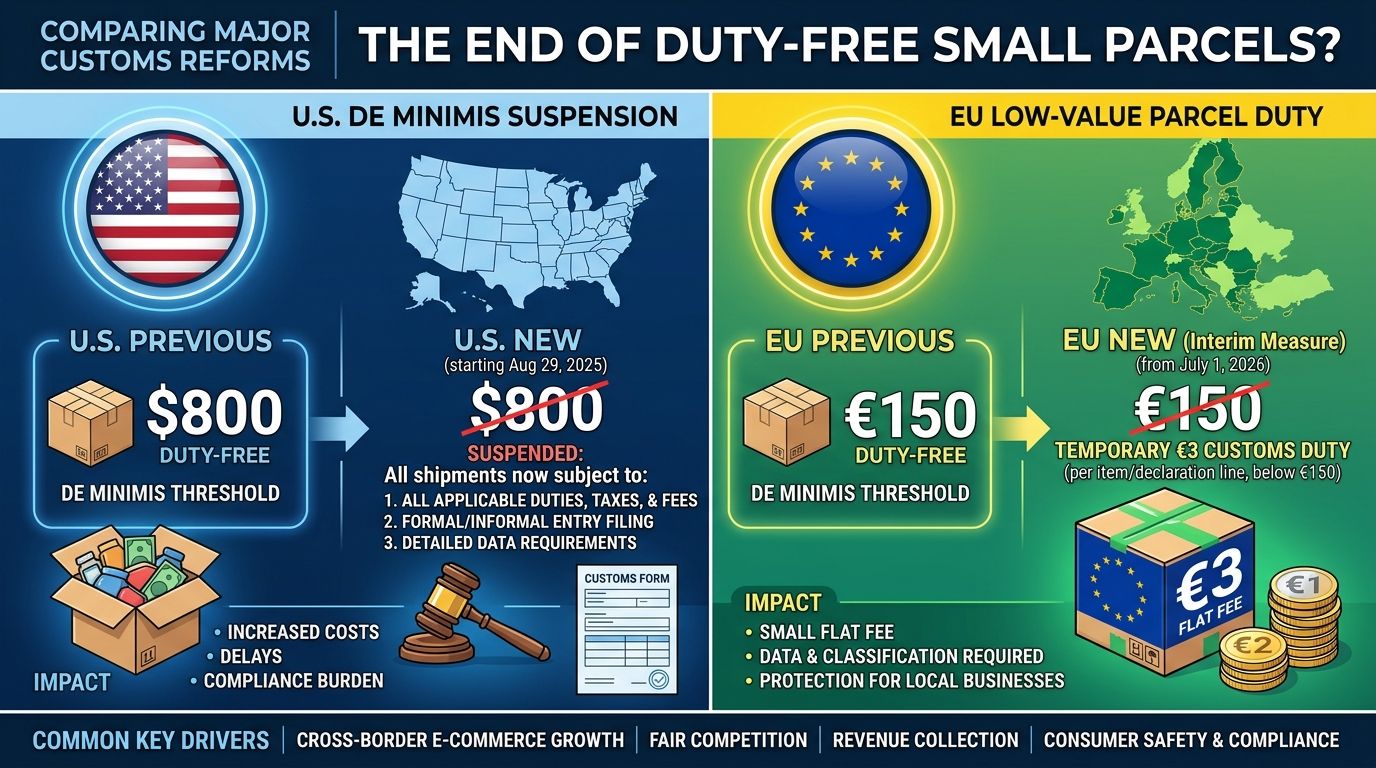
United States: The $800 Duty-Free Treatment Has Been Suspended
The United States suspended the broad de minimis duty-free treatment for most imports effective August 29, 2025. Previously, qualifying shipments valued at $800 or less could generally enter under this exemption, subject to applicable conditions and exceptions. In June 2026, U.S. Customs and Border Protection formalized the suspension through regulations covering shipments arriving through both postal and non-postal channels. As a result, importers should no longer assume that a shipment valued below $800 automatically qualifies for duty-free treatment. Applicable duties, taxes, fees, and customs entry requirements must be assessed under the rules governing the specific shipment.
European Union: A Temporary €3 Customs Duty
The European Union introduced a temporary €3 customs duty on qualifying low-value parcels valued at up to €150 entering from outside the EU, effective July 1, 2026.
The duty is applied per item based on tariff classification, rather than simply charging €3 for every physical item in a parcel. For example, five T-shirts falling under the same tariff classification would generally attract €3 in total under this measure, while T-shirts and a watch falling under different classifications would generally attract €6.
The measure is scheduled to apply until July 1, 2028, after which normal customs duties are expected to apply under the relevant rules. Importers should also account for applicable VAT and other customs requirements.
What Do These Changes Mean for Importers?
Higher and Less Predictable Import Costs
Shipments that previously benefited from duty relief may now incur additional charges. Businesses that rely on frequent, low-value imports should reassess their cost assumptions.
More Attention to Customs Documentation
Accurate product descriptions, declared values, country-of-origin information, and tariff classifications become especially important when determining applicable duties and entry requirements.
Changes to E-Commerce Pricing
Businesses selling internationally may need to review product prices, shipping fees, delivery promises, and how import charges are communicated to customers.
Greater Importance of Landed Cost
The product price alone no longer provides a sufficient basis for comparing international sourcing or delivery options. Businesses need a clearer view of duties, taxes, transportation, handling, and other applicable charges.
How Importers Can Prepare
Businesses can take several practical steps to adapt:
- Review destination-country rules: Confirm the current requirements for each market rather than assuming thresholds are the same everywhere.
- Recalculate landed costs: Include applicable duties, taxes, shipping costs, and handling fees.
- Improve product classification: Verify tariff codes and product descriptions before shipment.
- Coordinate with logistics partners: Confirm who is responsible for customs declarations, duty payment, and communicating additional charges.
- Review shipping strategies: Compare carrier services, fulfillment locations, and shipment consolidation options where commercially and legally appropriate.
- Monitor policy changes: Customs rules can evolve, so build regular compliance reviews into import planning.
Use Better Data to Manage Changing Import Costs
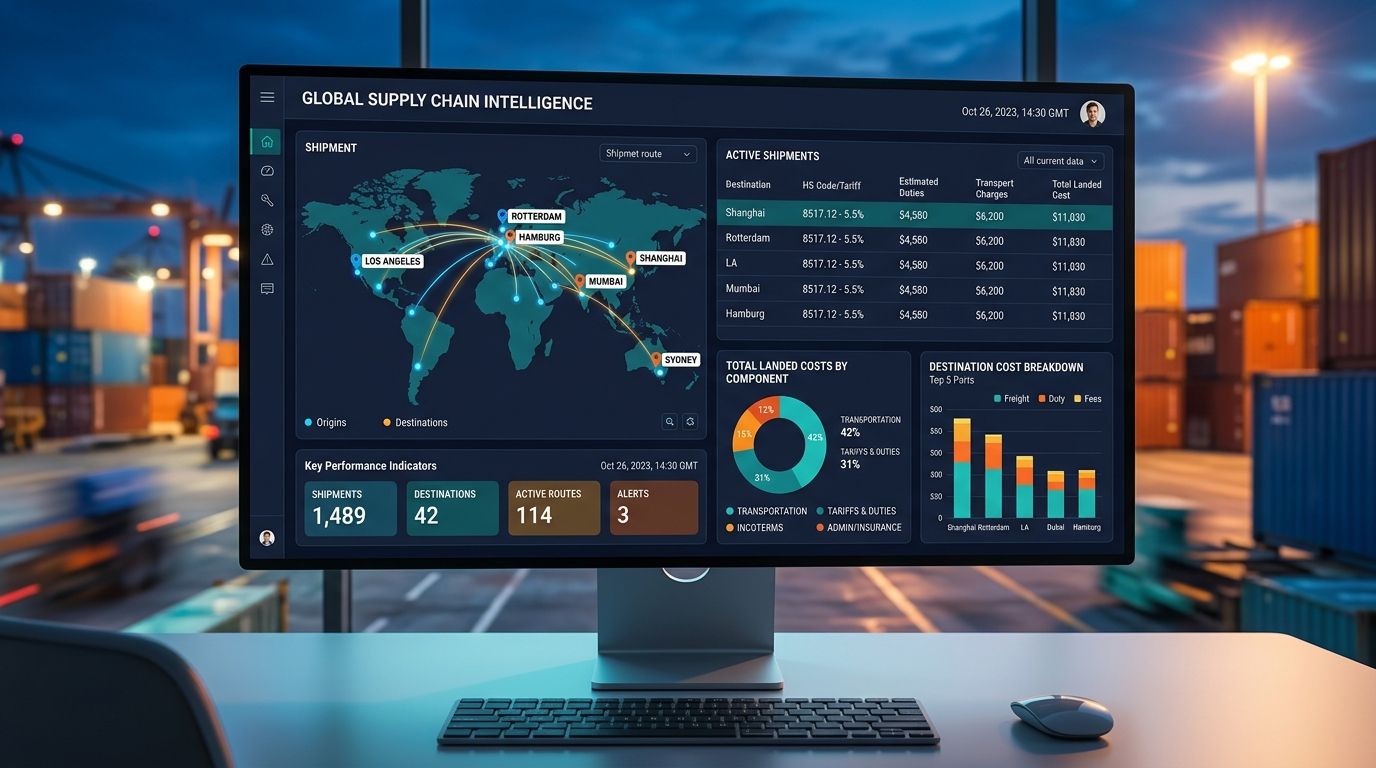
When customs information, freight rates, and shipment records are spread across different systems, it becomes harder to understand how regulatory changes affect total costs.
SupplySense 360 helps businesses bring together shipment visibility, tariff information, rate intelligence, and landed cost analysis to support more informed international shipping decisions.
By connecting transportation and trade data, businesses can evaluate cost changes more clearly and improve planning as import requirements evolve.
Conclusion
De minimis shipping rules are no longer something importers can safely treat as a minor customs detail. Changes in the United States and European Union demonstrate how quickly low-value shipment economics can shift. The most effective response is to understand the rules in each destination market, maintain accurate customs data, and calculate the full cost of moving goods across borders.