
Freight Class Calculator for LTL Shipments: How to Calculate Density and Class
Learn how to calculate freight density and estimate LTL freight class using shipment dimensions and weight. Understand NMFC classifications and avoid costly reclassification.


When shipping less-than-truckload (LTL) freight, the classification assigned to your shipment can influence how much you pay for transportation. Unlike full truckload shipping, where a business generally pays for the use of an entire trailer, LTL shipments share trailer space with freight from other shippers. Carriers use freight classification to assess how different shipments affect transportation costs, handling requirements, and available capacity. But how do you determine your shipment's freight class? One important starting point is freight density: the amount of weight occupying a given volume. Understanding how to calculate it can help shippers estimate applicable freight classes, prepare more accurate shipping documents, and reduce avoidable billing adjustments.
What Is Freight Class in LTL Shipping?
Freight class is a standardized classification used in the North American LTL freight industry under the National Motor Freight Classification (NMFC) system. It helps carriers evaluate shipments based on transportation characteristics, including:
- Density: How much a shipment weighs relative to the space it occupies.
- Handling: Whether the freight requires special equipment or additional care.
- Stowability: How easily the shipment can be loaded and positioned alongside other freight.
- Liability: The potential for damage, theft, or other risks during transportation.
Freight classes generally range from Class 50 to Class 500. Lower classes are commonly associated with denser, easier-to-transport freight, while higher classes may apply to lighter or more difficult-to-handle shipments. However, density alone does not determine every shipment's classification. The applicable NMFC item and its specific provisions must also be considered.
How to Calculate Freight Density
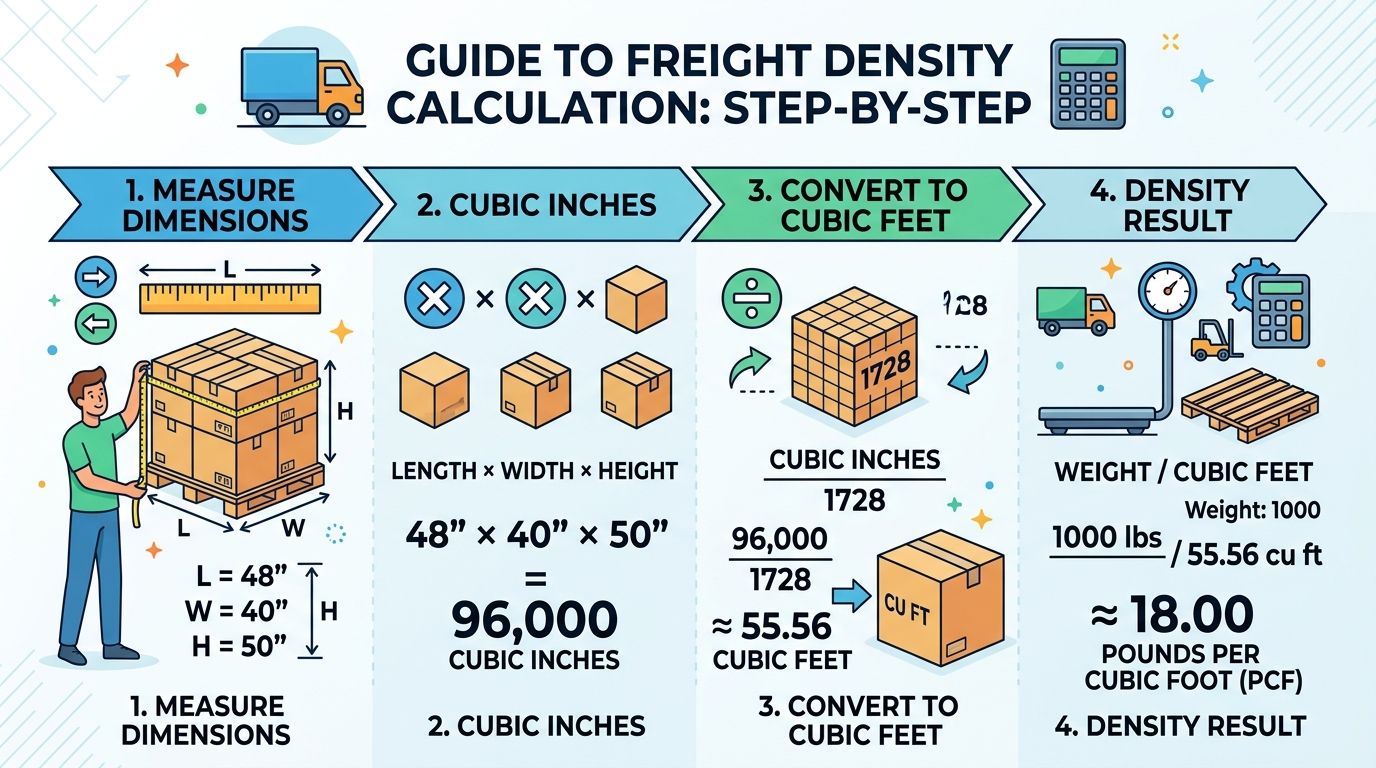
Freight density is measured in pounds per cubic foot (PCF). You need three measurements and the shipment's weight:
- Length in inches
- Width in inches
- Height in inches
- Total weight in pounds
Use the following formula: Step 1: Calculate cubic inches. Length × Width × Height = Cubic inches Step 2: Convert cubic inches to cubic feet Cubic inches ÷ 1,728 = Cubic feet Step 3: Calculate freight density. Shipment weight ÷ Cubic feet = Density (PCF)
Example: Calculating the Density of an LTL Shipment
Suppose a palletized shipment has the following measurements:
| Measurement | Value |
|---|---|
| Length | 48 inches |
| Width | 40 inches |
| Height | 45 inches |
| Weight | 450 lbs |
First, calculate the volume:
48 × 40 × 45 = 86,400 cubic inches
Convert to cubic feet:
86,400 ÷ 1,728 = 50 cubic feet
Now calculate density:
450 ÷ 50 = 9 PCF
The shipment has a density of 9 pounds per cubic foot.
LTL Freight Class Density Reference Table
For commodities subject to the applicable full density scale, the following reference shows the 13 density ranges and their corresponding freight classes under the updated NMFC structure.
| Density (PCF) | Freight Class |
|---|---|
| Less than 1 | 400 |
| 1 to less than 2 | 300 |
| 2 to less than 4 | 250 |
| 4 to less than 6 | 175 |
| 6 to less than 8 | 125 |
| 8 to less than 10 | 100 |
| 10 to less than 12 | 92.5 |
| 12 to less than 15 | 85 |
| 15 to less than 22.5 | 70 |
| 22.5 to less than 30 | 65 |
| 30 to less than 35 | 60 |
| 35 to less than 50 | 55 |
| 50 or greater | 50 |
Based on this density scale, the example shipment at 9 PCF falls within the Class 100 density range. Important: This is an indicative density reference, not a universal freight-class calculator. The density scale applies where the relevant NMFC item uses it. Commodity-specific provisions, handling, stowability, and liability requirements may affect the final classification.
Common Freight Class Calculation Mistakes
Even small measurement errors can affect the calculated density and potentially lead to incorrect classification. Watch out for these common mistakes:
1. Excluding packaging dimensions
Measure the complete handling unit as tendered to the carrier, including pallets, crates, packaging, and projections.
2. Using incorrect shipment weight
Use the applicable handling-unit weight, including packaging and pallet weight, rather than relying only on the product's net weight.
3. Assuming all products use the same density scale
Different commodities may have different NMFC provisions. Always verify the applicable item before assigning a class.
4. Using outdated classification information
The NMFC underwent significant changes effective July 19, 2025. Shippers should verify current item numbers and classification provisions rather than relying on old freight-class records.
How Accurate Freight Classification Helps Control Shipping Costs
Incorrect freight classification can result in carrier reclassification, additional charges, billing disputes, and shipment delays.
Accurate dimensions, weight records, commodity descriptions, and NMFC references help businesses obtain more reliable freight quotes and reduce avoidable adjustments.
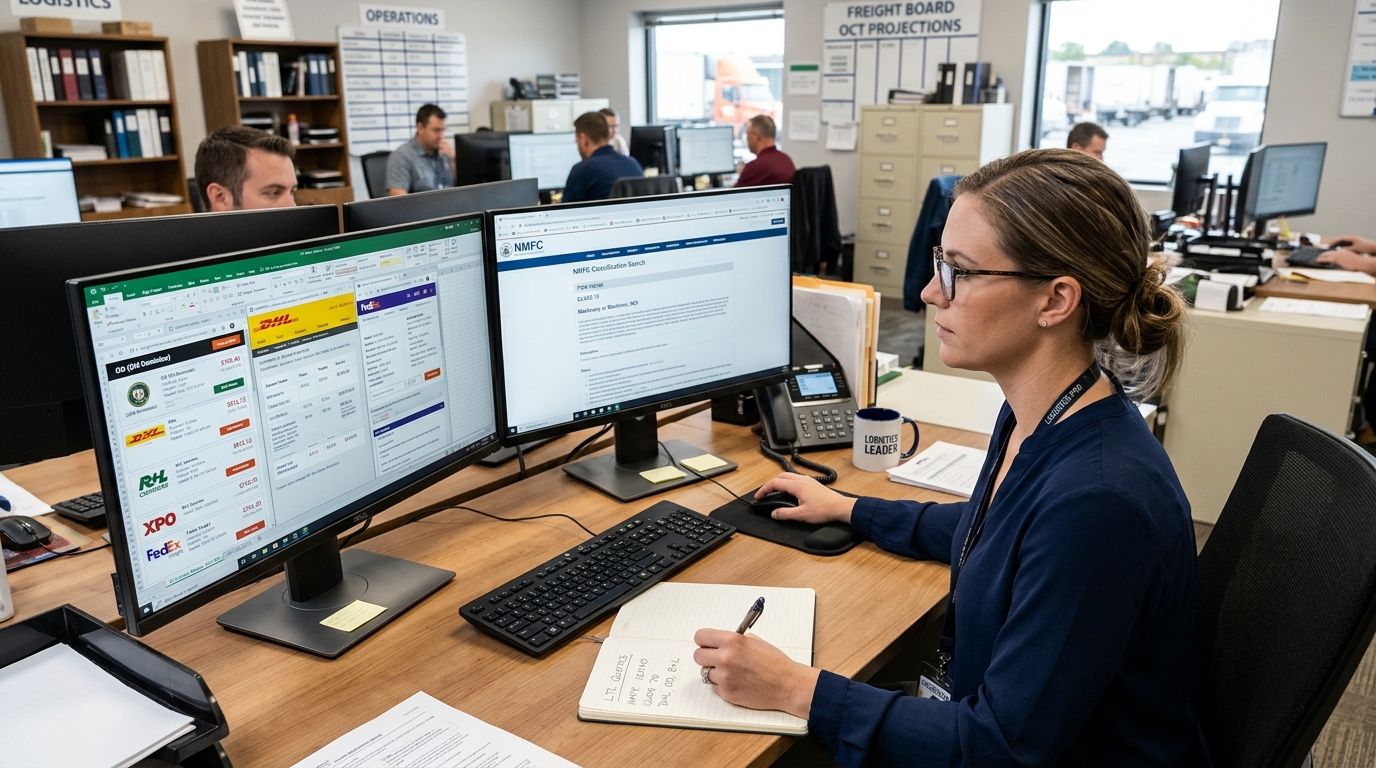 For businesses managing multiple carriers and frequent LTL shipments, manually checking every shipment can become time-consuming. A connected logistics platform can help centralize shipment information, compare available freight options, and improve cost visibility.
SupplySense 360 supports freight rate comparison, shipment visibility, and supply chain intelligence, helping businesses make more informed transportation decisions.
Conclusion
A freight class calculator is a useful starting point for understanding LTL shipment density and estimating applicable classifications. However, an accurate freight class requires more than a mathematical calculation. Measure the complete handling unit, calculate its density, identify the correct NMFC item, and verify the applicable classification provisions before booking.