
HTS Code Classification Explained: How to Avoid Costly Customs Errors
Learn what HTS codes are, how goods are classified for international trade, common classification mistakes, and how accurate HTS classification can reduce customs delays and unexpected costs.


Moving goods across international borders requires more than arranging transportation. Importers must also correctly classify their products so customs authorities can determine applicable duties, tariffs, and regulatory requirements. This is where HTS code classification becomes essential. An incorrect classification can result in unexpected duties, customs delays, compliance issues, or costly corrections.
What Is an HTS Code?
An HTS (Harmonized Tariff Schedule) code is a classification code used in the United States to identify imported products and determine the applicable tariff treatment. HTS codes are based on the internationally recognized Harmonized System (HS), which provides a standardized framework for classifying traded goods. The classification of a product can affect:
- Customs duties
- Tariff rates
- Import restrictions
- Trade agreements
- Reporting requirements
- Customs documentation
For importers, selecting the appropriate code is therefore an important part of trade compliance.
Why Accurate HTS Classification Matters
A product that is incorrectly classified may be assigned the wrong duty rate or subjected to inappropriate regulatory requirements. Common consequences include:
- Unexpected customs charges
- Shipment clearance delays
- Incorrect duty payments
- Customs audits
- Compliance penalties
- Additional administrative costs
These issues can become particularly expensive for businesses handling large international shipment volumes.
What Determines an HTS Classification?
Classifying a product isn't always as simple as searching for its name. Factors that may influence classification include:
Product Composition
The materials used to manufacture a product can affect its classification.
Function and Use
The primary purpose of a product may determine which classification applies.
Product Specifications
Size, design, technical characteristics, and construction can be relevant.
Country of Origin
Classification and applicable tariff treatment must be considered alongside the product's country of origin.
Applicable Trade Measures
Additional tariffs or trade measures may apply depending on the product and origin.
Common HTS Classification Mistakes
Businesses often run into problems when they:
- Use outdated classification information
- Choose codes based only on product descriptions
- Assume similar products have identical classifications
- Ignore changes to tariff schedules
- Rely on incomplete product specifications
A classification decision should be supported by accurate product and trade data.
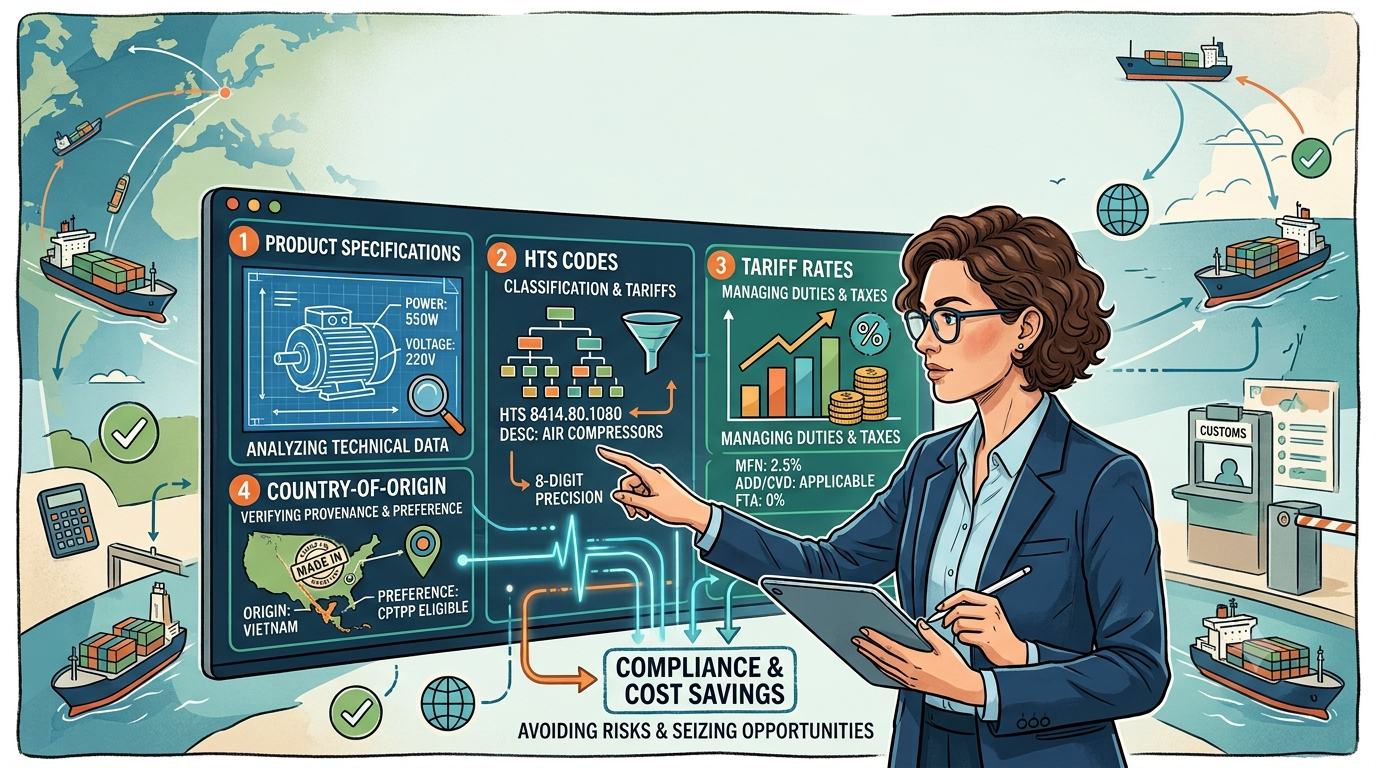
How Technology Can Improve Classification
Modern supply chain technology can make trade compliance more efficient by connecting product, shipment, and tariff information. Instead of managing classification data separately from transportation operations, businesses can bring these data points together to improve decision-making. This is especially valuable when managing large product catalogs and international shipment volumes.
How SupplySense 360 Supports Smarter Trade Decisions
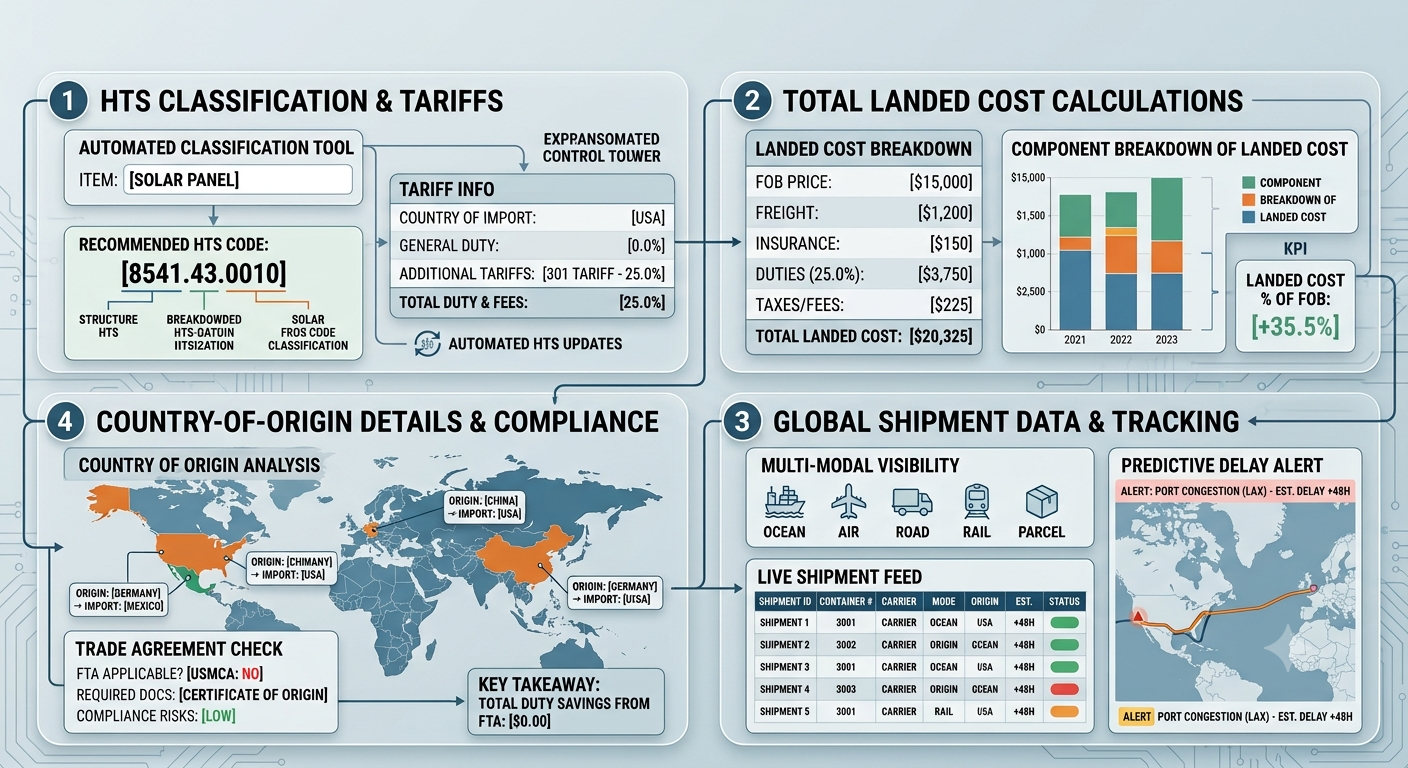 SupplySense 360 helps businesses connect trade intelligence with broader supply chain operations through capabilities such as:
- HTS classification support
- Tariff database access
- Landed cost analysis
- Shipment visibility
- Trade and compliance intelligence
- Transportation analytics
By bringing these insights together, businesses can better understand the financial and operational impact of international shipments.
Conclusion
HTS classification is more than a customs documentation requirement. It can directly affect the cost, speed, and compliance of international trade. Accurate product classification, combined with current tariff information and better supply chain visibility, helps businesses reduce avoidable customs risks and make more informed importing decisions.