
Human-in-the-Loop Logistics: Where to Let AI Decide and Where to Keep Control
Explore how human-in-the-loop logistics combines AI automation with human judgment to improve shipment decisions, manage exceptions, and maintain operational control.


Artificial intelligence is changing how logistics businesses track shipments, forecast delays, compare freight rates, and manage supply chain operations. Tasks that once required hours of manual work can now be supported by automated systems that process large amounts of data and generate recommendations in seconds. But should AI make every logistics decision on its own? Not necessarily. A delayed shipment, a customs discrepancy, or a sudden change in transportation costs may require more than a data-driven recommendation. It may involve financial risk, regulatory obligations, customer relationships, or decisions that require human judgment. This is where human-in-the-loop logistics becomes important. It combines AI capabilities with human oversight, allowing technology to handle routine processes while people retain control over decisions that require experience, accountability, or intervention.
What Is Human-in-the-Loop Logistics?
Human-in-the-loop (HITL) logistics is an approach where people remain involved in AI-supported logistics workflows. Rather than allowing an automated system to make every decision independently, businesses define where AI can act, where it should recommend an action, and where human approval is required. For example, an AI system might identify a shipment likely to arrive late and recommend an alternative route. A logistics manager can review the recommendation, consider additional operational factors, and approve or reject the proposed change. The objective is not to limit automation. It is to use automation responsibly while keeping important decisions accountable.
Where AI Can Take the Lead
1. Routine shipment monitoring
AI-powered systems can process shipment updates, track milestones, identify unusual movements, and flag potential delays without requiring employees to check multiple carrier portals manually.
2. Predictive alerts
By analyzing historical and real-time information, AI can identify patterns associated with possible delays, capacity constraints, or disruptions. Teams can receive earlier warnings and prepare accordingly.
3. Data processing and document validation
AI can extract information from invoices, shipping documents, and other records, then identify missing fields or inconsistencies for review.
4. Rate analysis and comparisons
AI can help compare available freight options, analyze historical rates, and identify potential cost-saving opportunities based on defined business requirements.
These tasks allow teams to spend less time collecting and processing information and more time managing exceptions and improving performance.
Where Human Control Should Remain
Not every logistics decision should be automated. Some situations involve uncertainty, financial exposure, legal responsibility, or business relationships that require human judgment.
1. High-value financial decisions
An AI system may recommend a more expensive alternative route to avoid a delay. However, approving additional freight costs may require a manager who understands the shipment's commercial importance and budget implications.2. Customs and regulatory decisions
AI can assist with tariff classification, document checks, and compliance monitoring. However, questionable classifications, disputed declarations, and complex regulatory interpretations should receive appropriate human review.
3. Major shipment disruptions
When a shipment is lost, damaged, or significantly delayed, the response may involve negotiations with carriers, customer communication, insurance claims, and contractual obligations.
4. Sensitive customer and supplier decisions
Automated systems can identify recurring performance problems, but decisions involving supplier relationships, contract changes, or customer commitments should account for context beyond the available data.

Building the Right Balance Between AI and Human Oversight
A successful human-in-the-loop strategy begins by classifying decisions according to their risk and complexity.
| Decision type | AI's role | Human involvement |
|---|---|---|
| Routine tracking updates | Automate | Monitor exceptions |
| Standard status notifications | Automate using approved rules. | Review unusual cases. |
| Delay predictions | Analyze and recommend | Decide on significant interventions. |
| Freight rate comparisons | Analyze available options. | Approve commercial commitments |
| Document validation | Extract and flag discrepancies. | Resolve critical inconsistencies. |
| Regulatory exceptions | Identify potential issues. | Review and approve decisions. |
Businesses should also establish clear approval thresholds, escalation procedures, audit trails, and permissions. Employees need to understand when they can rely on automated recommendations and when they must intervene.
Why Visibility Matters in Human-in-the-Loop Logistics
Human oversight is only effective when employees have access to accurate, timely information.
If shipment data is scattered across spreadsheets, emails, and disconnected carrier systems, managers may struggle to evaluate AI recommendations or respond quickly to exceptions.
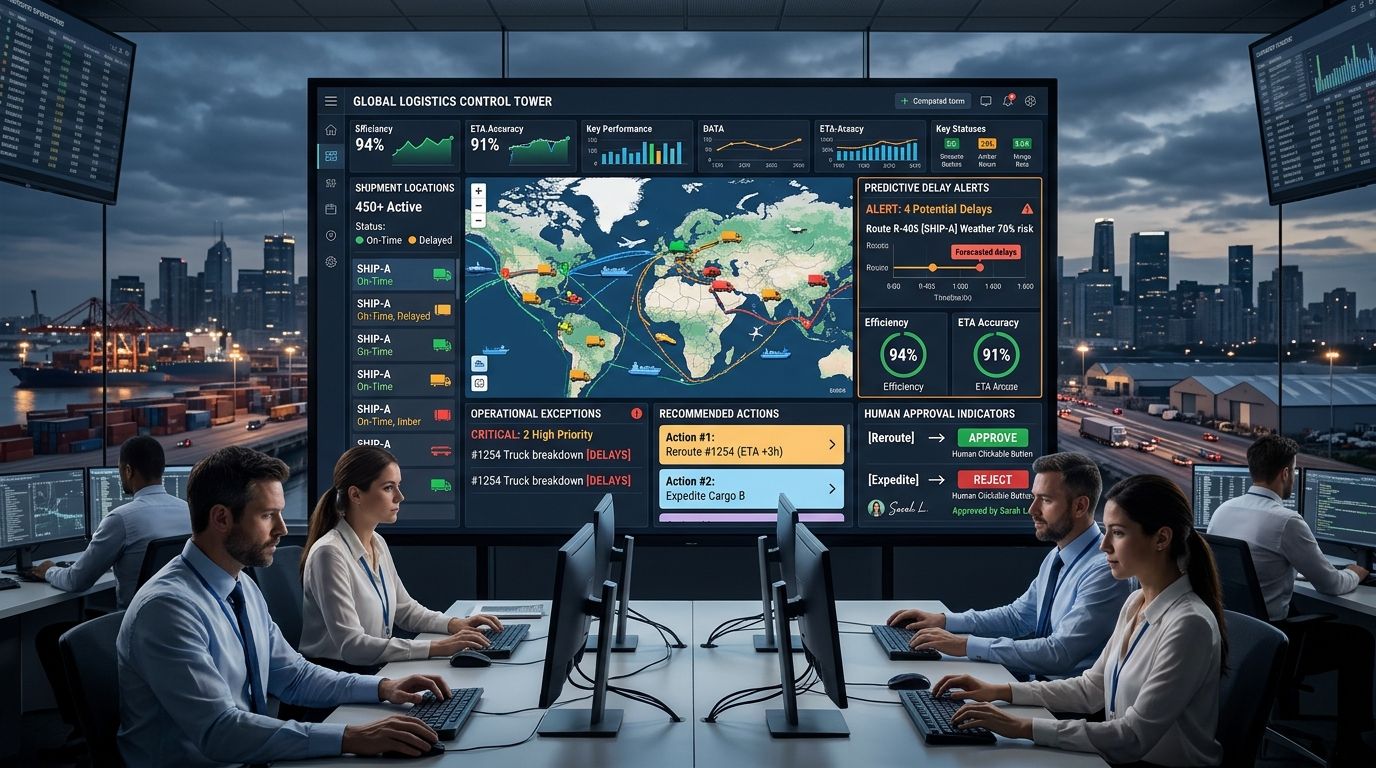 SupplySense 360 brings shipment visibility, predictive analytics, and exception management into a connected operational environment. This helps logistics teams access relevant information, monitor developing issues, and make more informed decisions while retaining control over critical actions.
Conclusion
The future of logistics is not simply about replacing manual work with artificial intelligence. It is about identifying which tasks benefit from automation and which decisions still require human judgment. AI can process information, identify patterns, and recommend actions at scale. People provide context, accountability, and the ability to handle complex situations. When both work together, logistics businesses can build operations that are more responsive, efficient, and controlled.