On-Time In-Full (OTIF): Why This Metric Is a Supply Chain Health Check
Learn what OTIF (On-Time In-Full) means, why it's one of the most important supply chain KPIs, and how businesses can improve delivery performance through real-time visibility.


A shipment arriving on time is important. A shipment arriving on time with every item ordered is even better. That's exactly what On-Time In-Full (OTIF) measures. As supply chains become more customer-centric, OTIF has become one of the most important key performance indicators (KPIs) for measuring operational excellence.
What Is OTIF?
On-Time In-Full (OTIF) measures whether customer orders are delivered:
- On time — by the promised delivery date.
- In full — with the complete quantity ordered and no missing items.
Only deliveries that meet both conditions count as successful OTIF deliveries. For this reason, OTIF provides a more complete picture of supply chain performance than on-time delivery alone.
Why OTIF Matters
A high OTIF score indicates that a supply chain is operating efficiently across procurement, transportation, warehousing, and fulfillment. Poor OTIF performance can result in:
- Customer dissatisfaction
- Lost sales
- Inventory shortages
- Higher transportation costs
- Supplier performance issues
- Reduced customer loyalty
Many retailers and manufacturers even include OTIF targets in supplier agreements.
What Affects OTIF Performance?
Several factors influence OTIF results:
Inventory Availability
Stockouts make it impossible to fulfill complete orders.
Transportation Delays
Carrier issues, weather, and congestion can delay shipments.
Warehouse Operations
Picking and packing errors affect order completeness.
Supplier Reliability
Late supplier deliveries disrupt downstream fulfillment.
Demand Forecasting
Poor forecasting often leads to inventory imbalances.

How to Improve OTIF
Improving OTIF requires visibility across the entire supply chain. Best practices include:
- Monitor shipments in real time
- Improve demand forecasting
- Strengthen supplier collaboration
- Optimize warehouse processes
- Measure carrier performance
- Automate exception management
The earlier issues are identified, the easier they are to resolve before they impact customers.
Why OTIF Is a Supply Chain Health Check
Think of OTIF as a report card for your supply chain. A declining OTIF score often signals underlying issues in:
- Procurement
- Inventory management
- Transportation
- Warehouse operations
- Customer fulfillment
Monitoring OTIF regularly helps businesses identify operational weaknesses before they become costly problems.
How SupplySense 360 Supports Better OTIF Performance
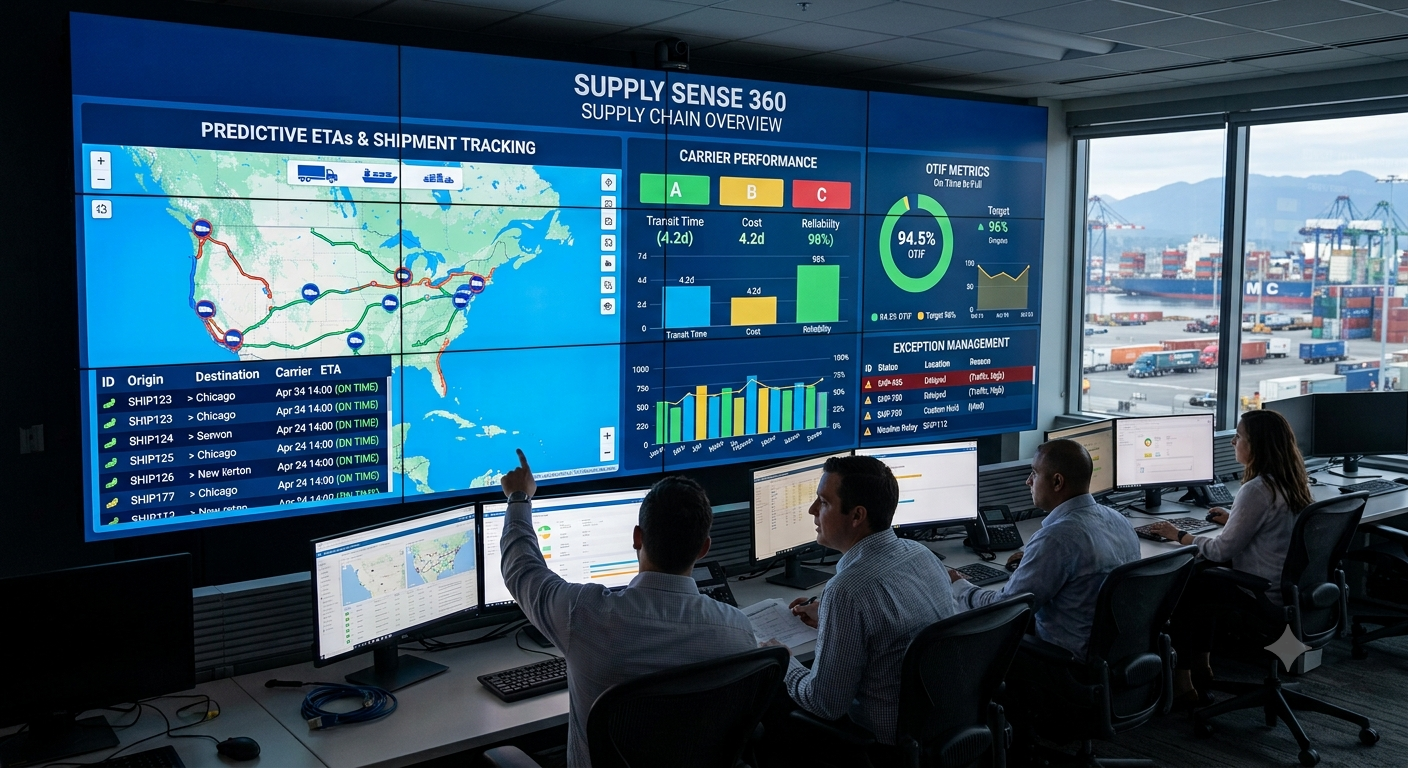 SupplySense 360 helps organizations improve OTIF by providing:
- Real-time shipment tracking
- Predictive ETA updates
- Carrier performance monitoring
- Automated exception alerts
- End-to-end supply chain visibility
Conclusion
OTIF is more than a logistics metric; it's a reflection of how well every part of your supply chain works together. Organizations that consistently improve OTIF strengthen customer relationships, reduce operational costs, and build more resilient supply chains.