
Rail Freight in North America: When It Makes Sense
Explore how rail freight works across North America, when it offers a cost advantage over trucking, and how businesses can evaluate transit times, intermodal shipping, and total logistics costs


Moving freight across North America often involves balancing transportation costs, delivery speed, shipment volume, and reliability. Trucks offer flexibility and direct delivery, but they may not always be the most economical option for long-distance shipments. Rail freight provides an alternative, particularly for businesses moving large quantities of goods across established transportation corridors. However, rail is not automatically the better choice. Understanding when to use it and when trucking or intermodal transportation makes more sense can help businesses build a more efficient logistics strategy.
What Is Rail Freight?
Rail freight is the transportation of goods by train using freight rail networks. Across North America, railways connect major industrial centers, distribution hubs, ports, and border crossings. Rail freight commonly moves commodities such as grain, coal, chemicals, lumber, metals, automotive products, and industrial materials. Containerized consumer goods can also travel by rail, particularly when combined with trucking through intermodal transportation. In an intermodal shipment, the same container moves between transportation modes, typically truck, rail, and sometimes ocean, without transferring the goods themselves into a different container at each stage. This approach combines rail's long-distance efficiency with trucking's flexibility for pickup and final delivery.
When Does Rail Freight Make Sense?
1. Long-Distance Shipments
Rail can be cost-effective for moving freight over long distances, especially when shipments travel along established rail corridors. For businesses moving goods between major North American production, distribution, and consumption centers, rail may offer an attractive alternative to transporting the entire journey by truck. However, the overall advantage depends on terminal access, route availability, transfer requirements, and delivery deadlines.
2. Large or Heavy Shipments
Rail is well suited to many high-volume and heavy freight movements. Industries transporting bulk commodities or large quantities of materials can benefit from rail's capacity to move substantial loads in a single train. For suitable commodities and routes, this can reduce the number of individual truck movements required.
3. Predictable Shipping Schedules
Businesses with consistent shipment volumes and flexible delivery windows may be able to plan around scheduled rail services. For example, manufacturers replenishing regional distribution centers can coordinate inventory movements in advance rather than requiring every shipment to travel by truck. Rail is less suitable when a shipment needs immediate dispatch or highly flexible delivery timing.
4. Intermodal Transportation
Intermodal rail can help businesses balance transportation costs and delivery requirements. A truck collects a container from a shipper, transfers it to a rail terminal, and the container travels by train before another truck completes the final leg. This arrangement can be useful for containerized freight moving over long distances between major hubs.
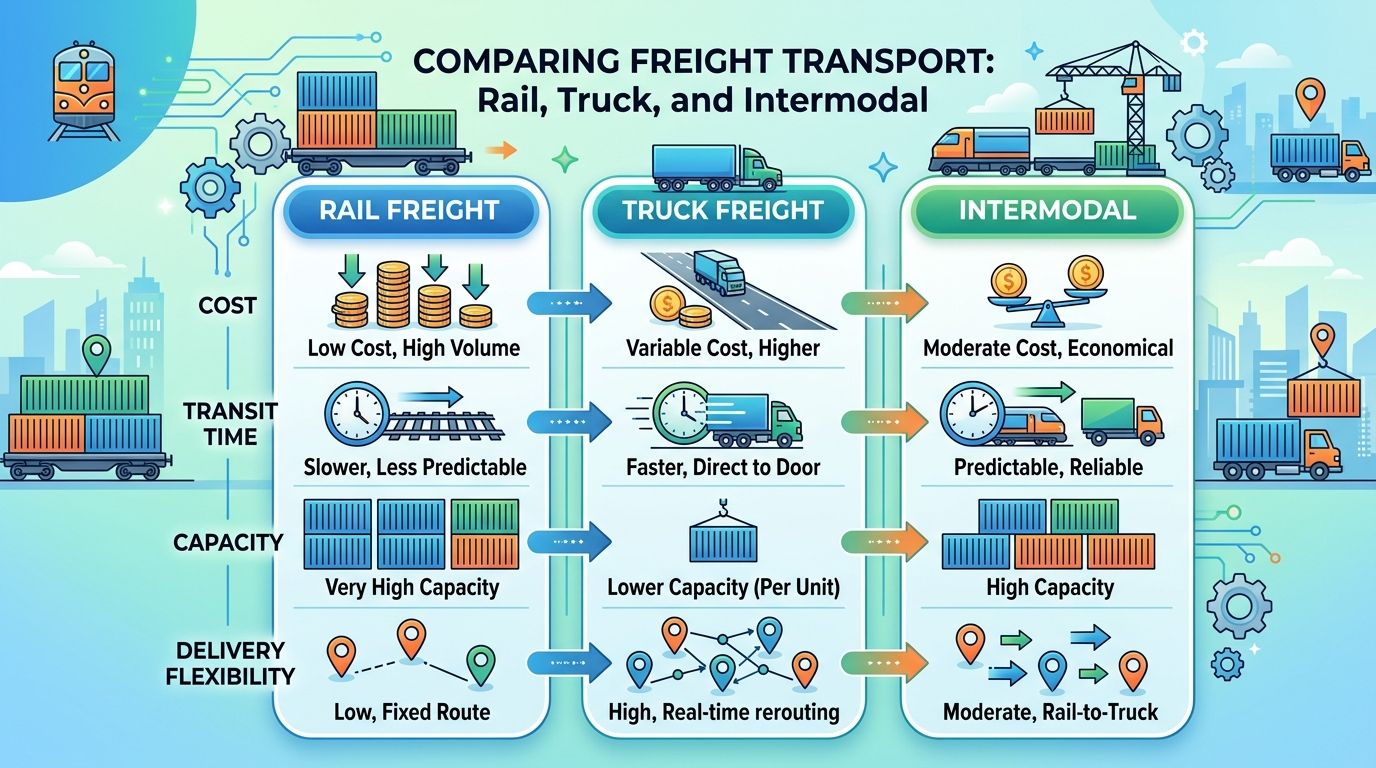
Rail vs. Truck: What Should You Compare?
Choosing between rail and road transportation requires more than comparing the quoted freight rates. Consider these factors:
- Transit time: Trucking may offer faster or more direct service on some routes, while rail can be competitive over longer distances.
- Total cost: Include pickup, terminal handling, rail charges, final delivery, fuel-related charges, and any storage or transfer fees.
- Shipment size: Large, heavy, or recurring shipments may be better suited to rail.
- Route availability: Not every origin and destination has convenient rail access.
- Delivery flexibility: Trucks generally offer more direct routing and flexible pickup and delivery arrangements.
- Reliability: Evaluate service schedules, terminal dwell, connection times, and historical performance.
The right option depends on the complete movement, not simply the distance traveled by train.
How to Make Rail Freight More Effective
Businesses can improve rail freight planning by:
- Identifying recurring lanes suitable for rail or intermodal service.
- Forecasting demand early enough to coordinate capacity.
- Comparing end-to-end costs rather than individual transport charges.
- Planning inventory around realistic transit times.
- Monitoring terminal dwell and missed connections.
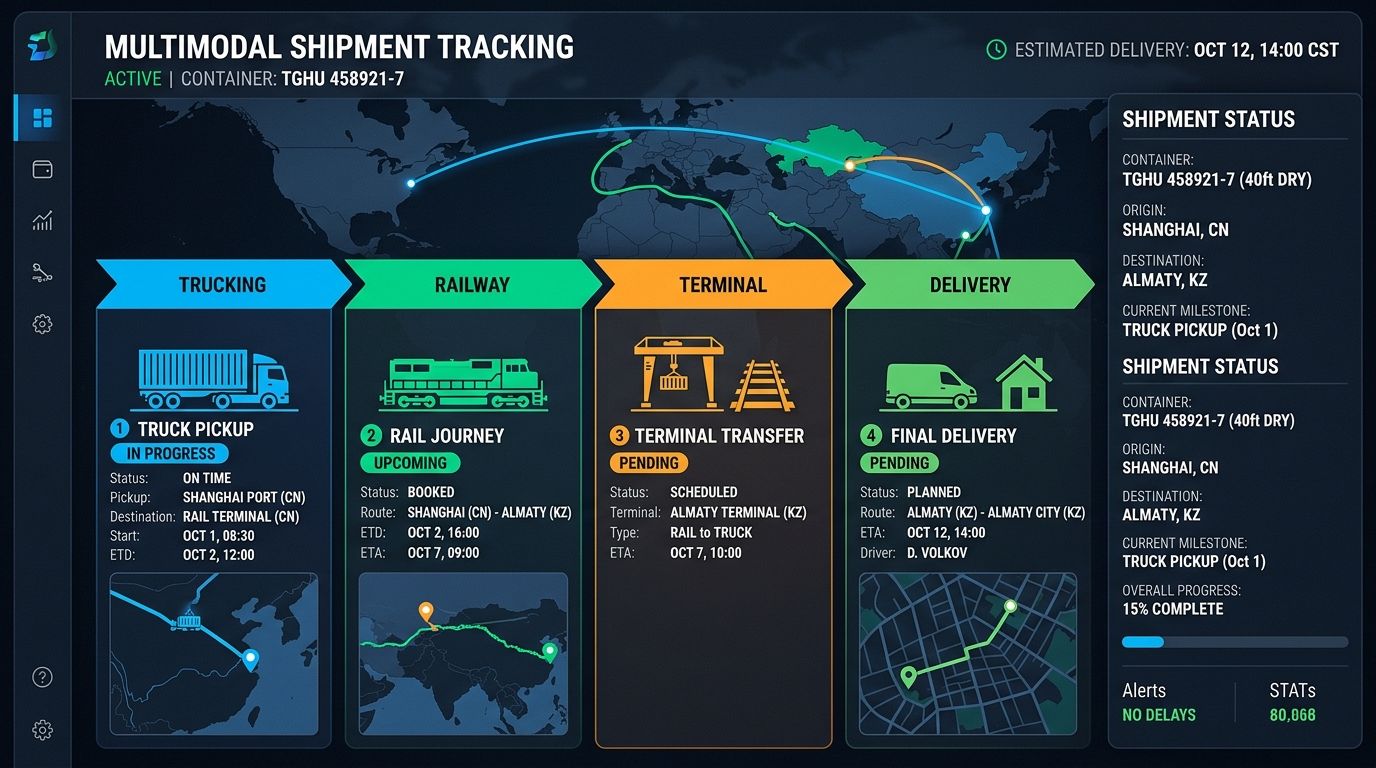
- Maintaining visibility across rail and truck legs.
For intermodal shipments in particular, tracking only the rail portion leaves gaps in visibility before pickup and after the container leaves the terminal.
Using Shipment Visibility to Improve Mode Selection
Transportation decisions become more effective when teams can compare costs, monitor progress, and identify delays across different modes.
SupplySense 360 helps businesses centralize shipment visibility and transportation data across road, ocean, air, rail, and parcel movements. Its tracking and analytical capabilities can support better-informed decisions about routes, carriers, and shipment performance.
Conclusion
Rail freight can be a valuable option for long-distance, high-volume, and predictable shipments across North America. Intermodal transportation can extend its usefulness by connecting rail networks with road-based pickup and delivery. The key is to evaluate the full journey, including cost, transit time, capacity, and service requirements.