
Supply Chain Visibility for Manufacturers: Closing the Blind Spots
Learn how supply chain visibility helps manufacturers identify transportation blind spots, anticipate delays, improve inventory planning, and build more resilient operations.


A manufacturing operation can be highly efficient inside the factory and still experience major disruptions because of what happens outside it. A supplier shipment is delayed. A container is stuck at a congested port. A truck misses a pickup. A critical component arrives later than expected. The production line may be ready, but the materials aren't. These are the kinds of supply chain blind spots that manufacturers face every day. Supply chain visibility helps close those gaps by giving manufacturers a clearer view of what is happening across their transportation network.
Why Visibility Matters to Manufacturers
Manufacturing depends on the timely movement of materials and components. When transportation is unpredictable, manufacturers can experience:
- Production delays
- Material shortages
- Excess inventory
- Expedited freight costs
- Missed customer commitments
- Increased operational costs
The earlier a manufacturer knows about a potential disruption, the more options it has to respond.
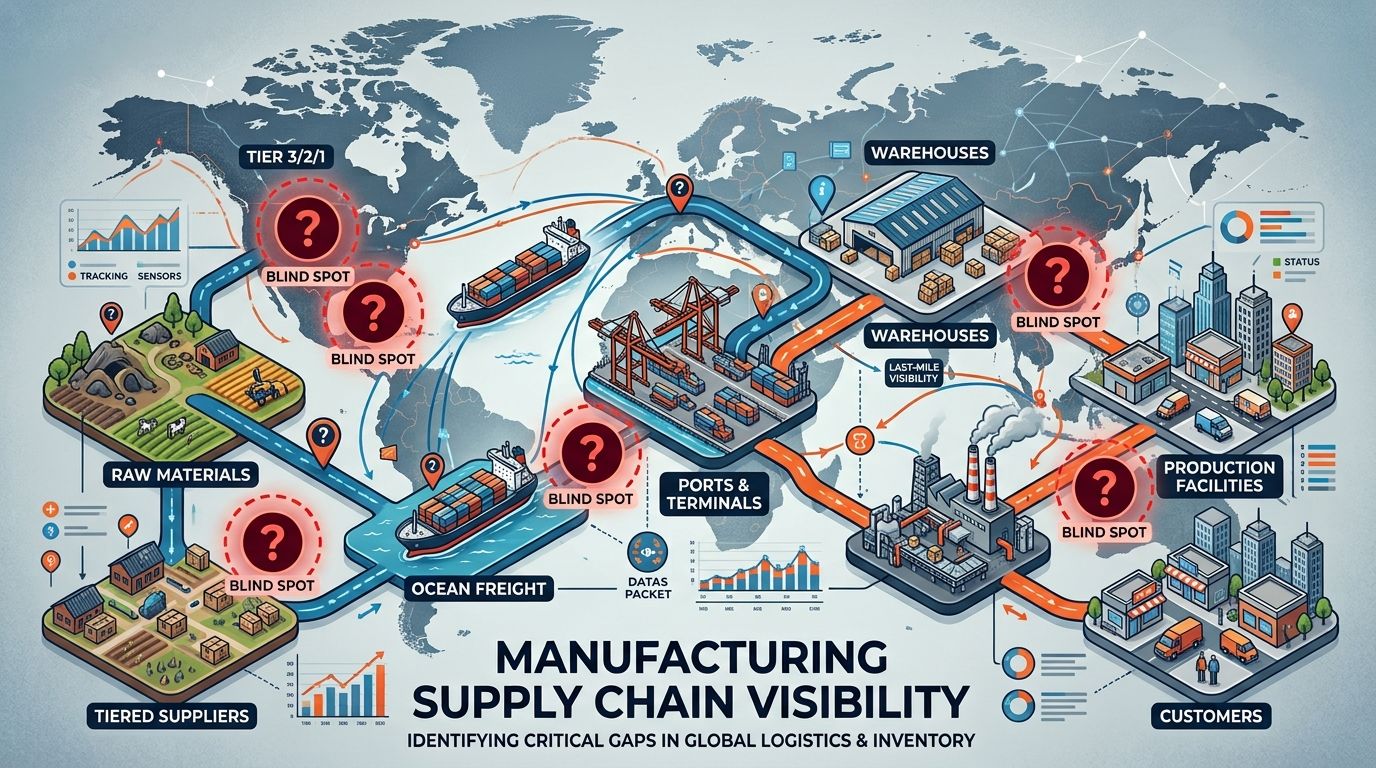
Where Manufacturing Supply Chains Have Blind Spots
Visibility gaps can occur at almost any stage of the supply chain.
Supplier Transportation
A manufacturer may know when a supplier shipped an order but have limited visibility into its actual transportation progress.
Ocean and Port Operations
International shipments can face vessel delays, port congestion, customs issues, and terminal delays.
Inland Transportation
Once freight reaches a port or distribution facility, trucking or rail delays can create additional uncertainty.
Final Delivery
Manufacturers may also lack real-time visibility into the final movement of components or finished products.
When these stages operate in disconnected systems, it becomes difficult to see the complete picture.
From Reactive to Predictive Manufacturing Logistics
Traditional visibility often tells teams what has already happened. Modern visibility can go further. Predictive analytics can help identify shipments that are likely to arrive late, allowing manufacturers to investigate alternatives before the disruption affects production. For example, if a critical component is projected to arrive several days late, a manufacturer may have time to:
- Adjust production schedules
- Contact the supplier
- Expedite transportation
- Find alternative inventory
- Prioritize available materials
- Communicate with customers
Visibility creates time, and time creates options.
What Should Manufacturers Monitor?
An effective supply chain visibility strategy should connect information across key transportation stages. Manufacturers should monitor:
- Supplier shipments
- Purchase orders
- Container movements
- Vessel and port activity
- Inland transportation
- Shipment milestones
- Predictive ETAs
- Transportation exceptions
- Carrier performance
The objective isn't simply to collect more information. It's to connect the information that affects production and customer commitments.
How SupplySense 360 Helps Manufacturers
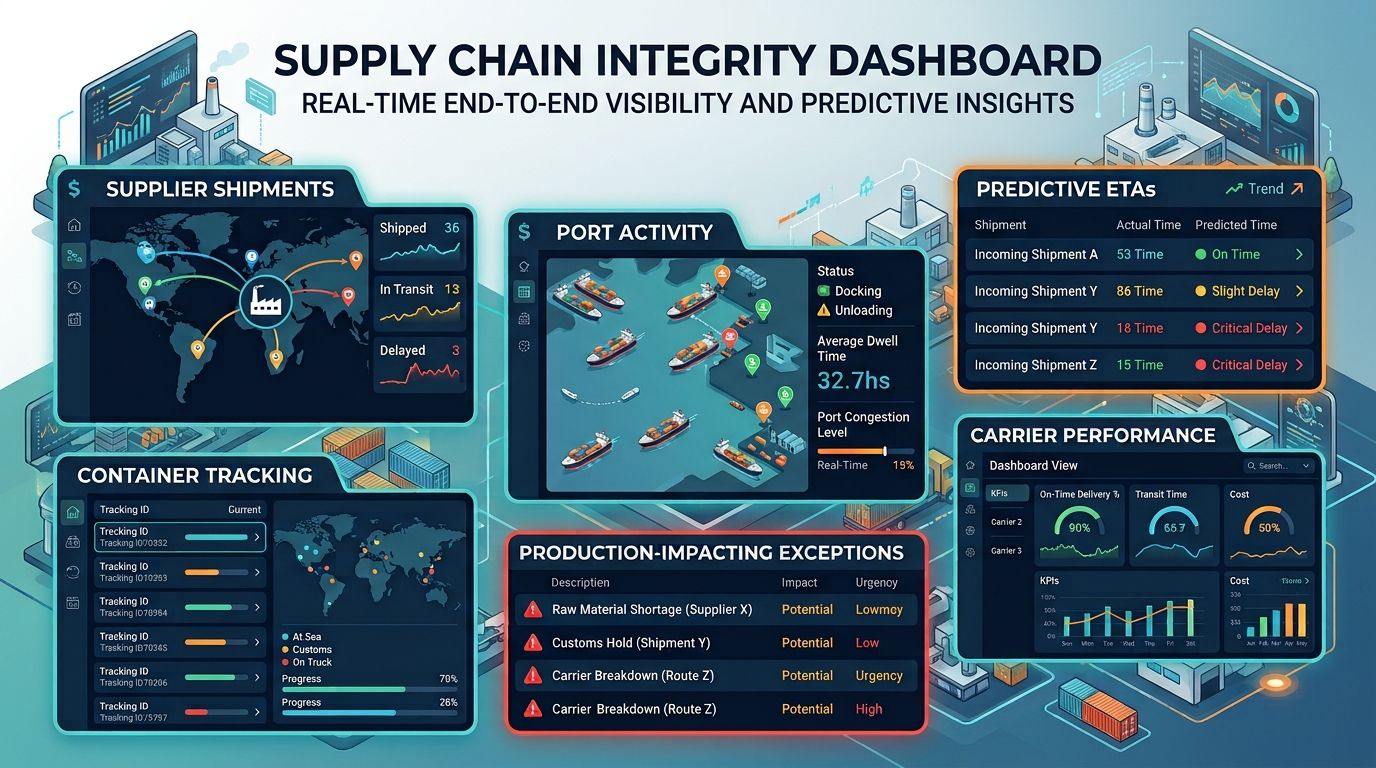 SupplySense 360 gives manufacturers a centralized view of transportation activity across their supply chain.
Key capabilities include:
- Real-time shipment tracking
- Predictive ETA updates
- Ocean and inland freight visibility
- Shipment exception management
- Carrier performance analytics
- Control tower dashboards
- End-to-end supply chain visibility
Visibility Is More Than Tracking
A shipment tracking system can tell you where freight is. A supply chain visibility platform should help you understand what that location means for the business. For manufacturers, that means connecting transportation events to inventory, production schedules, customer commitments, and operational decisions. That's where visibility becomes a strategic advantage rather than simply a tracking tool.
Conclusion
Manufacturers cannot control every disruption in their supply chain. They can, however, improve how quickly they detect and respond to those disruptions. Closing transportation blind spots with real-time data and predictive intelligence can help manufacturers protect production schedules, manage inventory more effectively, and respond to changing conditions with greater confidence.