
API vs. EDI: Choosing the Right Integration Method for Your Supply Chain
Compare API and EDI integration methods for supply chain operations and learn how to choose the right approach for exchanging shipment, order, and logistics data


Modern supply chains depend on information moving between shippers, carriers, freight forwarders, brokers, warehouses, and technology platforms. Two of the most common methods for exchanging this information are APIs (Application Programming Interfaces) and EDI (Electronic Data Interchange). Both can automate data exchange, but they work differently. Choosing the right approach depends on your systems, trading partners, data requirements, and long-term integration strategy.
What Is EDI?
EDI allows businesses to exchange standardized electronic documents between systems. Instead of manually sending documents such as purchase orders, shipment updates, invoices, or advance ship notices, EDI enables structured information to move automatically between connected organizations. EDI remains widely used in supply chain and logistics because many large companies and transportation providers already have established EDI requirements. Common EDI transactions include:
- Purchase orders
- Shipment status updates
- Advance Ship Notices (ASNs)
- Invoices
- Shipment confirmations
- Inventory information
What Is an API?
An API enables different software applications to communicate directly and exchange data. APIs can support flexible and frequently updated interactions between systems. For example, a logistics platform can use an API to retrieve shipment status information from a carrier and make that information available to users in near real time. APIs are commonly used for:
- Real-time shipment tracking
- Rate and quote requests
- Order management
- Location updates
- Automated status synchronization
- Application-to-application communication
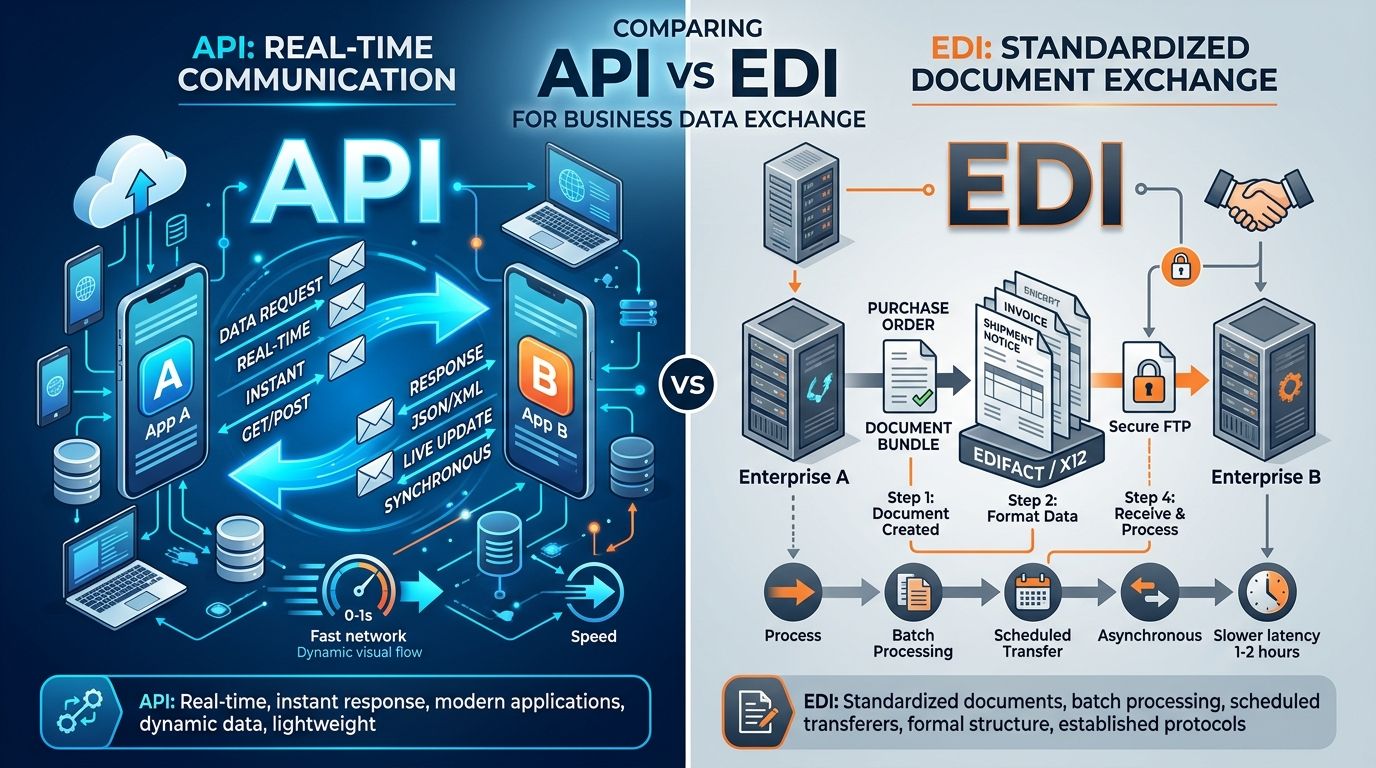
API vs. EDI: What's the Difference?
| Factor | API | EDI |
|---|---|---|
| Data exchange | Application-to-application | Structured business documents |
| Speed | Often near real time | Often batch or scheduled |
| Flexibility | Highly flexible | More standardized |
| Integration | Modern software ecosystems | Established trading networks |
| Best suited for | Dynamic data and applications | Structured transactions |
| Adoption | Growing across modern platforms | Widely established in supply chains |
| Neither approach is universally better. The right choice depends on the operational environment and the systems that need to communicate. | ||
 |
Should You Choose API or EDI?
Choose API When Real-Time Data Matters
APIs are particularly useful when businesses need continuously updated information. For shipment visibility, API integrations can help platforms retrieve tracking events, location information, estimated arrival updates, and other operational data without waiting for periodic document exchanges. This makes APIs particularly valuable for applications where speed and data freshness are important.
Choose EDI When Trading Partners Require It
EDI can be the practical choice when customers, carriers, suppliers, or other trading partners already depend on established EDI workflows. Replacing an existing EDI network simply because APIs are newer may introduce unnecessary complexity and cost.
Consider a Hybrid Approach
Businesses do not always have to choose between API and EDI. A supply chain may use APIs for real-time tracking and operational data while continuing to use EDI for standardized commercial transactions. This hybrid approach allows organizations to take advantage of modern connectivity while maintaining compatibility with established trading partners.
Why Integration Matters for Supply Chain Visibility
The value of API and EDI integration goes beyond simply moving information between systems. The real benefit comes from turning fragmented data into a usable operational picture.
When shipment, carrier, order, and transportation information are scattered across different platforms, teams may spend significant time searching for updates and reconciling records.
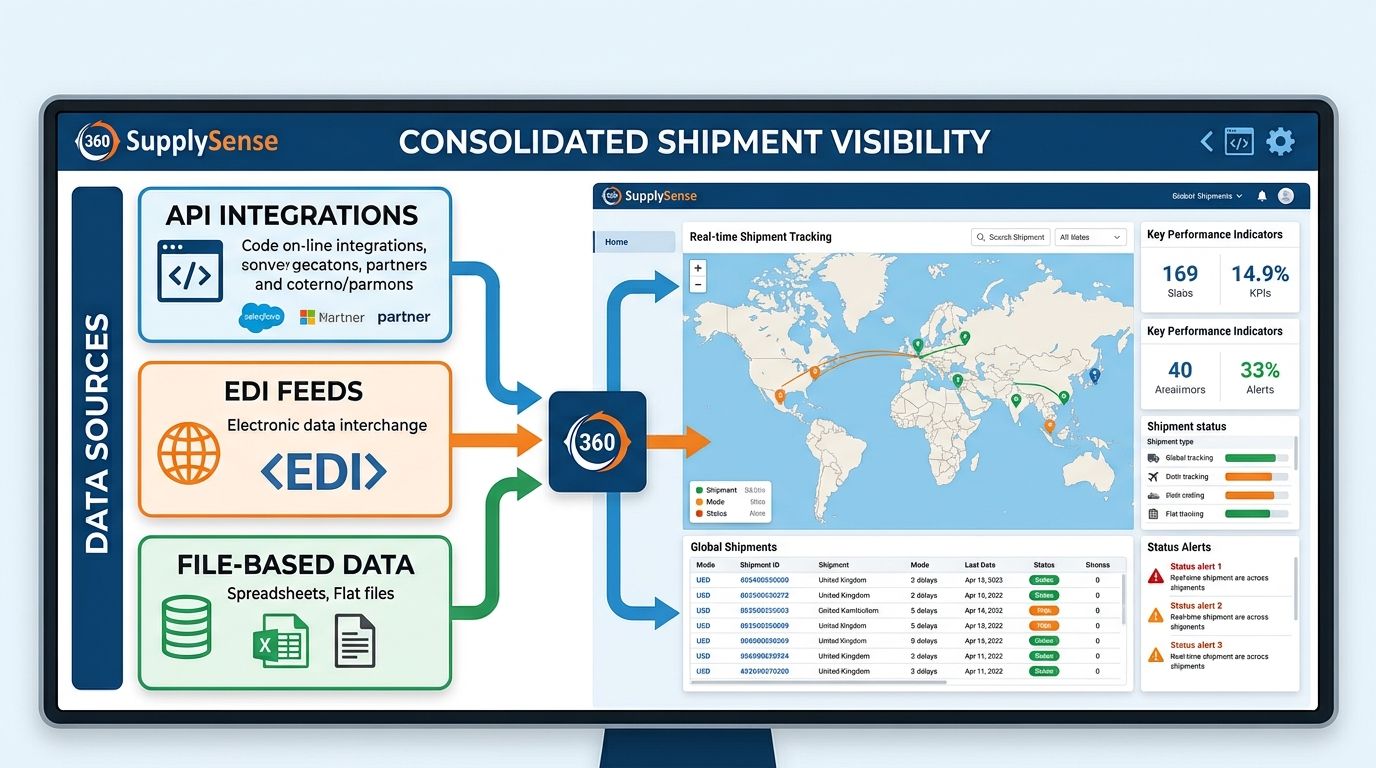
SupplySense 360 supports multiple integration approaches, including API, EDI, and spreadsheet-based data uploads, helping businesses bring information from different systems and trading partners into a centralized supply chain environment.
Key Questions Before Choosing an Integration Method
Before implementing an integration strategy, businesses should consider:
- Do we need real-time or scheduled data?
- What integration methods do our trading partners support?
- What types of information need to be exchanged?
- How frequently does the data change?
- Which systems need to connect?
- How much flexibility will we need as the network grows?
- Can we support both API and EDI where necessary?
Answering these questions can help businesses choose an integration strategy based on actual operational requirements rather than technology trends alone.
Conclusion
API and EDI are not necessarily competing technologies. In many supply chains, they can complement one another. APIs provide flexible, real-time connectivity, while EDI remains valuable for standardized transactions across established trading networks. The strongest integration strategy is often the one that uses each method where it makes the most operational sense. With SupplySense 360, businesses can connect data from multiple sources and bring it into a more unified supply chain visibility environment, helping teams spend less time chasing information and more time acting on it.