
Container-Level vs. Shipment-Level Tracking: What's the Difference?
Understand the difference between container-level and shipment-level tracking, when each approach is useful, and how combining both improves end-to-end supply chain visibility.


Knowing where your freight is sounds simple. But in modern supply chains, a single shipment can involve multiple containers, carriers, transportation modes, and delivery stages. This makes it important to understand exactly what you're tracking. Two common approaches are container-level tracking and shipment-level tracking. Although they are related, they provide different perspectives on transportation activity. Understanding the difference can help logistics teams gain a more complete view of their supply chain.
What Is Container-Level Tracking?
Container-level tracking focuses on the movement and status of a specific shipping container. A container may be identified using information such as its container number and can be tracked through key transportation milestones. For example, teams may monitor whether a container has:
- Been loaded onto a vessel
- Departed from a port
- Arrived at a destination port
- Been discharged
- Cleared the terminal
- Been picked up for inland transportation
Container-level visibility is particularly useful for ocean freight and intermodal transportation.
What Is Shipment-Level Tracking?
Shipment-level tracking focuses on the overall movement of a shipment from origin to destination. Instead of concentrating on one physical container, shipment-level tracking provides a broader view of the transportation journey. A shipment may include:
- Multiple containers
- Several purchase orders
- Different carriers
- Multiple transportation legs
- Transfers between transportation modes
For example, a shipment could move by ocean from Asia to Europe, by truck from the destination port to a distribution center, and then by another carrier to the final customer. Shipment-level tracking helps teams understand the entire journey.
Container vs. Shipment: The Key Difference
The simplest way to think about the difference is:
Container-level tracking answers: "Where is this container? "
Shipment-level tracking answers: "Where is this shipment in its overall journey? "
Both views are valuable.
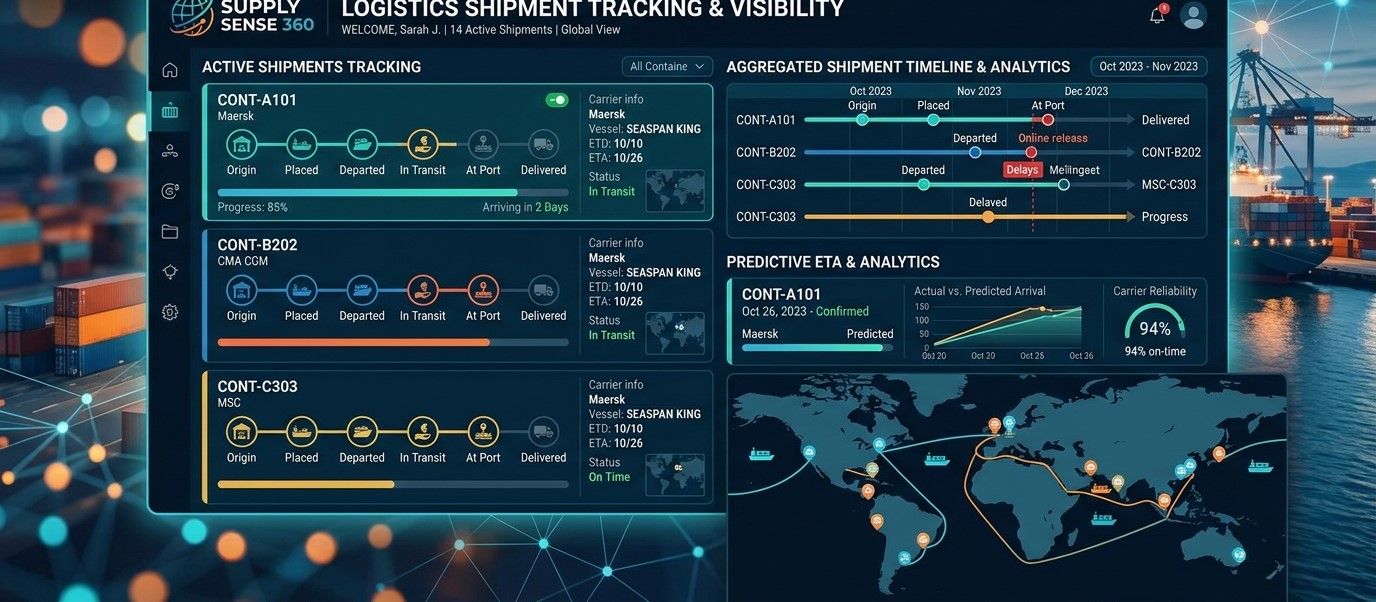
A logistics team may need container-level information to determine whether a particular container has reached a terminal, while shipment-level visibility helps the business understand whether the customer's overall order is on schedule.
Why Businesses Need Both
Relying exclusively on one tracking level can create blind spots. Container tracking provides detailed physical movement information. Shipment tracking provides broader operational context. Combining both can help businesses understand:
- Individual container status
- Overall shipment progress
- Connecting transportation legs
- Changing ETAs
- Delays and exceptions
- Final delivery expectations
This becomes especially important when shipments involve multiple containers or transportation providers.
The Challenge of Connecting the Data
One of the biggest challenges isn't collecting tracking information. It's connecting it. Container information may exist in an ocean carrier system, while inland transportation data sits with a trucking provider. Purchase order and customer information may reside in an ERP or TMS. Without connecting these data points, teams may have detailed information but still lack a complete picture.
How SupplySense 360 Helps
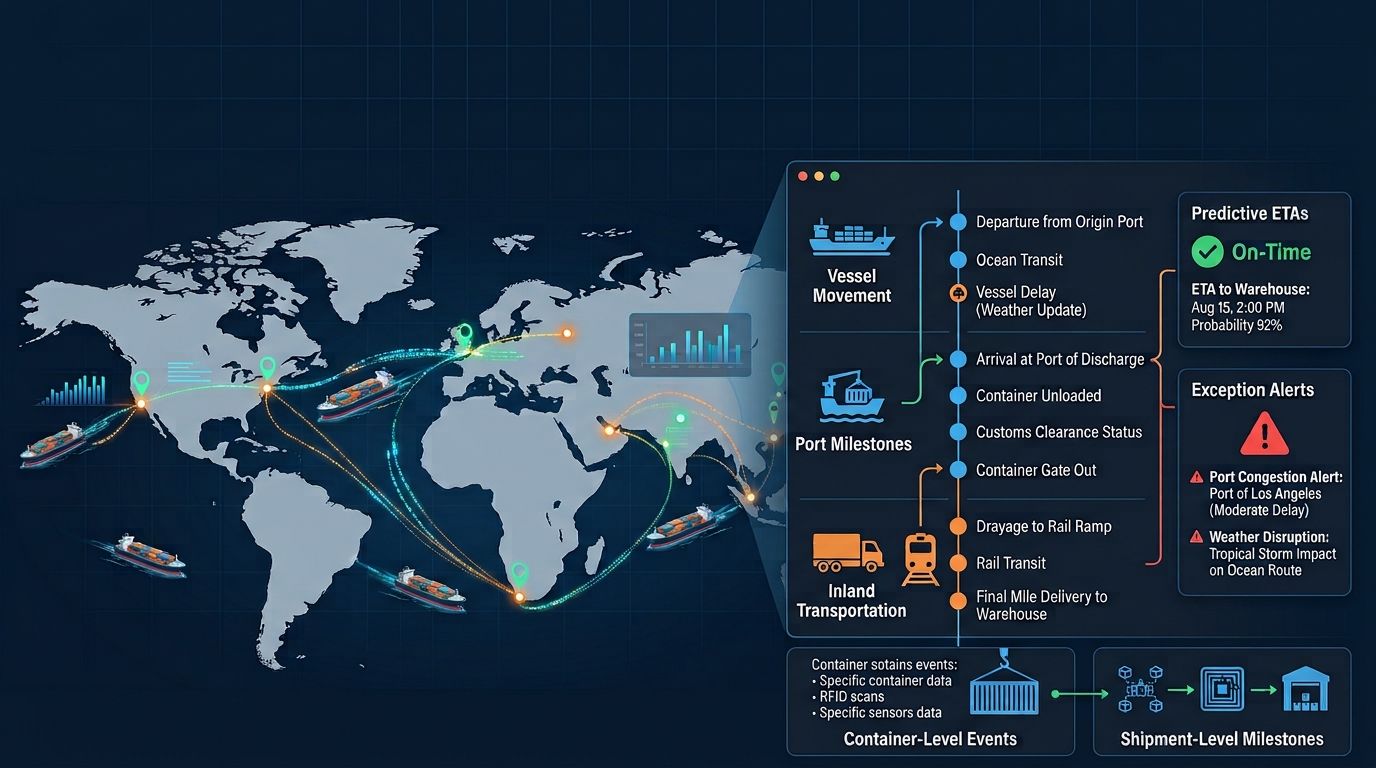 SupplySense 360 helps businesses bring transportation information together through:
- Real-time shipment tracking
- Ocean freight visibility
- Container milestone monitoring
- Predictive ETA updates
- Shipment exception management
- Multi-carrier visibility
- End-to-end supply chain intelligence
By connecting detailed tracking information with the broader shipment journey, businesses can better understand both where freight is and what its current status means for the overall supply chain.
Conclusion
Container-level and shipment-level tracking aren't competing approaches. They answer different questions. Container-level tracking provides granular visibility into individual units of freight, while shipment-level tracking provides the broader context needed to manage the complete transportation journey. For businesses managing complex supply chains, combining both perspectives can create a much clearer picture of transportation performance.