
Customs Bonds Explained: Types and When You Need One
Learn what customs bonds are, the different types of customs bonds, when importers need them, and how they support smoother customs clearance."


Importing goods across international borders involves more than arranging transportation and paying customs duties. In some cases, importers must also provide a customs bond to guarantee that certain financial obligations to customs authorities will be met. For businesses involved in international trade, understanding customs bonds can help prevent clearance delays and ensure that shipments meet applicable requirements.
What Is a Customs Bond?
A customs bond is a financial guarantee between an importer, a surety company, and the relevant customs authority. In the United States, for example, a customs bond provides a guarantee that the importer will comply with applicable customs regulations and pay certain duties, taxes, and fees when required. The bond does not replace customs duties. Instead, it provides financial security that certain obligations will be fulfilled. Customs bonds can be particularly important for businesses that regularly import goods or conduct transactions requiring additional customs security.
When Might an Importer Need a Customs Bond?
Whether a customs bond is required depends on the type of import transaction and applicable customs regulations. Common situations can include:
- Importing commercial goods
- Importing goods subject to specific regulatory requirements
- Using certain customs procedures
- Operating a bonded warehouse
- Conducting temporary importations
- Moving goods under specific customs programs
Common Types of Customs Bonds
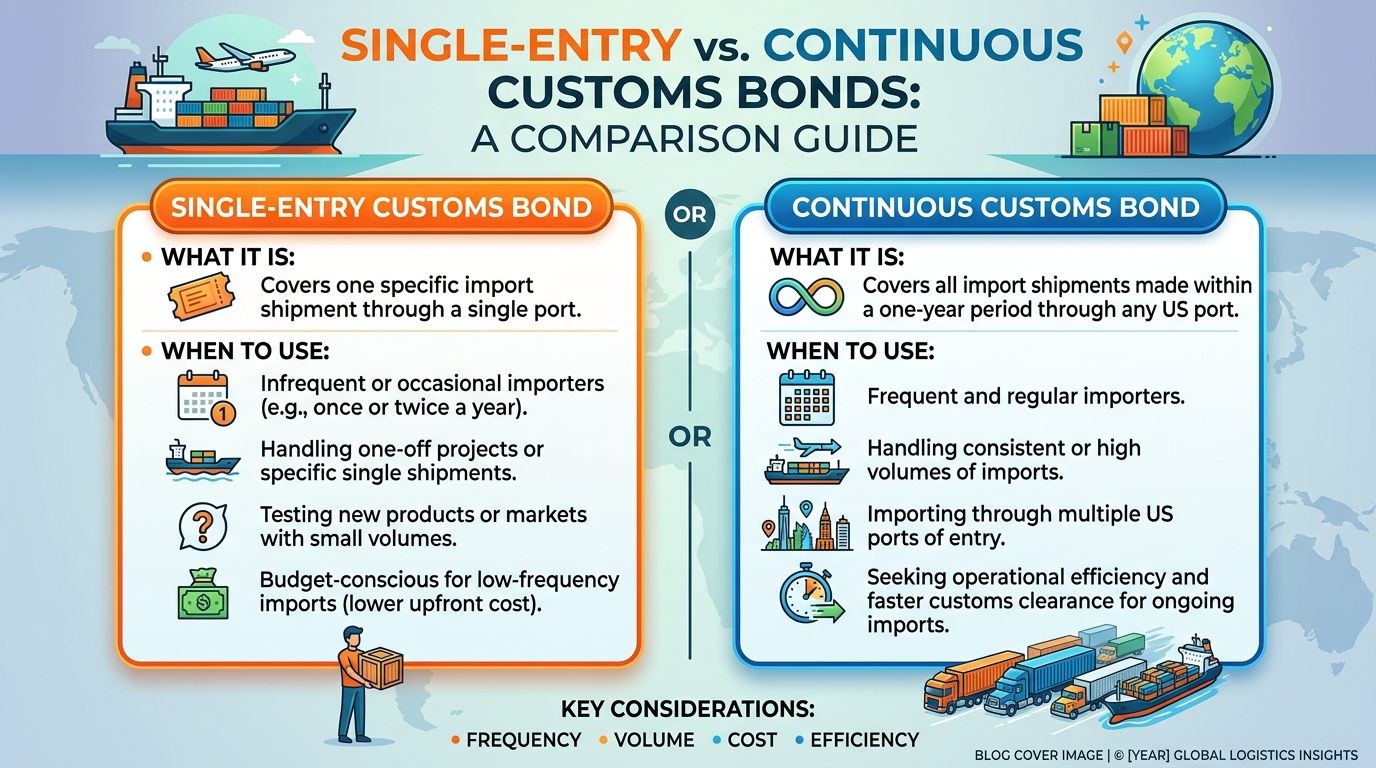
Single Entry Bond
A single entry bond generally covers one specific import transaction. This type may be appropriate for businesses that import occasionally or need coverage for an individual shipment. The amount and requirements depend on the applicable customs rules and the circumstances of the entry.
Continuous Bond
A continuous customs bond provides coverage for multiple import transactions over a specified period. This can be useful for businesses that import frequently because they do not need to arrange a separate bond for every shipment when a continuous bond is appropriate. Continuous bonds can simplify recurring import operations and provide a more consistent customs process.
Other Specialized Bonds
Customs authorities may also require or allow specialized bonds for particular activities. Examples can include bonds associated with:
- Warehousing
- Transportation
- Drawback programs
- Temporary importations
- Other customs procedures
The specific bond requirements depend on the applicable customs regulations and the importer's activities.
How Customs Bonds Support Import Operations
A customs bond can provide customs authorities with financial assurance while helping eligible importers complete certain transactions. For businesses, having the appropriate bond in place can help avoid situations where a shipment is delayed because a required financial guarantee has not been arranged. However, a customs bond is only one part of an effective customs compliance process. Importers also need accurate:
- Product classifications
- Country-of-origin information
- Commercial invoices
- Customs values
- Duty calculations
- Import documentation
Customs Bonds and Supply Chain Planning
Customs requirements can have a direct impact on shipment timing and overall import costs.
A missing or incorrect customs requirement can contribute to delays, additional administrative work, or unexpected expenses.
This is why customs information should be considered alongside transportation and landed cost planning.
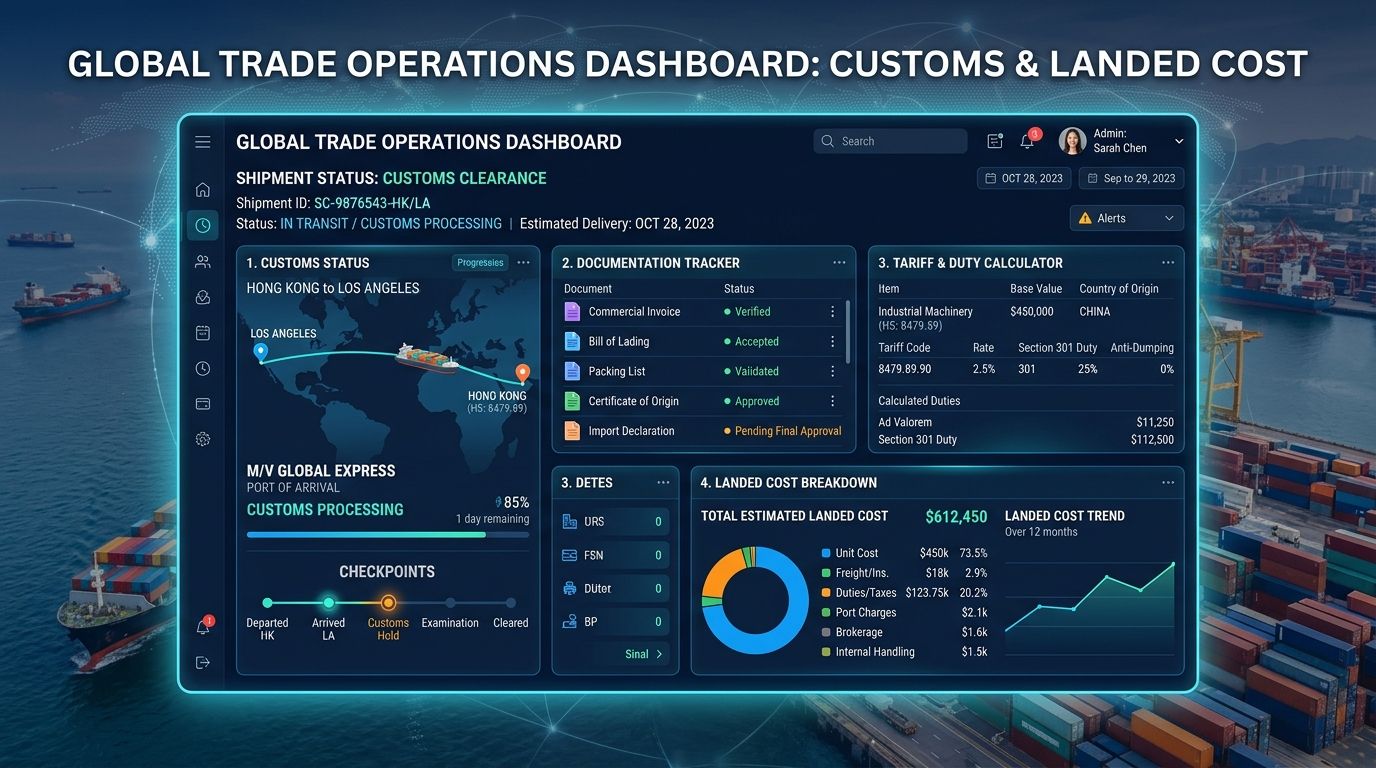
SupplySense 360 helps businesses bring together shipment visibility, trade intelligence, tariff information, and landed cost data to support more informed international logistics decisions.
How to Manage Customs Bond Requirements
Businesses can take several steps to make customs bond management more predictable:
- Determine which shipments or activities require a bond.
- Understand the applicable bond type
- Keep customs documentation accurate.
- Monitor bond requirements as trade activities change.
- Work with qualified customs professionals when necessary.
- Include potential customs-related costs in import planning.
Frequent importers should also review their customs processes periodically to ensure that their arrangements continue to match their business activities.
Conclusion
Customs bonds provide financial assurance that certain customs obligations will be met. For importers, understanding when a bond is required and which type applies can help support smoother customs operations. The specific requirements vary by jurisdiction and transaction, so businesses should always verify the rules applicable to their shipments. By combining customs compliance with accurate shipment and cost visibility, businesses can better manage the complexities of international trade.
Learn more about SupplySense 360's Market Intelligence and supply chain visibility tools.