
Section 301 Tariffs Explained: What Importers Need to Know
Understand Section 301 tariffs, how they affect imported goods, how importers determine applicable duties, and why tariff monitoring matters for landed costs.


Importers moving goods into the United States may encounter several layers of customs duties. One of those layers can come from Section 301 of the Trade Act of 1974. Section 301 provides the United States Trade Representative (USTR) with authority to investigate certain acts, policies, or practices of foreign governments that are considered unreasonable or discriminatory and that burden or restrict U.S. commerce. Section 301 has been used for multiple trade actions. For many importers, the most familiar application involves additional duties on certain products from China. However, Section 301 is not limited to one product or one tariff rate.
What Are Section 301 Tariffs?
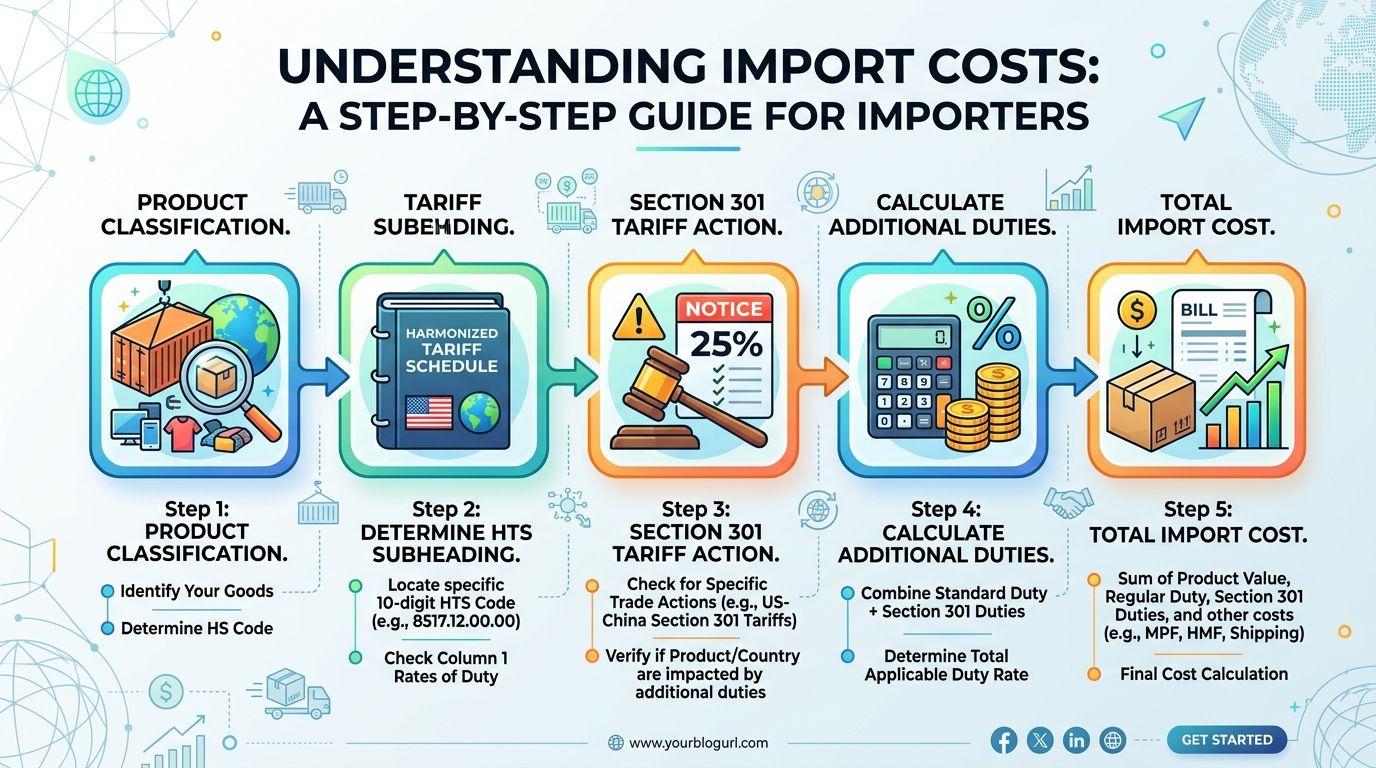
Section 301 tariffs are additional duties imposed under specific Section 301 trade actions. For covered products, these duties may apply in addition to the ordinary customs duty associated with the product's tariff classification. The applicable Section 301 treatment depends on the specific trade action and the product's classification. Importers therefore need to identify the relevant Harmonized Tariff Schedule (HTS) classification before determining whether additional duties apply.
How Do Importers Know If a Product Is Covered?
The first step is identifying the correct HTS classification for the imported product. Products subject to Section 301 actions are identified through specific HTS subheadings. Importers can use the applicable classification to determine whether a product falls under a Section 301 action and whether an additional duty applies. This makes accurate product classification particularly important. An incorrect classification can result in incorrect duty calculations and may create customs compliance issues.
Section 301 and China Imports
The U.S. Section 301 framework covering certain Chinese imports has included multiple tariff actions, commonly referred to as List 1, List 2, List 3, and List 4, along with subsequent modifications and exclusion processes.
The product coverage and applicable rates can differ between these actions. Importers should therefore avoid assuming that every product imported from China is subject to the same Section 301 duty rate.
Instead, businesses should determine the applicable treatment based on the product's HTS classification and the current Section 301 tariff action.
What Are Section 301 Exclusions?
In certain circumstances, specific products may receive exclusions from Section 301 additional duties. These exclusions can have expiration dates and may be extended, modified, or allowed to expire through subsequent trade policy actions. Because exclusion status can change, importers should verify whether an exclusion is currently applicable rather than relying on an older classification or previous shipment.
How Section 301 Tariffs Affect Landed Cost
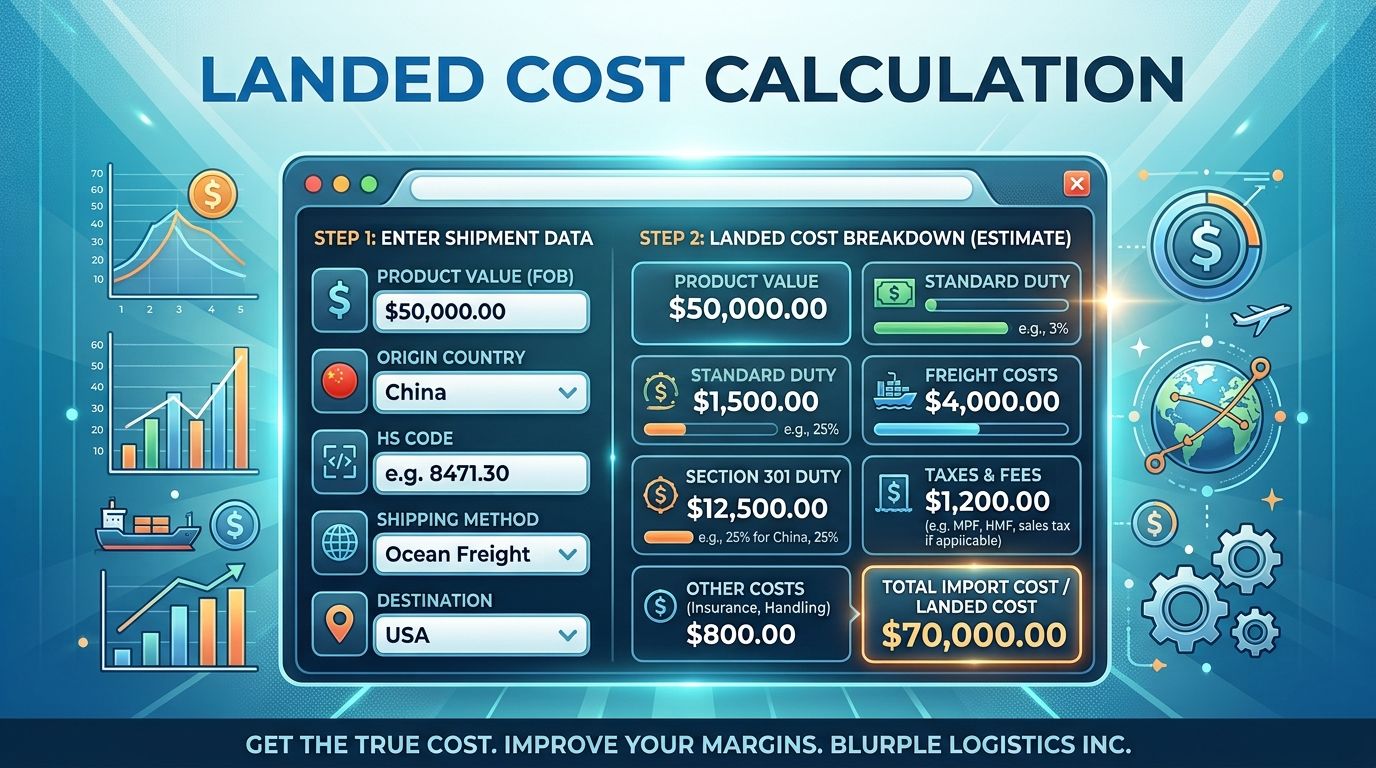
Additional duties can have a direct impact on the total cost of imported goods. An importer's total cost may include:
- Product cost
- Freight
- Insurance
- Standard customs duty
- Section 301 additional duty
- Other applicable fees and charges
If an applicable additional duty is excluded from the initial calculation, the expected landed cost may be understated.
How Importers Can Manage Section 301 Risk
Businesses importing potentially affected products should regularly:
- Verify HTS classifications.
- Check current Section 301 product coverage.
- Monitor applicable duty rates.
- Review exclusion expiration dates.
- Track changes to U.S. trade actions.
- Include applicable additional duties in landed cost calculations
- Maintain accurate import documentation.
Section 301 Tariffs and Supply Chain Planning
Tariffs are not only a customs issue. Changes in import duties can influence sourcing decisions, supplier costs, product pricing, and overall supply chain planning. SupplySense 360's Market Intelligence capabilities can help businesses connect tariff information with HTS classification and landed cost analysis. By bringing these elements together, importers can gain a clearer view of how tariff requirements may affect the total cost of moving products across borders.
Conclusion
Section 301 tariffs can add another layer of complexity to U.S. import costs. The applicable treatment depends on the specific Section 301 action, product classification, and any applicable exclusions or modifications. For importers, maintaining accurate HTS classifications and monitoring current tariff requirements are important for reliable cost planning and customs compliance.
Learn more about SupplySense 360's Market Intelligence and Landed Cost tools.