
What Is a Tariff Schedule, and How Do Duty Rates Get Set?
Learn what a tariff schedule is, how customs duty rates are determined, and why tariff classification matters for accurate landed costs and international trade.


When goods cross international borders, importers need to know more than the purchase price. Customs duties and tariffs can significantly affect the final cost of a shipment. This is where a tariff schedule becomes important. A tariff schedule is a structured listing of products and the customs duty rates that apply when those products are imported into a country. Understanding how tariff schedules work can help businesses estimate costs, classify products correctly, and avoid unexpected charges.
What Is a Tariff Schedule?
A tariff schedule is an official reference that lists products imported into a country along with the applicable duty rates and trade requirements. Products are generally identified using Harmonized System (HS) codes, which provide a standardized classification system for traded goods. Individual countries may then extend these classifications through their own tariff schedules and national tariff codes. A tariff schedule can contain information such as:
- Product or commodity descriptions
- HS or tariff classification codes
- Standard duty rates
- Preferential rates under trade agreements
- Additional tariffs or trade measures
- Quotas or special requirements
- Country-specific treatment
How Are Duty Rates Determined?
Duty rates are established through a country's customs and trade framework. Several factors can influence the rate that applies to a particular shipment.
1. Product Classification
The type, material, function, and characteristics of a product can determine its tariff classification. Different classifications can carry significantly different duty rates. This makes accurate HS or tariff classification an important part of customs compliance and cost management.
2. Country of Origin
The country where a product originates can affect the applicable duty rate. Trade agreements may provide reduced or zero-duty rates for qualifying goods from participating countries. Importers therefore need to consider both the product classification and its country of origin when estimating duties.
3. Trade Policies
Governments can introduce or modify tariffs as part of broader economic and trade policies. These changes can increase or reduce the cost of importing specific products.
4. Special Trade Measures
Some products may be subject to additional measures such as anti-dumping duties, quotas, safeguards, or other trade restrictions. As a result, the standard tariff rate may not always represent the complete duty burden for an imported product.
Why Tariff Schedules Matter to Supply Chain Costs
Tariffs directly influence the landed cost of imported products. For example, a company may calculate an import cost using the supplier's price and freight charges while overlooking applicable customs duties. Once the shipment arrives, the additional duty can make the actual cost significantly higher than expected. Accurate tariff information helps businesses:
- Build more reliable landed cost estimates.
- Compare international suppliers.
- Improve pricing decisions.
- Budget for import expenses
- Identify potential cost-saving opportunities.
- Reduce customs compliance risks
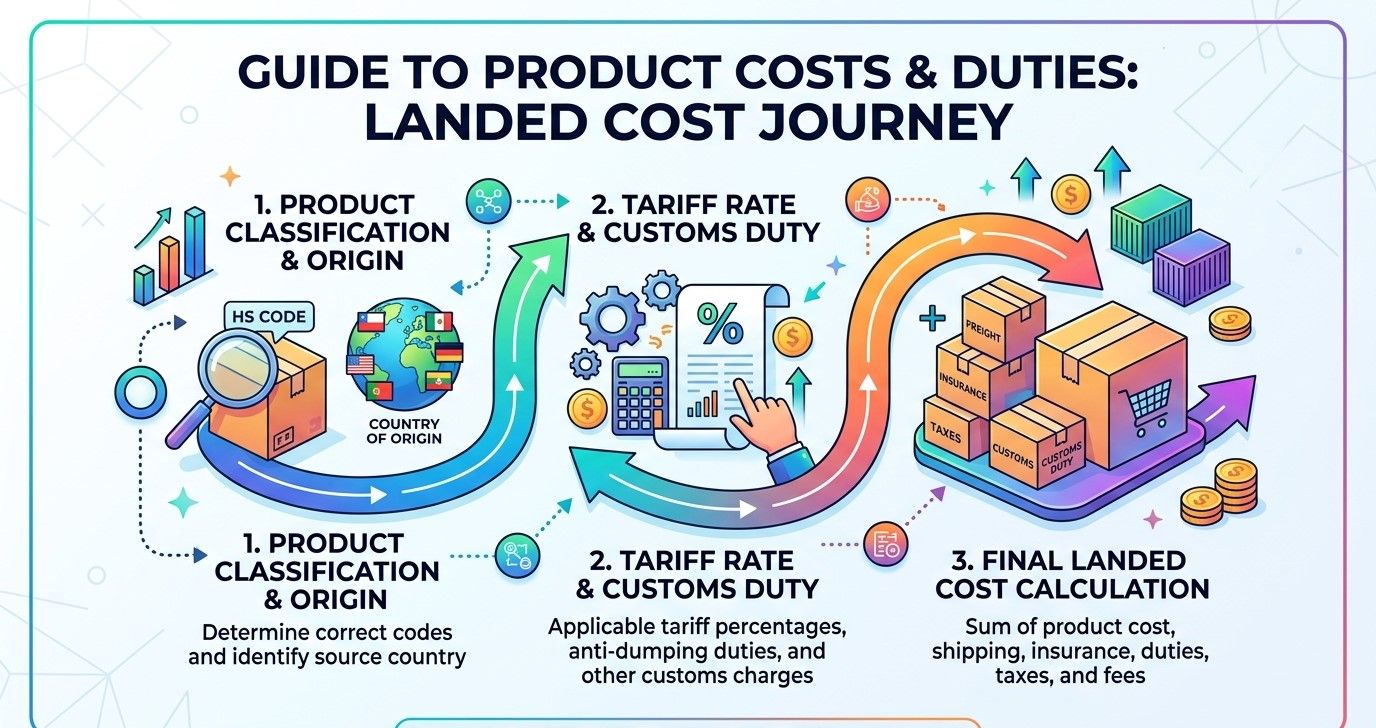
Tariff Schedules and Landed Cost Intelligence
Tariff information becomes more useful when combined with other costs associated with importing goods, including freight, insurance, handling, taxes, and fees.
SupplySense 360's market intelligence capabilities help businesses evaluate these factors together through tools such as HTS classification, tariff information, and landed cost analysis.
Instead of looking at customs duties as an isolated expense, businesses can incorporate them into a broader view of the total cost of moving goods across borders.

How Businesses Can Manage Tariff Changes
Tariff schedules and trade policies can change over time. Relying on outdated tariff information can therefore lead to inaccurate cost estimates and unexpected expenses. Businesses should:
- Maintain accurate product classifications.
- Monitor tariff and trade policy updates.
- Verify country-of-origin information.
- Include duties in landed cost calculations.
- Review supplier and sourcing strategies when rates change.
- Work with qualified customs professionals when classifications are complex.
Conclusion
A tariff schedule provides the foundation for understanding the customs duties that may apply to imported goods. By combining accurate product classification with current tariff information and landed cost analysis, businesses can make better sourcing, pricing, and supply chain decisions. For companies managing international shipments, SupplySense 360 can help turn tariff and trade data into actionable cost intelligence.
Learn more about SupplySense 360's Market Intelligence tools.