
Free Trade Agreements 101: How FTAs Affect Your Landed Costs
Learn how free trade agreements affect tariffs, duties, and landed costs, and how businesses can use FTA benefits to reduce import expenses and improve supply chain planning.


International trade involves more than the price you pay a supplier. When goods cross borders, businesses may also face tariffs, duties, taxes, transportation costs, insurance, and other expenses. Together, these costs contribute to the landed cost of imported goods. One factor that can significantly change that calculation is a Free Trade Agreement (FTA). Understanding how FTAs work can help businesses identify potential savings and make better sourcing and logistics decisions.
What Is a Free Trade Agreement?
A Free Trade Agreement (FTA) is an agreement between two or more countries designed to make trade between them easier. FTAs can reduce or eliminate certain tariffs and may establish rules governing areas such as:
- Import duties
- Rules of origin
- Customs procedures
- Trade documentation
- Market access
- Certain regulatory requirements
The benefits depend on the specific agreement, products involved, and whether the shipment meets the agreement's requirements.
How Do FTAs Affect Landed Costs?
Landed cost represents the total cost associated with getting a product from its origin to its final destination. It can include:
- Product purchase price
- Freight
- Insurance
- Customs duties
- Tariffs
- Taxes
- Handling and brokerage fees
- Other import-related expenses
When an FTA reduces or eliminates an applicable tariff, the customs portion of the landed cost can decrease. For businesses importing large volumes, even a small reduction in duty rates can have a significant financial impact.
Rules of Origin Matter
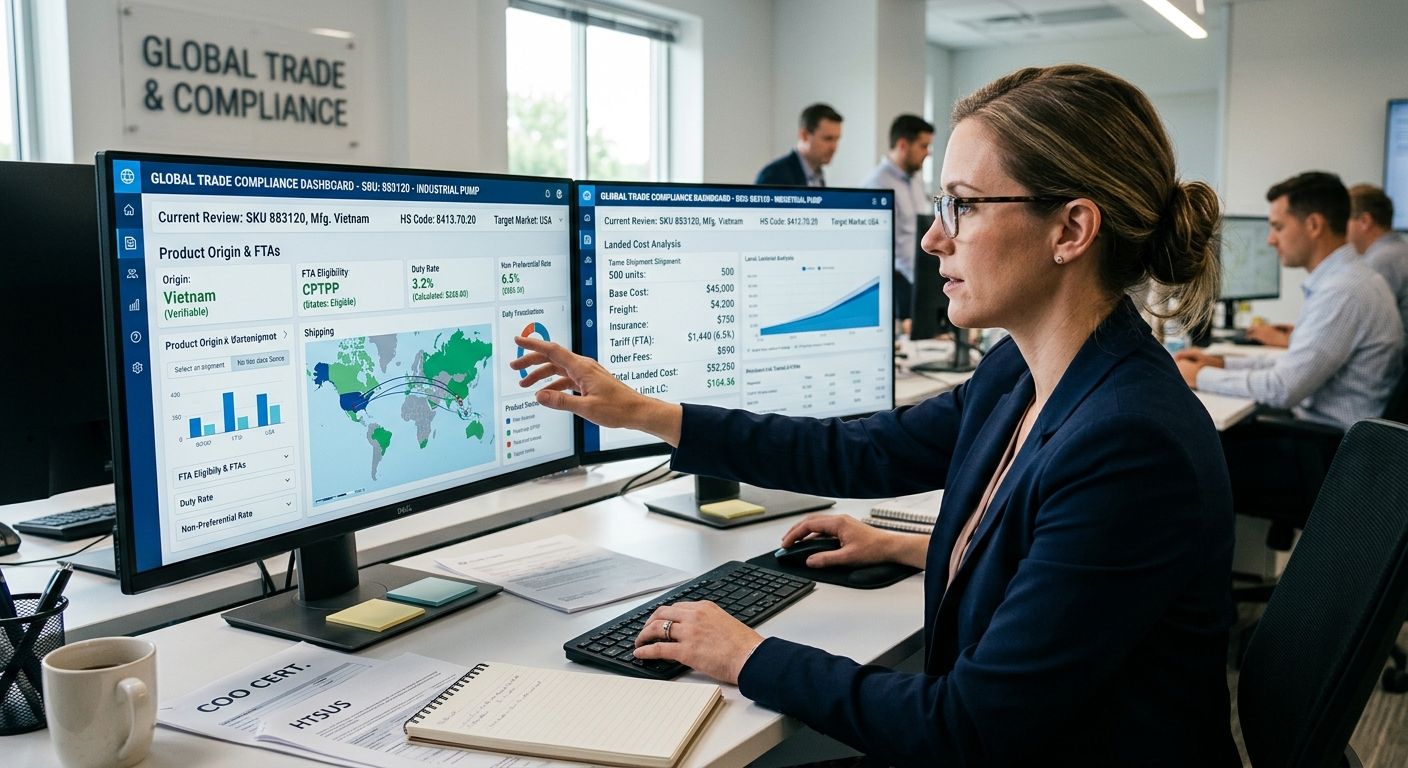
One of the most important parts of an FTA is its rules of origin. A product doesn't necessarily qualify for preferential treatment simply because it was shipped from an FTA member country.
Depending on the agreement, the product may need to meet specific requirements concerning where it was manufactured, processed, or where its components originated. This makes accurate product and supplier information essential.
Common FTA Mistakes
Businesses can miss potential savings or create compliance risks when they:
- Assume every imported product qualifies
- Ignore rules of origin
- Use outdated tariff information
- Maintain inaccurate product classifications
- Fail to retain supporting documentation
- Calculate landed costs without considering preferential tariff treatment
FTA benefits should be evaluated alongside proper customs and classification processes.
How FTAs Can Support Better Sourcing Decisions
FTAs can influence more than customs compliance. They can also affect sourcing strategy. For example, if two suppliers offer similar products at similar prices, but goods from one sourcing location qualify for preferential tariff treatment, the total landed cost may be significantly different. Looking only at the supplier's quoted price could therefore lead to the wrong purchasing decision.
How SupplySense 360 Helps Analyze Landed Costs
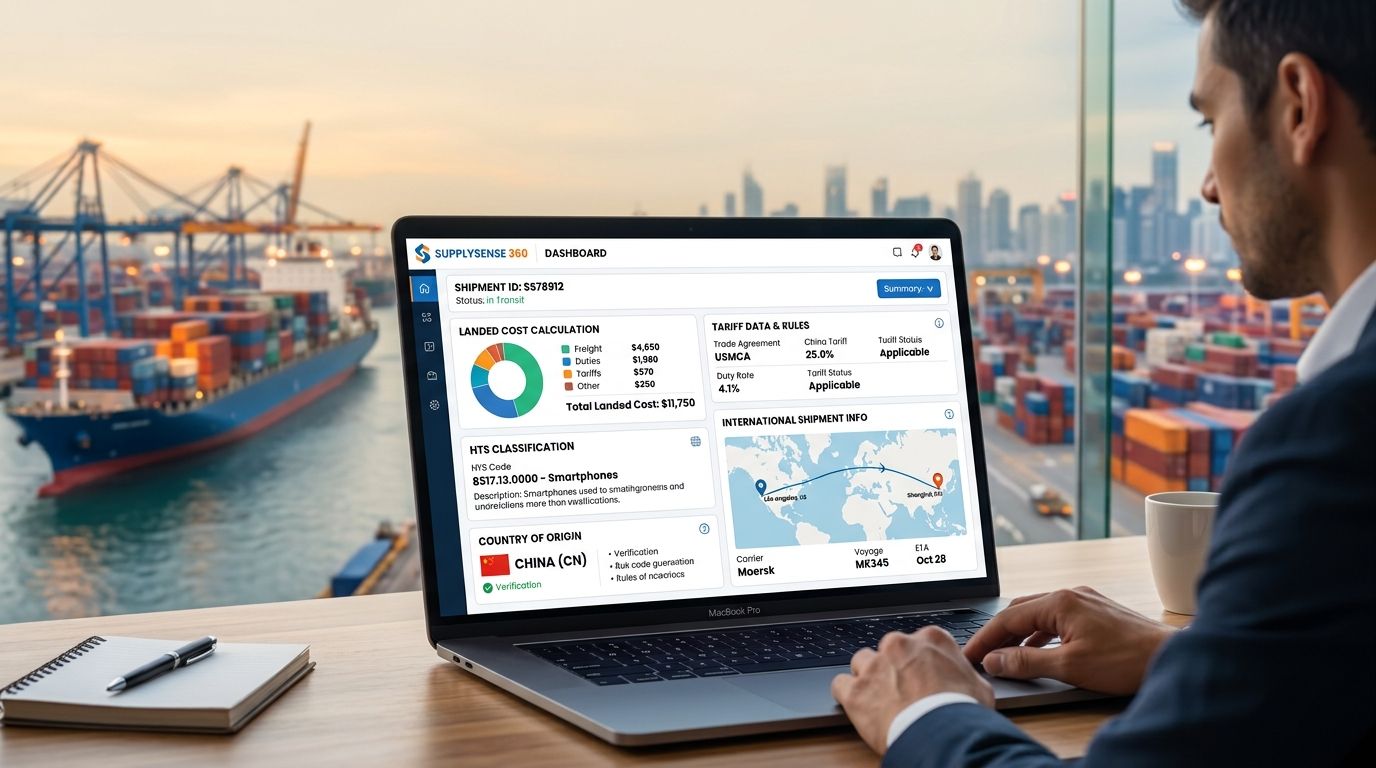 Understanding the financial impact of an FTA requires accurate trade and logistics data.
SupplySense 360 helps businesses connect trade intelligence with supply chain costs through capabilities such as:
Understanding the financial impact of an FTA requires accurate trade and logistics data.
SupplySense 360 helps businesses connect trade intelligence with supply chain costs through capabilities such as:
- Landed cost analysis
- HTS classification
- Tariff data
- Country-of-origin information
- Shipment visibility
- Trade and compliance intelligence
By bringing these factors together, businesses can gain a clearer picture of the true cost of importing products.
Conclusion
Free Trade Agreements can create valuable opportunities to reduce import costs, but those benefits depend on accurate classification, rules-of-origin compliance, and proper documentation. For businesses managing international supply chains, understanding FTAs should be part of a broader landed cost strategy. Learn how SupplySense 360 helps businesses connect tariff intelligence, landed costs, and shipment data to make smarter international sourcing decisions.