
How to Build a Carrier Diversification Strategy
Learn how to build a carrier diversification strategy that reduces transportation risk, improves capacity flexibility, and strengthens supply chain resilience.


Relying heavily on one carrier can make transportation operations easier to manage, but it can also create a significant point of failure. A carrier may experience capacity constraints, equipment shortages, labor disruptions, service issues, or unexpected rate changes. When a large portion of your freight depends on that carrier, a single disruption can quickly affect delivery schedules and customer commitments. A carrier diversification strategy helps businesses reduce this dependency by building a transportation network with multiple qualified carriers.
What Is Carrier Diversification?
Carrier diversification means using multiple transportation providers instead of relying on a single carrier or a very limited carrier network. The goal is not simply to add as many carriers as possible. Instead, businesses should create a balanced network where different carriers provide capacity, geographic coverage, service options, or specialized capabilities. A diversified carrier network may include:
- Multiple carriers across important trade lanes
- Regional and national transportation providers
- Different carriers for different service levels
- Specialized carriers for specific cargo
- Backup carriers for contingency capacity
The right structure depends on a company's shipment volume, geography, products, and transportation requirements.
Why Carrier Diversification Matters
A diversified carrier network can provide greater flexibility when transportation conditions change.
Reduced Carrier Dependency
If one carrier becomes unavailable or cannot provide enough capacity, shipments can potentially be reassigned to another qualified provider.
Greater Capacity Flexibility
Multiple carrier relationships can give shippers more options during periods of high demand or constrained transportation capacity.
Better Rate Visibility
Improved Supply Chain Resilience
Alternative transportation providers can become part of a broader contingency plan when disruptions affect normal operations.
How to Build a Carrier Diversification Strategy
1. Analyze Your Current Carrier Network
Start by understanding how much freight is concentrated with each carrier. Review factors such as:
- Shipment volume
- Freight spend
- Major trade lanes
- Service levels
- Delivery performance
- Capacity utilization
- Accessorial charges
This analysis can reveal areas where the business may have excessive carrier dependency.
2. Identify Critical Shipping Lanes
Not every shipping lane requires the same level of diversification. Prioritize lanes where disruption would have the greatest operational or financial impact. These may include high-volume routes, time-sensitive shipments, or lanes supporting critical customers or facilities.
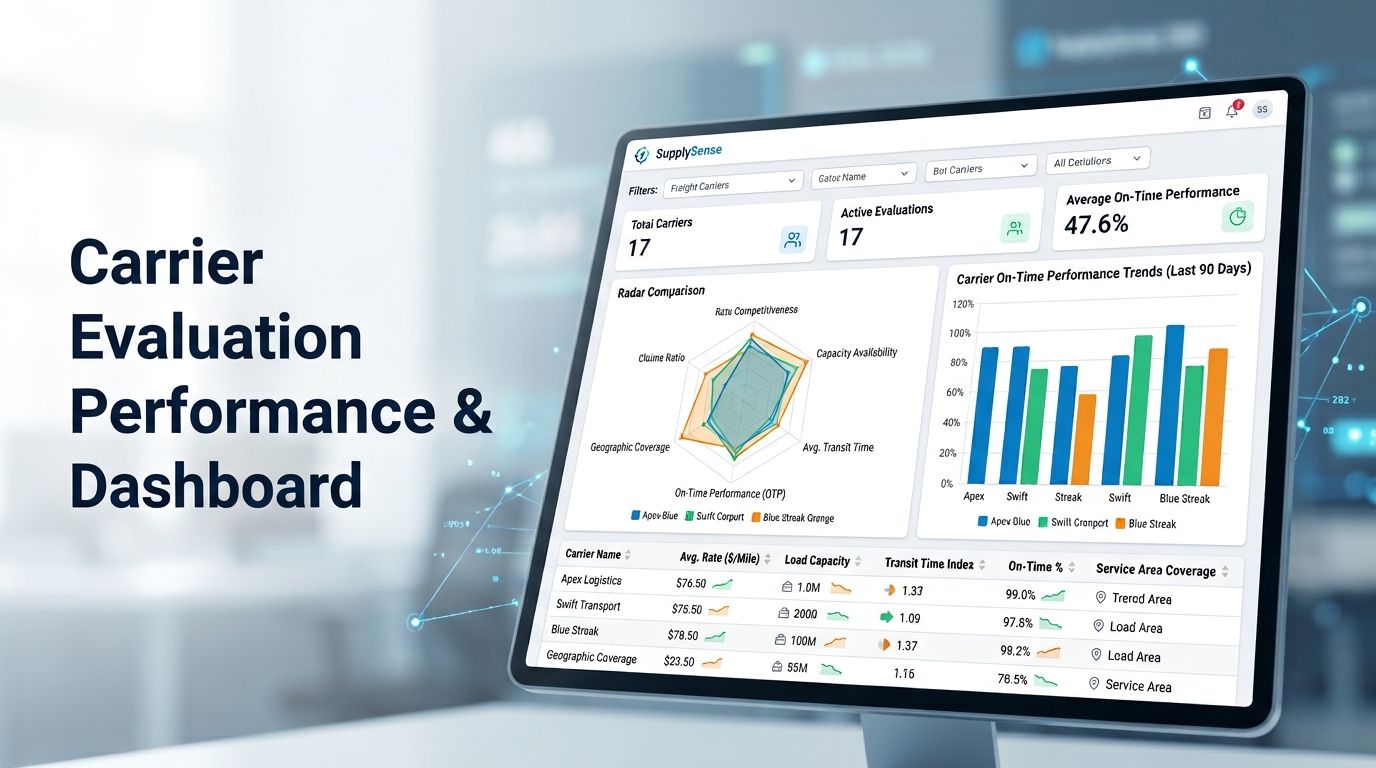
3. Evaluate Alternative Carriers
Look beyond price when evaluating potential transportation providers. Consider:
- Geographic coverage
- Available capacity
- Transit times
- On-time performance
- Equipment availability
- Technology capabilities
- Claims history
- Pricing structure
A lower transportation rate may not provide value if service performance is inconsistent.
4. Establish Primary and Backup Carriers
A practical strategy can assign primary carriers while maintaining qualified alternatives. For example, a business could establish a primary carrier for a major lane while maintaining one or more approved alternatives that can be activated when capacity or service conditions change. This provides flexibility without requiring every carrier to handle an equal share of freight.
5. Monitor Carrier Performance Continuously
Diversification should not end once carrier relationships are established. Track metrics such as:
- On-time pickup
- On-time delivery
- Transit time
- Tender acceptance
- Claims
- Shipment exceptions
- Cost per shipment
- Accessorial charges
Use Data to Strengthen Carrier Decisions
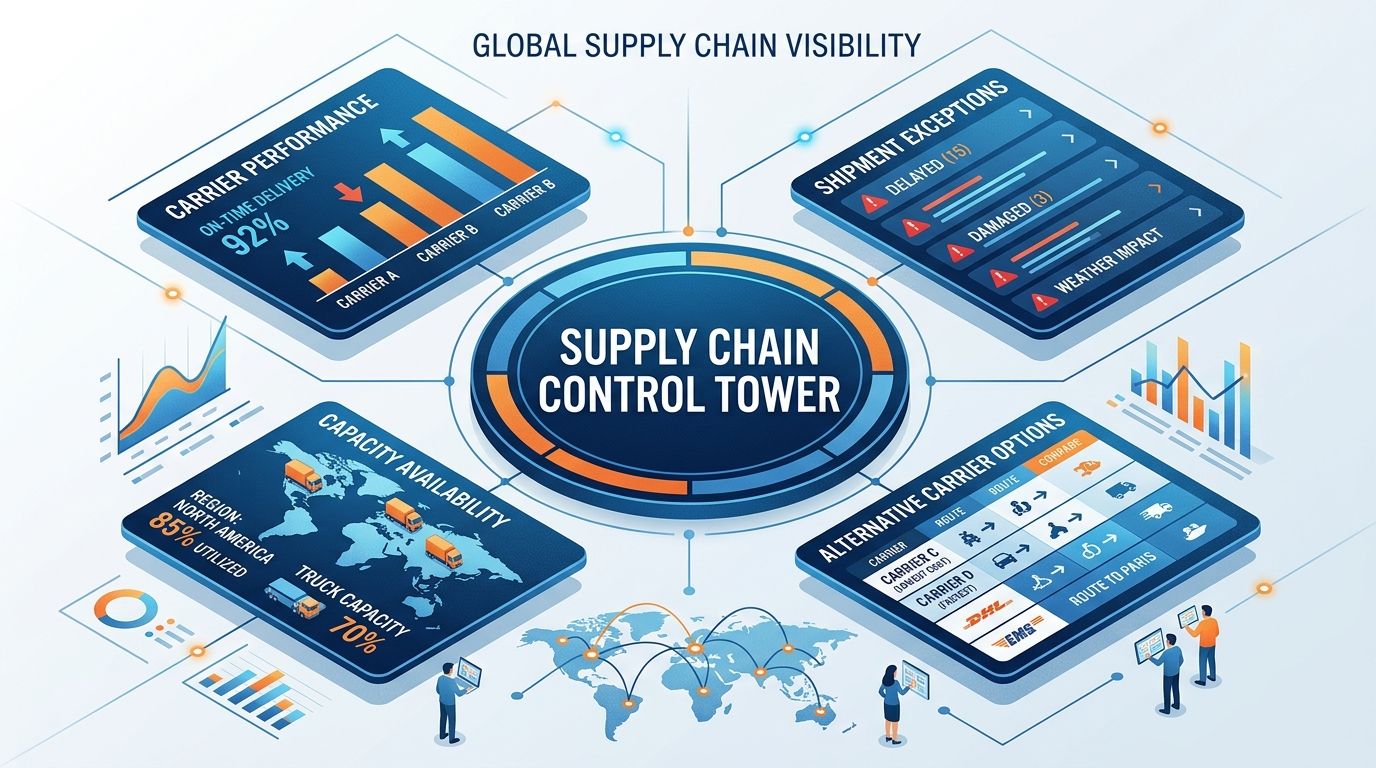
Carrier diversification works best when businesses have visibility into both transportation costs and operational performance. SupplySense 360 can help organizations centralize shipment information, monitor carrier performance, compare transportation rates, and identify shipment exceptions across their logistics network. This gives transportation teams a clearer view of carrier dependency and helps them identify where alternative capacity may be needed.
Conclusion
Carrier diversification is not about using as many carriers as possible. It is about building a transportation network that provides the right balance of cost, capacity, service, and resilience. By analyzing carrier concentration, identifying critical lanes, evaluating alternative providers, and continuously monitoring performance, businesses can create a more flexible transportation strategy.