
Multi-Carrier Rate Shopping: A Practical Guide for Shipper
Learn how multi-carrier rate shopping helps shippers compare freight rates, service levels, and carrier performance to reduce transportation costs and make smarter shipping decisions


Choosing a carrier based on the first available rate is rarely the best way to manage transportation costs. Freight rates can vary significantly between carriers depending on the shipment's origin, destination, weight, dimensions, service level, transportation mode, and delivery requirements. For businesses shipping regularly, multi-carrier rate shopping provides a way to compare available options before making a transportation decision. The goal isn't always to find the cheapest rate. It's to find the best combination of cost, service, reliability, and delivery performance.
What Is Multi-Carrier Rate Shopping?
Multi-carrier rate shopping is the process of comparing transportation rates and service options from multiple carriers for the same shipment. Instead of automatically assigning freight to one carrier, a shipper can evaluate available options based on factors such as:
- Freight rate
- Transit time
- Service level
- Delivery location
- Shipment size and weight
- Carrier availability
- Historical performance
This gives logistics teams more information before selecting a transportation provider.
Why Should Shippers Compare Multiple Carriers?
Using a single carrier for every shipment may appear convenient, but it can limit flexibility. Different carriers may perform better on different lanes or shipment types. One carrier might offer a lower price on a particular route, while another may provide faster transit or more reliable delivery. Multi-carrier rate shopping helps shippers identify those differences.
Potential benefits include:
- Lower transportation costs
- Better carrier utilization
- More competitive freight rates
- Improved service selection
- Greater transportation flexibility
- Better delivery performance
Rate Isn't the Only Factor
The lowest quoted rate isn't necessarily the lowest overall transportation cost.
For example, a carrier with a cheaper rate may have longer transit times or a higher history of delivery exceptions.
A slightly more expensive carrier may provide more reliable service and reduce the risk of late deliveries.
That's why effective rate shopping should consider both price and performance.

How to Build an Effective Rate-Shopping Strategy
1. Compare Like-for-Like Quotes
Make sure carriers are pricing the same shipment requirements.
2. Consider Transit Time
A lower rate may not be worthwhile if it significantly extends delivery time.
3. Evaluate Carrier Performance
Look beyond quoted rates and review historical delivery performance.
4. Consider Accessorial Charges
5. Use Historical Data
Past shipment data can reveal which carriers consistently provide the best combination of price and service.
Automation Makes Rate Shopping Easier
Manually requesting and comparing carrier rates can become difficult as shipment volumes increase. Transportation technology can help automate the process by bringing carrier rates, shipment information, and performance data together. This allows logistics teams to make faster and more informed transportation decisions.
How SupplySense 360 Supports Smarter Transportation Decisions
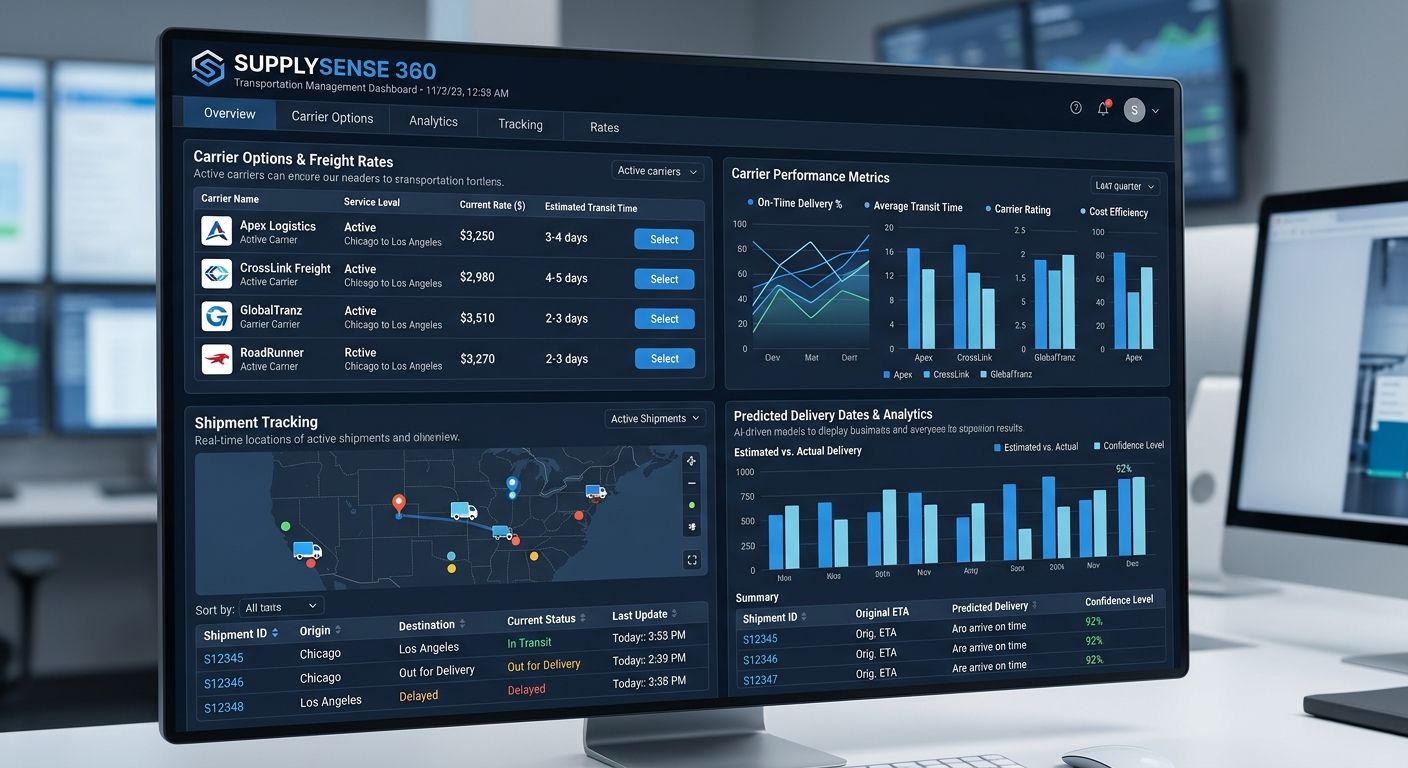 SupplySense 360 helps businesses connect transportation data with broader supply chain intelligence.
With capabilities such as:
- Carrier performance analytics
- Shipment tracking
- Predictive ETA updates
- Transportation visibility
- Freight and cost intelligence
- Exception management
Businesses can evaluate transportation decisions using more than just the quoted freight rate. The result is a more informed approach to carrier selection and transportation management.
Conclusion
Multi-carrier rate shopping isn't simply about finding the lowest freight quote. It's about understanding the trade-off between cost, speed, reliability, and service. By combining rate comparison with carrier performance and real-time shipment intelligence, shippers can make transportation decisions that support both cost control and customer service.