
Is Your Supply Chain Data Ready for AI Agents? A Readiness Checklist
Assess whether your supply chain data is ready for AI agents. Explore data quality, integration, standardization, security, and governance requirements for intelligent logistics automation.


Artificial intelligence is moving beyond answering questions and generating reports. AI agents are increasingly being designed to interpret information, coordinate tasks, recommend actions, and interact with business systems to complete defined workflows. In supply chain management, this could mean identifying a delayed shipment, checking alternative transportation options, preparing a revised delivery recommendation, or escalating an exception to the appropriate team. But there is an important requirement behind these capabilities: reliable data. An AI agent cannot consistently make useful decisions if shipment records are incomplete, supplier information is outdated, or different systems contain conflicting figures. Before introducing AI agents into logistics operations, businesses need to assess whether their underlying data is ready.
What Do AI Agents Need from Supply Chain Data?
AI agents are software systems designed to pursue specific goals by interpreting information and performing tasks within defined permissions. Unlike a conventional dashboard that displays information for a person to interpret, an AI agent may be able to use that information to initiate a workflow or interact with connected applications. For example, an agent monitoring inbound shipments might:
- Identify a shipment that is likely to miss its estimated arrival time.
- Retrieve relevant shipment and purchase order details.
- Check available alternative delivery options.
- Prepare a recommended response.
- Notify a logistics manager or request approval before proceeding.
The Supply Chain AI Readiness Checklist
Use the following checklist to assess your organization's current data environment.
1. Data Quality and Accuracy
AI agents depend on the information they receive. Incorrect or incomplete records can produce unreliable recommendations.
- Shipment records contain accurate reference numbers and status updates.
- Supplier and carrier information is regularly maintained.
- Product descriptions, quantities, and shipment details are consistent.
- Important fields are not frequently missing or duplicated.
- Historical records are sufficiently reliable for analysis.
What to look for: If teams regularly spend time correcting shipment records or reconciling conflicting spreadsheets, data quality needs attention before introducing more autonomous workflows.
2. Data Integration and Accessibility
- Relevant business systems can exchange information.
- APIs, EDI connections, or other integration methods are available where needed.
- AI applications can access authorized data sources.
- Data updates occur frequently enough for the intended workflow.
- System integrations have documented ownership and maintenance procedures.
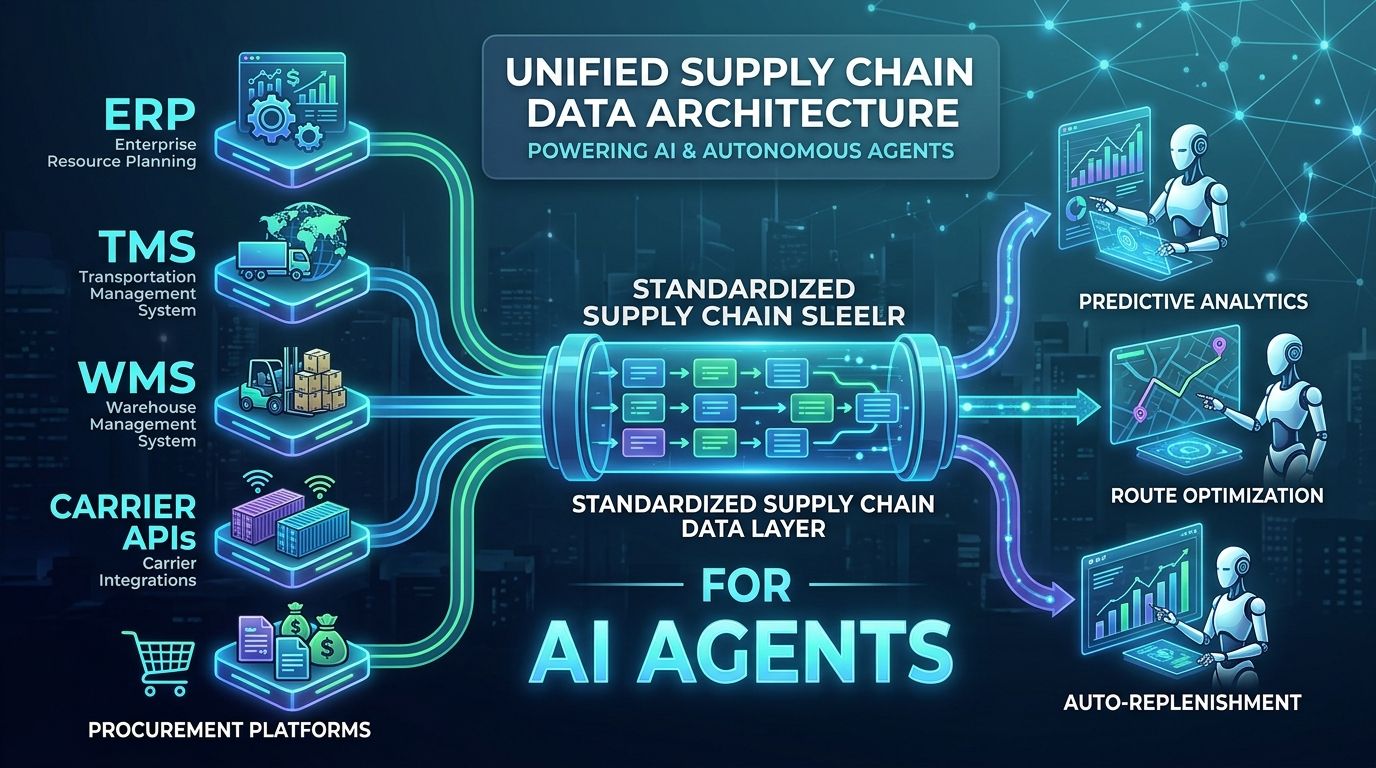
A centralized data environment does not necessarily require replacing every existing application. It requires making relevant information accessible and usable across systems.
3. Data Standardization and Context
Two systems may describe the same shipment differently. One might use a purchase order number, while another relies on a carrier tracking reference. Without consistent identifiers and definitions, an AI agent may struggle to connect related records.
- Shipment identifiers are consistent or can be reliably mapped.
- Units of measurement, currencies, and date formats are standardized.
- Logistics milestones have clearly defined meanings.
- Product and supplier records follow consistent naming conventions.
- Relationships between orders, shipments, invoices, and deliveries can be established.
What to look for: Teams should be able to trace a shipment across relevant systems without manually guessing which records belong together.
4. Data Security and Governance
AI agents may access commercially sensitive information, including supplier contracts, shipment values, customer records, and financial data. Access must therefore be controlled.
- User and system permissions are clearly defined.
- Sensitive information is protected through appropriate security controls.
- Data access can be restricted according to business roles.
- System activities and important agent actions can be audited.
- Data retention and usage policies are documented.
- Approval requirements are defined for sensitive operations.
The NIST AI Risk Management Framework provides guidance for managing risks associated with AI systems, including governance, measurement, and ongoing evaluation.
5. Workflow Readiness and Human Oversight
Even when data is reliable, AI agents need clearly defined instructions and boundaries.
- Repetitive workflows have been documented.
- Business rules and decision criteria are clearly established.
- Tasks requiring human approval have been identified.
- Escalation procedures exist for unusual situations.
- Teams understand how to review and challenge AI recommendations.
- There is a process for monitoring agent performance and correcting errors.
Start with workflows where the process is predictable and the potential consequences of an incorrect action are manageable. For example, an agent might initially prepare shipment status reports or flag missing documents before progressing to more complex tasks such as proposing alternative carriers.
How to Interpret Your Readiness Results
After completing the checklist, review the areas where your organization has the most gaps.
| Readiness area | Signs of readiness | If gaps exist |
|---|---|---|
| Data quality | Accurate and complete records | Clean and validate existing data |
| Integration | Connected, accessible systems | Improve APIs, EDI, and data exchange |
| Standardization | Consistent identifiers and formats | Establish common data definitions |
| Security | Defined permissions and audit controls | Strengthen governance and access policies. |
| Workflows | Documented processes and approval rules | Standardize workflows before automation. |
A business does not need perfect data before experimenting with AI. However, it should understand its limitations and avoid deploying agents into workflows where inaccurate information could create significant financial or operational consequences.
Start with Better Data, Then Introduce More Intelligence
AI agents are only as useful as the information and permissions supporting their decisions.
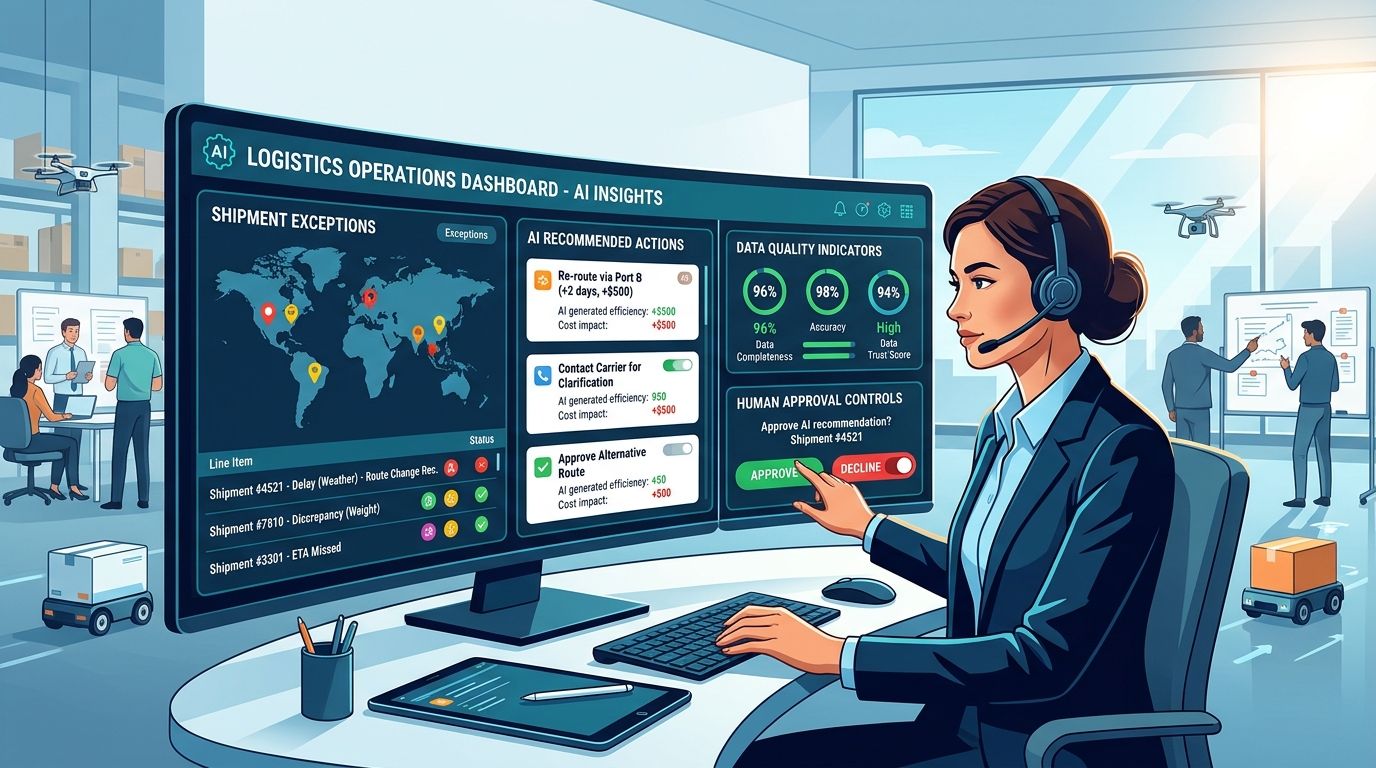 SupplySense 360 focuses on connecting supply chain information through shipment visibility, predictive analytics, integrations, and centralized operational intelligence. This kind of connected data foundation can help businesses improve the quality and accessibility of information used in increasingly intelligent workflows.
The NIST AI Risk Management Framework and NIST Cybersecurity Framework are also useful references when developing governance and security practices around AI-enabled operations.
Conclusion
AI agents may become valuable participants in supply chain operations, but successful adoption begins long before an agent is deployed. Businesses need reliable records, connected systems, consistent data definitions, appropriate security controls, and clearly governed workflows. Rather than automating everything at once, start by identifying one practical use case, assessing the data it requires, and testing it under controlled conditions.