
Single Source of Truth: Why Fragmented Shipment Data Kills Efficiency
Discover how fragmented shipment data creates inefficiencies in logistics and why a single source of truth improves visibility, decision-making, collaboration, and supply chain performance.


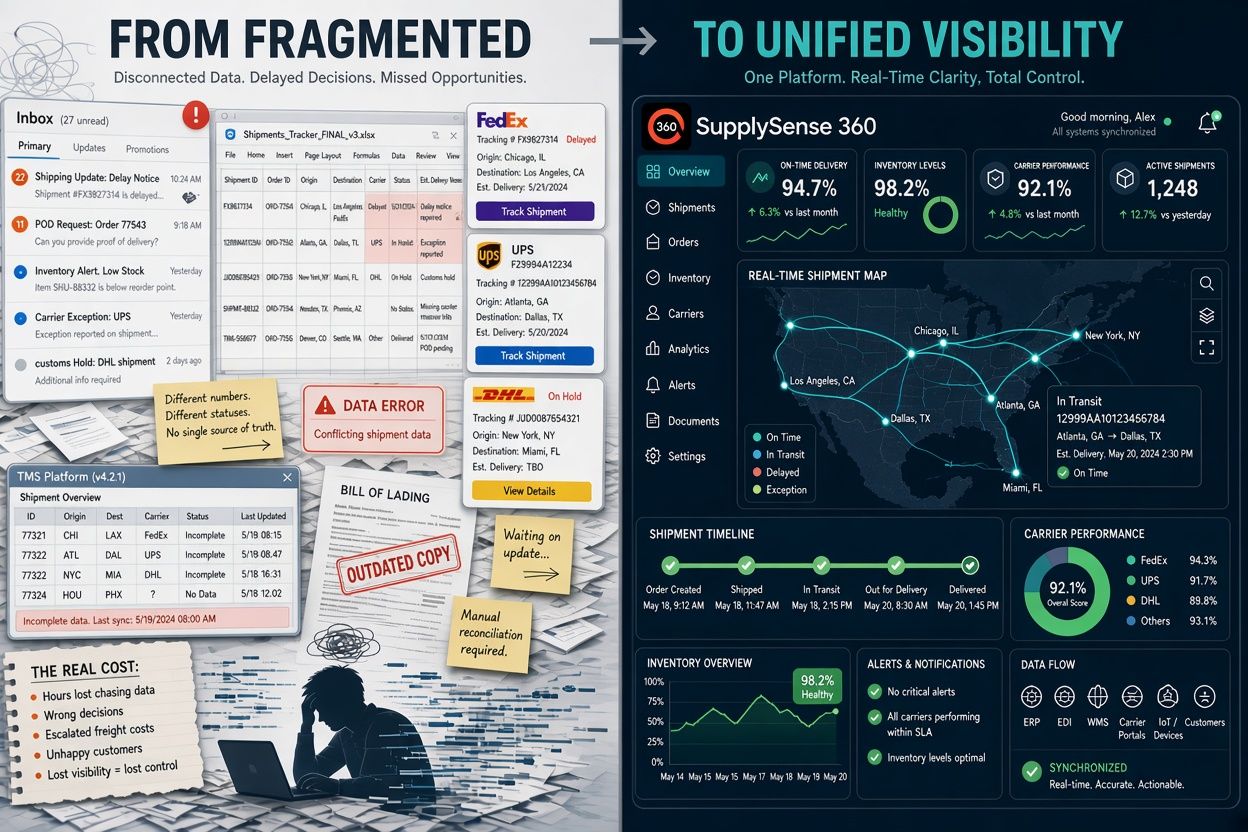
Where is the shipment? For many logistics teams, answering that simple question can involve checking a carrier portal, opening a spreadsheet, searching through emails, or contacting a freight forwarder. The problem isn't a lack of data. The problem is too much data in too many places. When shipment information is fragmented across disconnected systems, logistics teams spend more time finding information and less time acting on it. That's why a single source of truth is becoming essential to modern supply chain management.
What Is a Single Source of Truth?
A single source of truth is a centralized and trusted view of information that allows different teams to work from the same data. In logistics, this can include:
- Shipment status
- Carrier information
- ETAs
- Shipment milestones
- Delivery information
- Exceptions
- Transportation costs
- Performance metrics
Instead of each department maintaining its own version of shipment information, everyone works from a consistent data set.
The Problem With Fragmented Shipment Data
When logistics information is spread across multiple systems, several problems emerge.
Duplicate Work
Employees may spend hours searching for and reconciling shipment information.
Conflicting Information
Different systems may show different shipment statuses or ETAs.
Slow Decision-Making
Teams can't respond quickly when they first need to determine which information is accurate.
Poor Customer Communication
Customer service teams may not have access to the latest shipment information.
Missed Exceptions
Important delays can be overlooked when shipment data isn't centralized.
Why a Unified View Matters
A single source of truth allows logistics teams to move from: "Let me find out what happened. " to: "Here's what is happening, and here's what we should do next." That difference can have a major impact on operational efficiency. With centralized shipment data, teams can identify delays faster, coordinate more effectively, and make decisions using the same information.
What Should a Logistics Data Hub Include?
An effective centralized visibility solution should bring together information such as:
- Multi-carrier shipment tracking
- Real-time shipment status
- Predictive ETAs
- Transportation milestones
- Carrier performance
- Exception alerts
- Historical shipment data
The goal isn't simply to collect more data. It's to make the right data accessible when teams need it.
How SupplySense 360 Creates Greater Visibility
 SupplySense 360 helps businesses centralize transportation and shipment intelligence through:
- Real-time shipment tracking
- Predictive ETA updates
- Multi-carrier visibility
- Shipment milestone monitoring
- Exception management
- Carrier performance analytics
- End-to-end supply chain visibility
Instead of switching between multiple systems to understand shipment activity, teams can access a unified view of their logistics network.
The Business Impact
A single source of truth can help organizations:
- Reduce manual tracking
- Improve operational efficiency
- Respond to disruptions faster
- Strengthen customer communication
- Improve carrier management
- Make more informed supply chain decisions
When teams trust the data they're using, decisions become faster and more consistent.
Conclusion
Fragmented shipment data doesn't just create inconvenience: it creates operational friction. Every minute spent searching for information is time that could have been spent solving problems, improving performance, or serving customers. Creating a single source of truth gives logistics teams the visibility they need to operate with greater speed, confidence, and control.