
Port Congestion Tracking: How to Anticipate Delays Before They Happen
Learn how port congestion tracking helps businesses anticipate shipping delays, improve planning, and build more resilient supply chains through real-time visibility and predictive analytics.


Port congestion remains one of the biggest causes of delays in global supply chains. When vessels queue for berths, containers wait longer for unloading, and cargo experiences customs or terminal delays, businesses face increased costs and missed delivery commitments. The good news is that organizations no longer have to wait until shipments are delayed to respond. With port congestion tracking, logistics teams can anticipate disruptions earlier and adjust their plans before delays affect customers.
What Is Port Congestion Tracking?
Port congestion tracking is the process of monitoring activity at ports to identify conditions that may impact cargo movement. Rather than simply tracking individual shipments, congestion monitoring evaluates factors such as:
- Vessel queues
- Terminal capacity
- Berth availability
- Container dwell times
- Port productivity
- Weather conditions
- Labor disruptions
These insights help businesses understand how external conditions may affect shipment schedules.
Why Port Congestion Happens
Several factors contribute to congestion, including:
- High import or export volumes
- Limited terminal capacity
- Equipment shortages
- Severe weather
- Labor strikes
- Customs processing delays
- Infrastructure limitations
Even localized disruptions can ripple across global supply chains.
Why Businesses Should Track Congestion
Without visibility into port conditions, companies often discover delays after they have already impacted inventory and customer deliveries. Tracking congestion enables businesses to:
- Adjust delivery expectations
- Improve inventory planning
- Coordinate warehouse receiving
- Optimize transportation schedules
- Reduce detention and demurrage risks
Proactive planning reduces the operational impact of unexpected delays.

Best Practices for Managing Port Delays
Monitor Major Trade Lanes
Keep track of ports that support your primary shipping routes.
Diversify Transportation Options
Consider alternative ports or intermodal solutions when congestion increases.
Strengthen Supplier Communication
Share updated ETAs with suppliers, customers, and warehouse teams.
Use Predictive Analytics
Forecasting tools help identify potential delays before shipments reach congested ports.
Build Buffer Time
Include reasonable lead-time flexibility during periods of expected congestion.
How SupplySense 360 Helps Businesses Stay Ahead
Real-time shipment visibility becomes even more valuable during periods of port congestion.
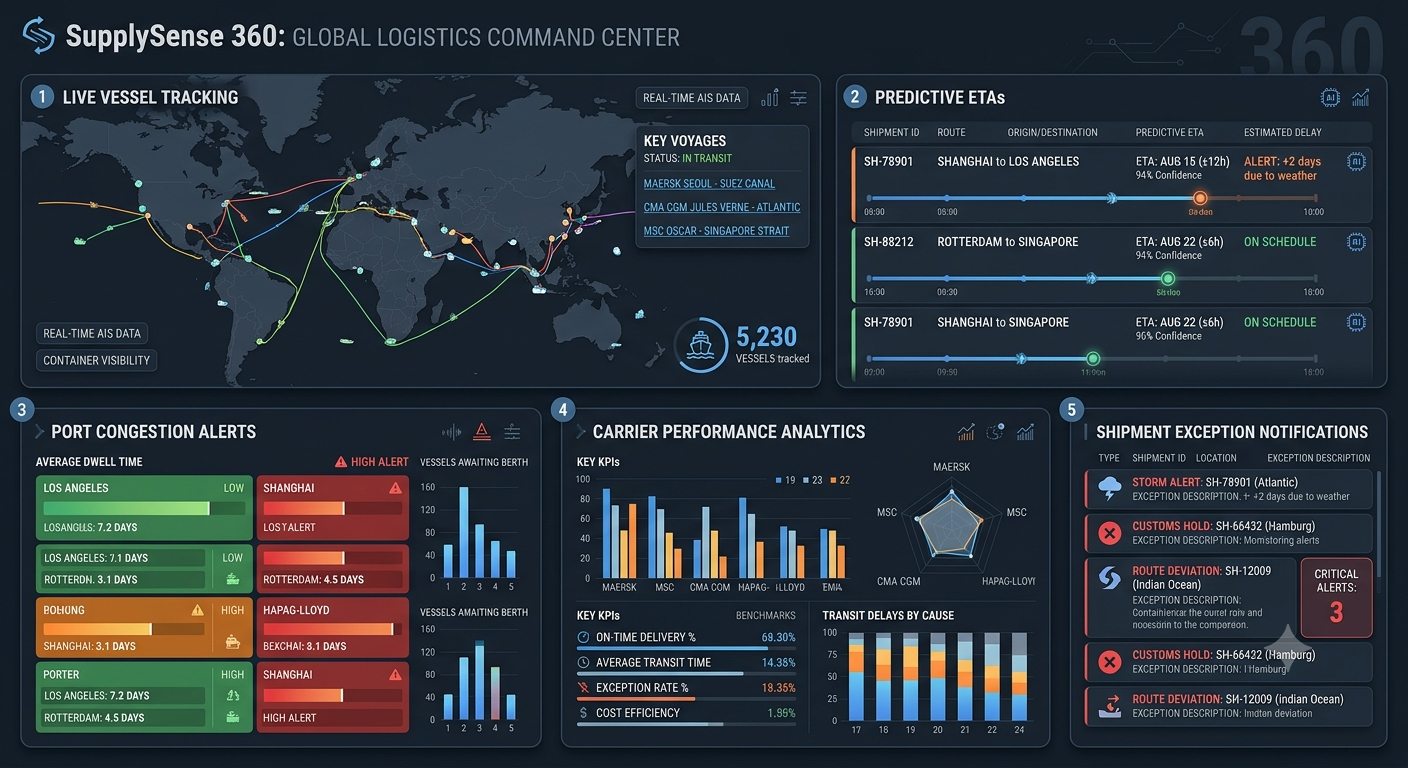 SupplySense 360 helps organizations navigate port disruptions through:
- Real-time shipment tracking
- Predictive ETA updates
- Ocean freight visibility
- Shipment milestone monitoring
- Exception management
- Supply chain control tower dashboards
By combining live shipment data with predictive logistics intelligence, businesses can respond to congestion before it disrupts operations.
Conclusion
Port congestion may be unavoidable, but being caught off guard doesn't have to be. Organizations that monitor port activity, anticipate delays, and leverage real-time visibility can make better logistics decisions, protect customer commitments, and build more resilient supply chains.