
Real-Time Visibility Software vs. Manual Tracking: A Cost Comparison
Compare real-time shipment visibility software with manual tracking to understand the hidden costs, operational trade-offs, and potential savings for supply chain teams


How much does it really cost to track a shipment? For many supply chain teams, the answer goes beyond the freight bill. Employees spend time checking carrier portals, sending emails, calling transport providers, updating spreadsheets, and sharing shipment status with customers or internal departments. These activities may seem inexpensive individually, but their combined cost can become significant as shipment volumes grow. Real-time visibility software offers an alternative by consolidating shipment information and helping teams monitor progress from a central platform. Understanding the cost difference requires looking at both direct expenses and the operational impact of each approach.
1. Understanding Manual Shipment Tracking
Manual tracking relies on employees collecting shipment updates from different sources and compiling them into a usable view. A typical process may involve:
- Logging into multiple carrier websites.
- Contacting carriers or freight forwarders for updates.
- Copying tracking details into spreadsheets.
- Sending status reports to customers and internal teams.
- Following up when a shipment misses an expected milestone.
- Reconciling inconsistent information across systems.
This approach can work for businesses managing a small number of shipments. It may also be sufficient when shipment updates are infrequent and the consequences of a delay are limited. However, as shipment volumes, carrier networks, and customer expectations increase, manual processes can consume more staff time and make it harder to identify exceptions promptly.
2. What Real-Time Visibility Software Changes
Real-time visibility software brings shipment information into a centralized environment, using available data from carrier integrations, APIs, EDI connections, GPS devices, and other supported sources. Depending on the platform and available integrations, teams may be able to:
- Monitor shipments across multiple carriers and transport modes.
- View estimated arrival times and shipment milestones.
- Receive alerts when delays or exceptions are detected.
- Share shipment status with relevant stakeholders.
- Maintain a centralized record of shipment activity.
- Analyze recurring delays and carrier performance.
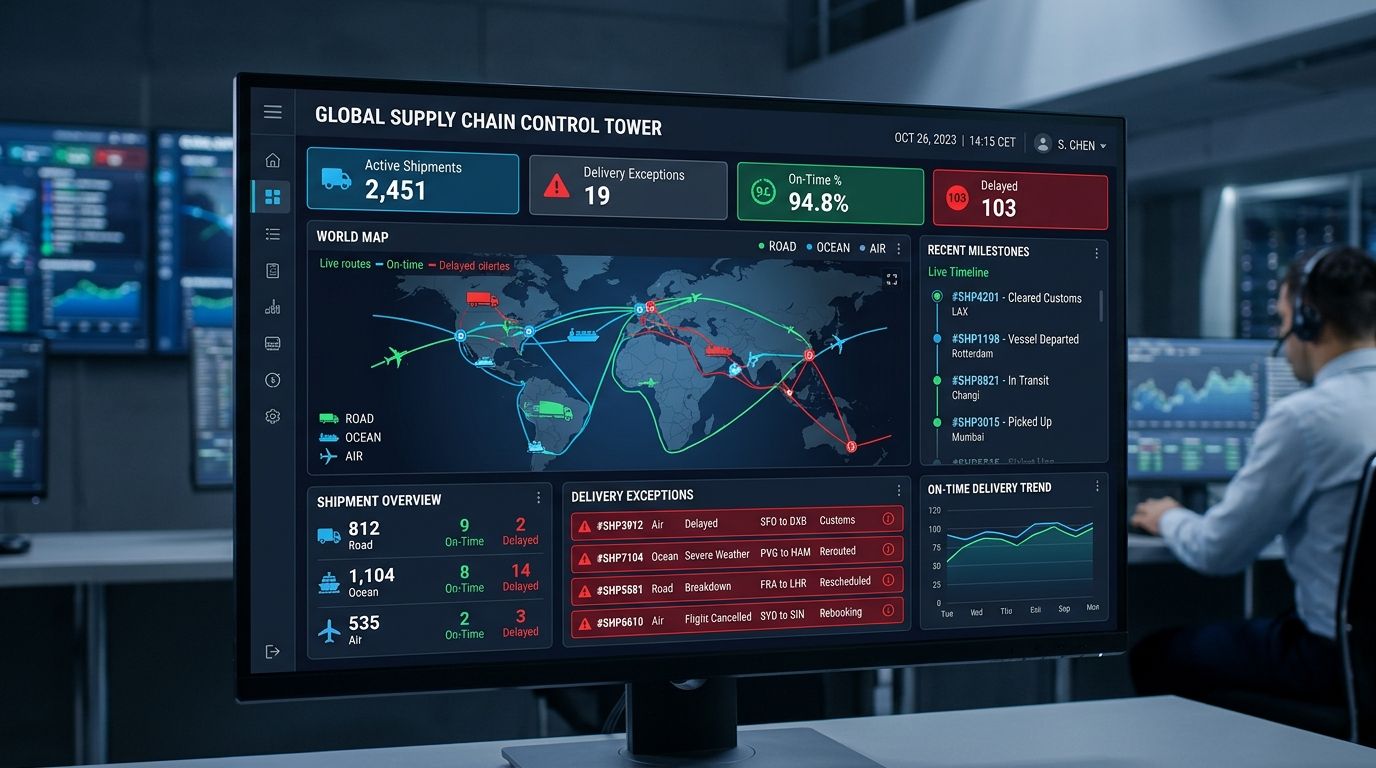 Automation does not mean every shipment update will always be instantaneous or accurate. Visibility depends on the quality, frequency, and availability of the underlying data. Teams may still need to contact providers when information is missing or an exception requires investigation.
The main difference is that employees can spend less time collecting routine updates and more time responding to issues that require attention.
3. Comparing the Total Cost of Each Approach
A meaningful comparison should consider the full cost of managing shipment information, not just the price of the software.
| Cost factor | Manual tracking | Real-time visibility software |
|---|---|---|
| Staff time | Repeated data collection and follow-ups | Less routine work when updates are automated |
| Software costs | Often relies on existing office tools | Subscription, licensing, or platform fees may apply. |
| Integration costs | May require little initial setup but ongoing manual effort | Initial integration, configuration, and maintenance may be needed. |
| Error correction | Inconsistent entries can require manual reconciliation. | Centralized data can reduce duplication, depending on data quality |
| Exception management | Issues may be discovered during routine checks. | Alerts can help teams identify selected exceptions earlier. |
| Reporting | Spreadsheets and manual compilation | Reports may be generated from centralized shipment data. |
| Scalability | Workload often grows with shipment volume. | Automation can support higher volumes without a proportional increase in tracking effort. |
Neither approach is automatically cheaper for every business. The result depends on shipment volume, labor costs, system requirements, existing technology, and how much manual work can realistically be eliminated.
4. Calculate the Cost of Manual Tracking
Start by estimating how much employee time goes into tracking shipments. For example, assume a business manages 1,000 shipments per month. Employees spend an average of 12 minutes per shipment collecting updates, checking status, and communicating changes. That represents 200 hours of tracking work per month. If the fully loaded labor cost is $20 per hour, the estimated monthly tracking labor cost is $4,000, or $48,000 annually. These figures are illustrative, not industry benchmarks. Now compare that baseline with the cost of a visibility platform, including subscription fees, integration, maintenance, and training. If the platform reduces the manual workload, calculate the remaining labor cost rather than assuming all tracking work disappears. The potential net benefit can be estimated as: Net benefit = Labor savings + Other verified cost reductions − Total software and implementation costs Other reductions might include fewer avoidable accessorial charges, less time spent resolving billing discrepancies, or lower administrative overhead. Include these only when they can be reasonably measured and attributed to the change.
5. Look Beyond Labor Savings
The cost comparison should also consider the consequences of delayed information.
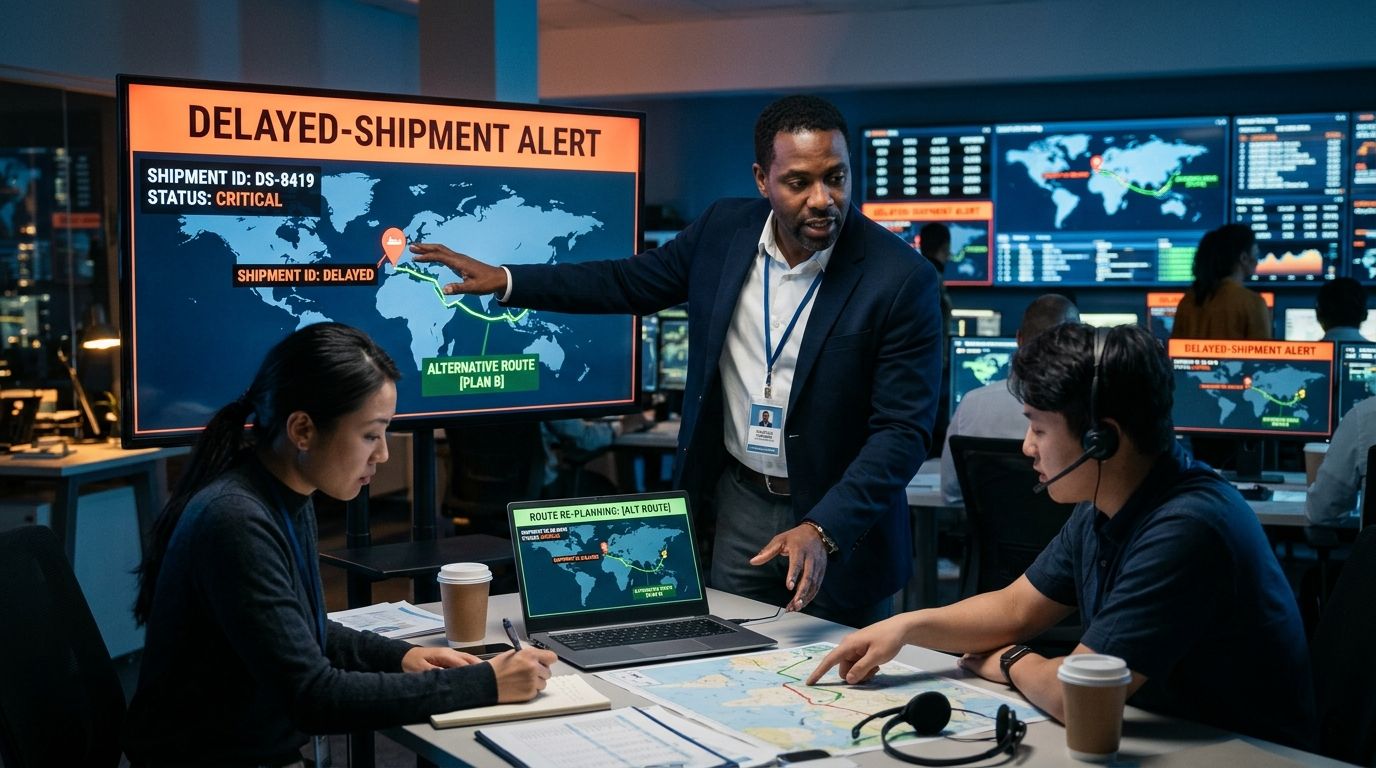
If a shipment is delayed but the team does not discover the problem until a scheduled spreadsheet update, the business may have less time to adjust production schedules, notify customers, or arrange alternative transportation.
Earlier visibility may create opportunities to act before a problem becomes more expensive. However, alerts alone do not guarantee that a delay can be prevented or that a recovery option will be available.
SupplySense 360 combines shipment visibility with predictive analytics, exception management, and centralized operational information to help teams monitor shipments and coordinate responses. The value comes from turning available data into actionable decisions, not simply displaying shipment locations.
6. When Should a Business Make the Switch?
Manual tracking may remain practical when shipment volumes are low, carrier relationships are simple, and the existing process provides sufficient visibility. Visibility software becomes more worth evaluating when teams experience recurring manual follow-ups, inconsistent shipment records, frequent status requests, limited exception awareness, or difficulty scaling operations. Before selecting a platform, assess its supported integrations, data coverage, alert capabilities, reporting features, implementation requirements, and total cost of ownership. Run a pilot using representative shipments and compare the results against your current process. Measure staff time, update accuracy, exception response time, reporting effort, and relevant logistics costs before and after implementation.
Conclusion
Manual tracking can appear inexpensive because its biggest cost is often hidden in employee time and fragmented workflows. Real-time visibility software introduces technology and implementation expenses, but it can reduce repetitive work and help teams respond to shipment issues more effectively. The best decision comes from comparing the total cost of both approaches against measurable operational outcomes.