
Country of Origin Rules: Why They Matter More Than Ever
Understand country of origin rules, how origin differs from shipping location, and why origin determination matters for tariffs, trade agreements, customs compliance, and landed costs.


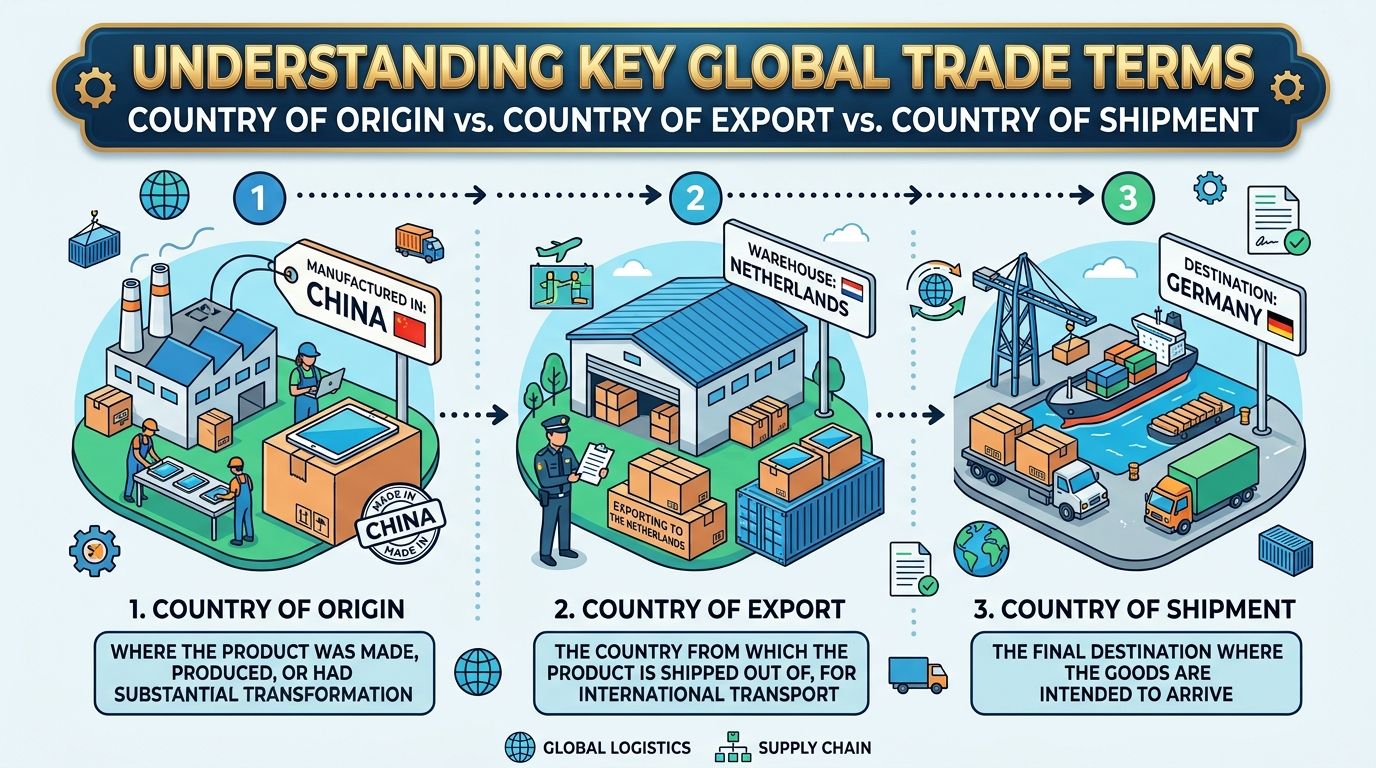
A product ships from China, passes through a warehouse in the Netherlands, and arrives at a customer in the United States. Which country is its country of origin? The answer is not necessarily the Netherlands, where the product was stored, or the country from which it was last shipped. Country of origin rules determine the country customs authorities recognize as the origin of a product for a particular trade purpose. That determination can influence applicable tariffs, eligibility for trade preferences, marking requirements, and other import obligations. As trade policies evolve and businesses diversify their sourcing networks, understanding these rules has become an important part of managing international shipments.
What Are Country of Origin Rules?
Country of origin rules, often called rules of origin, are the criteria used to determine where a product originates. The applicable rules depend on the destination country, the product, and the purpose for which the origin is being determined. Two broad categories are particularly important.
Non-Preferential Rules of Origin
These rules are generally used for purposes such as applying trade measures, determining origin marking requirements, and administering certain import restrictions or trade remedies. For goods manufactured in one country, origin may be straightforward. For products made using components from several countries, customs authorities may need to assess where the goods underwent the required manufacturing or processing. Depending on the jurisdiction and product, relevant tests may include substantial transformation, changes in tariff classification, or specified processing requirements.
Preferential Rules of Origin
These rules determine whether goods qualify for reduced or zero tariffs under a trade agreement or preference program. For example, a product may qualify for preferential treatment under a trade agreement only if it meets the agreement's specific origin criteria and any applicable documentation requirements. Simply shipping a product from a participating country does not automatically make it eligible.
Why Country of Origin Is Different From Shipping Location
The country of origin is not always the country of export, the location of the supplier, or the final shipping point. Consider a company that sources components from several countries and assembles them in another location. The finished product's origin depends on the applicable rules and the nature of the processing performed. Packaging, storage, relabeling, or simple handling may not be sufficient to change origin. This distinction matters because declaring the wrong origin can lead to incorrect duty calculations, customs disputes, or compliance problems.
Why Origin Rules Matter More Than Ever
1. Tariff Exposure
Different countries and products may face different duty rates or trade measures. Correct origin determination helps importers assess which tariffs and other applicable measures may affect their shipments.
2. Trade Agreement Benefits
Businesses may be able to reduce import duties when goods qualify under a relevant trade agreement. However, preferential treatment typically requires compliance with specific origin criteria and supporting documentation.
3. Supply Chain Diversification
Companies increasingly evaluate alternative sourcing locations to manage costs, capacity, and geopolitical risk. Changing suppliers or moving production does not automatically change a product's origin. Businesses need to assess whether the new manufacturing process satisfies the applicable rules.
4. Customs Compliance and Documentation
Importers may need to provide origin declarations, supplier records, production information, certificates, or other supporting evidence, depending on the jurisdiction and applicable requirements.
Weak documentation can make it difficult to substantiate an origin claim during a customs review.
How Importers Can Manage Country of Origin Risk
Businesses can strengthen their origin compliance processes through several practical steps:
- Map product supply chains: Document where components originate and where manufacturing or processing occurs.
- Check the applicable rules: Confirm the relevant origin test for the product, destination market, and intended trade treatment.
- Maintain supplier documentation: Keep records that support origin declarations and preferential claims.
- Review sourcing changes: Reassess origin when suppliers, production locations, or manufacturing processes change.
- Coordinate classification and origin data: Ensure product descriptions, tariff classifications, and origin records are consistent.
- Consult qualified customs professionals: Seek advice for complex products, trade remedies, or uncertain origin determinations.
Origin decisions should be supported by the applicable legal rules and evidence rather than assumptions about where goods were purchased or shipped.
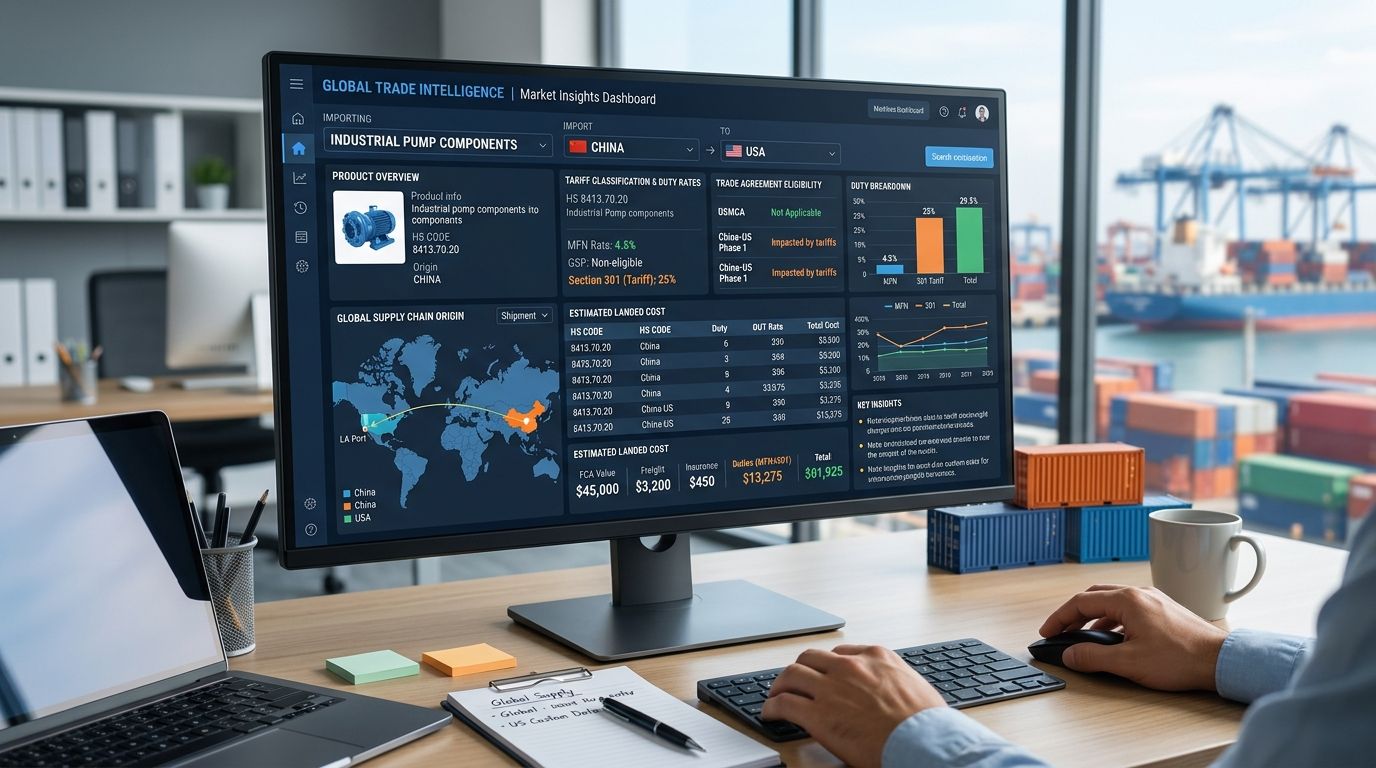
Connecting Origin Data to Landed Cost
Country of origin can affect the duties and trade measures used to calculate the total cost of an import.
For example, two otherwise comparable products may have different duty exposure because of their origin, tariff classification, or eligibility for preferential treatment.
Businesses therefore need to consider origin alongside product classification, customs value, transportation charges, and other applicable costs when estimating landed cost.
SupplySense 360 helps businesses connect shipment information, tariff intelligence, and landed cost analysis to support more informed international trade and sourcing decisions.
Conclusion
Country of origin is much more than a field on a customs declaration. It can influence import costs, trade agreement eligibility, and compliance obligations across international supply chains. As sourcing networks change and trade policies evolve, businesses should make origin determination a consistent part of procurement, documentation, and customs planning.