
Dwell Time Explained: What It Costs You at Ports and Terminals
Learn what dwell time means in logistics, why containers spend too long at ports and terminals, how dwell time increases supply chain costs, and strategies businesses can use to reduce it.


A container can arrive at a port on schedule and still experience a costly delay before it leaves the terminal. The time cargo spends sitting at a port or terminal can have a significant impact on transportation costs, inventory availability, and delivery performance. This period is commonly referred to as dwell time. Understanding and monitoring dwell time helps businesses identify bottlenecks and take action before delays become expensive.
What Is Dwell Time?
Dwell time is the amount of time a container, truck, or other freight remains at a facility before the next stage of its journey. In container shipping, port dwell time commonly refers to the period between a container being discharged from a vessel and being picked up from the terminal. The exact definition and measurement can vary between ports, terminals, carriers, and logistics operations.
Why Does Dwell Time Increase?
Several factors can cause cargo to remain at a port or terminal longer than expected. Common causes include:
- Customs clearance delays
- Documentation problems
- Port congestion
- Limited terminal capacity
- Truck shortages
- Chassis availability issues
- Importer delays
- Container pickup scheduling problems
When several of these factors occur simultaneously, dwell times can increase significantly.
Why High Dwell Time Is Expensive
Longer dwell times can create costs throughout the supply chain.
Demurrage Charges
Containers that remain at terminals beyond their permitted free time may incur demurrage charges.
Storage Costs
Extended stays can result in additional terminal storage expenses.
Transportation Delays
Trucks and other transportation resources may sit idle while waiting for cargo.
Inventory Disruptions
Delayed containers can prevent businesses from receiving inventory when expected.
Customer Service Problems
When inbound freight is delayed, downstream deliveries can also be affected.
Dwell Time vs. Detention
These terms are often confused.
Dwell time generally describes how long cargo remains within a facility or terminal.
Detention generally refers to charges associated with keeping carrier-owned equipment, such as containers or trailers, outside the terminal longer than the agreed free period.
The exact definitions and charging rules vary by carrier and contract, so businesses should always check the applicable terms.

How Businesses Can Reduce Dwell Time
Reducing dwell time requires coordination between multiple parties.
Prepare Documentation Early
Accurate documentation can help prevent avoidable customs and clearance delays.
Monitor Container Status
Track containers from vessel arrival through terminal release and pickup.
Coordinate With Trucking Providers
Make sure transportation is available when cargo becomes ready for collection.
Watch Free-Time Expiration
Monitoring free-time deadlines helps businesses reduce unnecessary demurrage exposure.
Identify Recurring Bottlenecks
Analyze historical dwell times to determine which ports, terminals, carriers, or processes consistently cause delays.
Real-Time Visibility Makes a Difference
Knowing that a container has arrived isn't enough.
Logistics teams need to understand whether the container has been discharged, cleared, released, and scheduled for pickup.
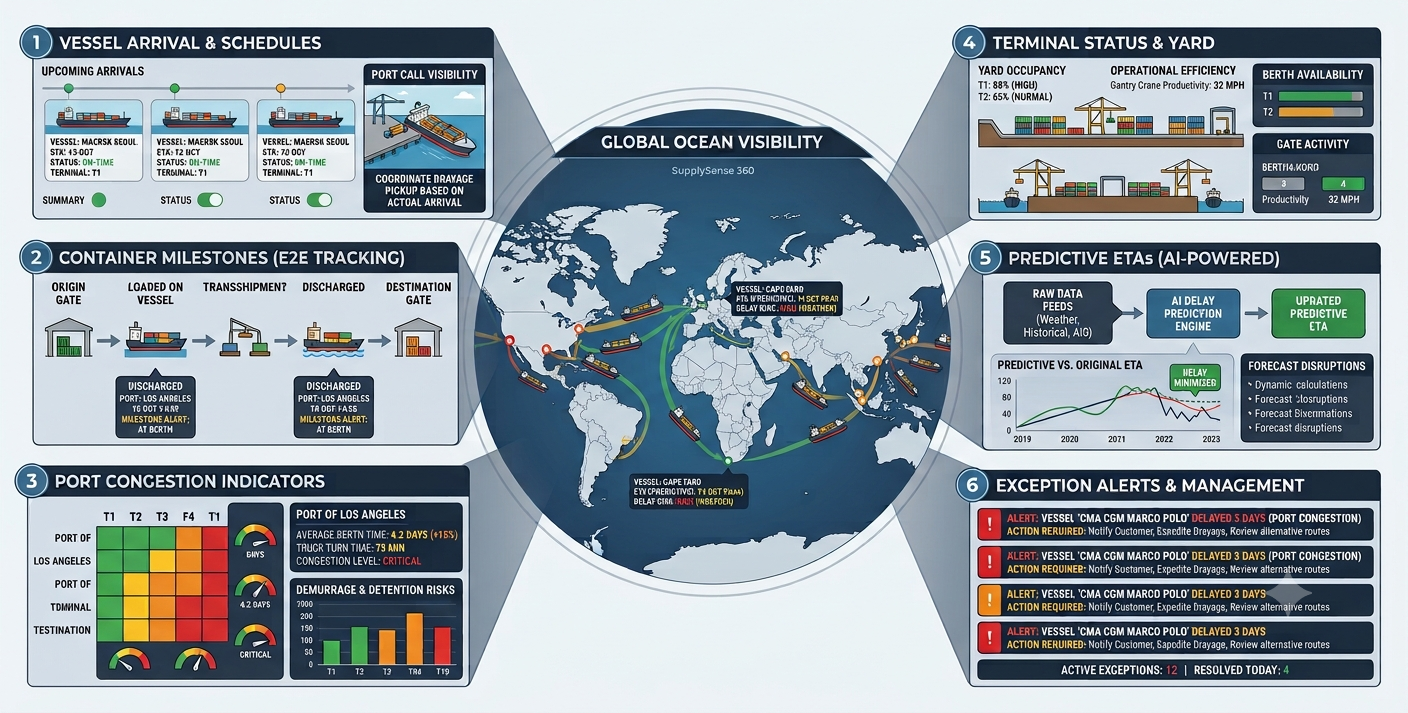 SupplySense 360 provides the visibility needed to monitor shipment progress and identify potential disruptions through:
- Real-time shipment tracking
- Predictive ETA updates
- Shipment milestone monitoring
- Port and ocean freight visibility
- Exception management
- End-to-end supply chain intelligence
This enables logistics teams to identify delays earlier and coordinate the next steps before they result in additional costs.
Conclusion
Dwell time may occur at a single port or terminal, but its impact can extend across the entire supply chain. By monitoring container milestones, improving coordination, and using real-time shipment intelligence, businesses can reduce avoidable delays, control costs, and improve delivery reliability.