
How Freight Rate Benchmarking Helps You Negotiate Better Contracts
Learn how freight rate benchmarking helps shippers understand market pricing, evaluate carrier rates, and make more informed freight contract decisions.


Freight rates can vary significantly depending on the carrier, trade lane, shipment characteristics, market conditions, and contract terms. For shippers negotiating transportation contracts, simply knowing what they paid previously may not be enough. Freight rate benchmarking provides a broader reference point by helping businesses compare their rates against relevant market information and historical data. With better pricing intelligence, procurement and logistics teams can enter carrier negotiations with a clearer understanding of their transportation costs.
What Is Freight Rate Benchmarking?
Freight rate benchmarking is the process of comparing transportation rates against relevant market data, historical rates, or comparable freight movements. For example, a shipper may compare the rate paid for a particular trade lane against:
- Previous contract rates
- Current market rates
- Rates from other carriers
- Similar shipping lanes
- Historical pricing trends
- Different service levels
Why Freight Rate Benchmarking Matters
Without reliable benchmarks, negotiating freight contracts can become heavily dependent on the information provided by individual carriers. A carrier may present a rate increase as necessary because of market conditions. The shipper then needs a way to evaluate that claim against relevant pricing information. Benchmarking can help answer questions such as:
- How have rates changed over time?
- How does one carrier's quote compare with alternatives?
- Which lanes have experienced the largest price changes?
- Are current contract rates aligned with market conditions?
- Where should procurement teams focus negotiations?
What Factors Affect Freight Rates?
A benchmark is only useful when the underlying comparison is relevant. Freight pricing can be influenced by factors such as:
Trade Lane
The origin and destination of a shipment can have a major impact on transportation costs.
Shipment Characteristics
Weight, volume, equipment requirements, cargo type, and shipment frequency can all influence pricing.
Transportation Mode
Service Requirements
Expedited transportation, guaranteed delivery, specialized equipment, and other service requirements can increase rates.
Market Conditions
Capacity availability, fuel costs, seasonal demand, port conditions, and broader market changes can affect transportation pricing.
How Benchmarking Supports Contract Negotiations
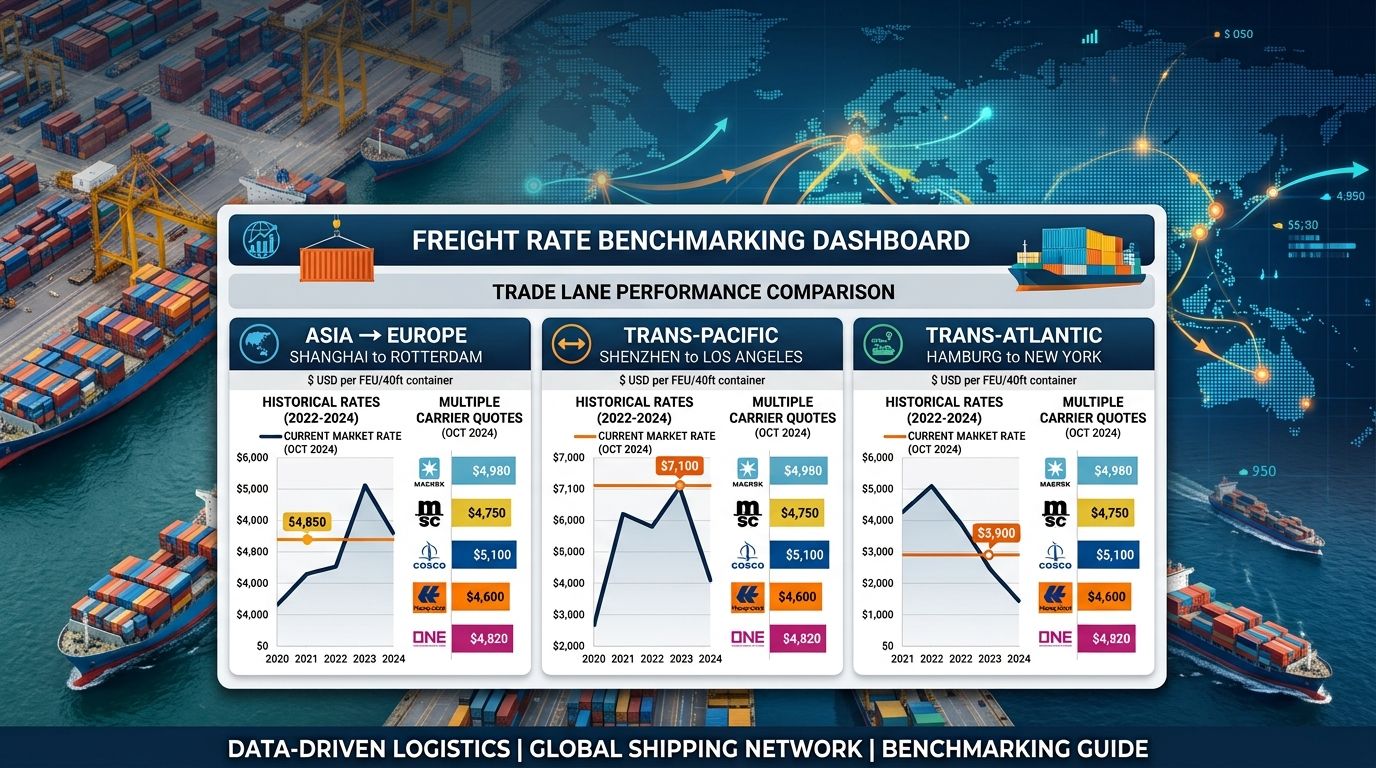
Benchmarking can give procurement teams a stronger foundation for evaluating carrier proposals. Instead of asking only whether a rate is higher or lower than the previous contract, teams can examine how it compares with relevant market information. For example, if a carrier proposes a significant rate increase, a shipper can analyze:
- The previous contracted rate
- The proposed new rate
- Current market benchmarks
- Rates from alternative carriers
- Changes in shipment volume or service requirements
This provides a more complete basis for evaluating the proposal.
Don't Focus Only on the Base Rate
A freight contract can contain costs beyond the headline transportation rate. Businesses should also examine:
- Fuel surcharges
- Accessorial charges
- Detention
- Demurrage
- Handling fees
- Peak-season surcharges
- Minimum charges
- Other contract-specific fees
A carrier with a lower base rate may not necessarily have the lower total transportation cost if additional charges are significantly higher. This is why effective benchmarking should consider the broader cost structure.
Using Data Before, During, and After Negotiations
Freight rate benchmarking is not only useful when a contract is about to expire.
Businesses can use rate intelligence throughout the procurement cycle.
Before negotiations:
Analyze historical spending and current market conditions.
During negotiations:
Compare carrier proposals against relevant benchmarks and alternatives.
After negotiations:
Monitor actual shipment costs against contracted rates to identify unexpected increases or billing discrepancies.
SupplySense 360's rate intelligence capabilities can help businesses compare freight rates, analyze market trends, evaluate quotes, and bring transportation cost information into a centralized environment.
Building a Data-Driven Freight Procurement Strategy
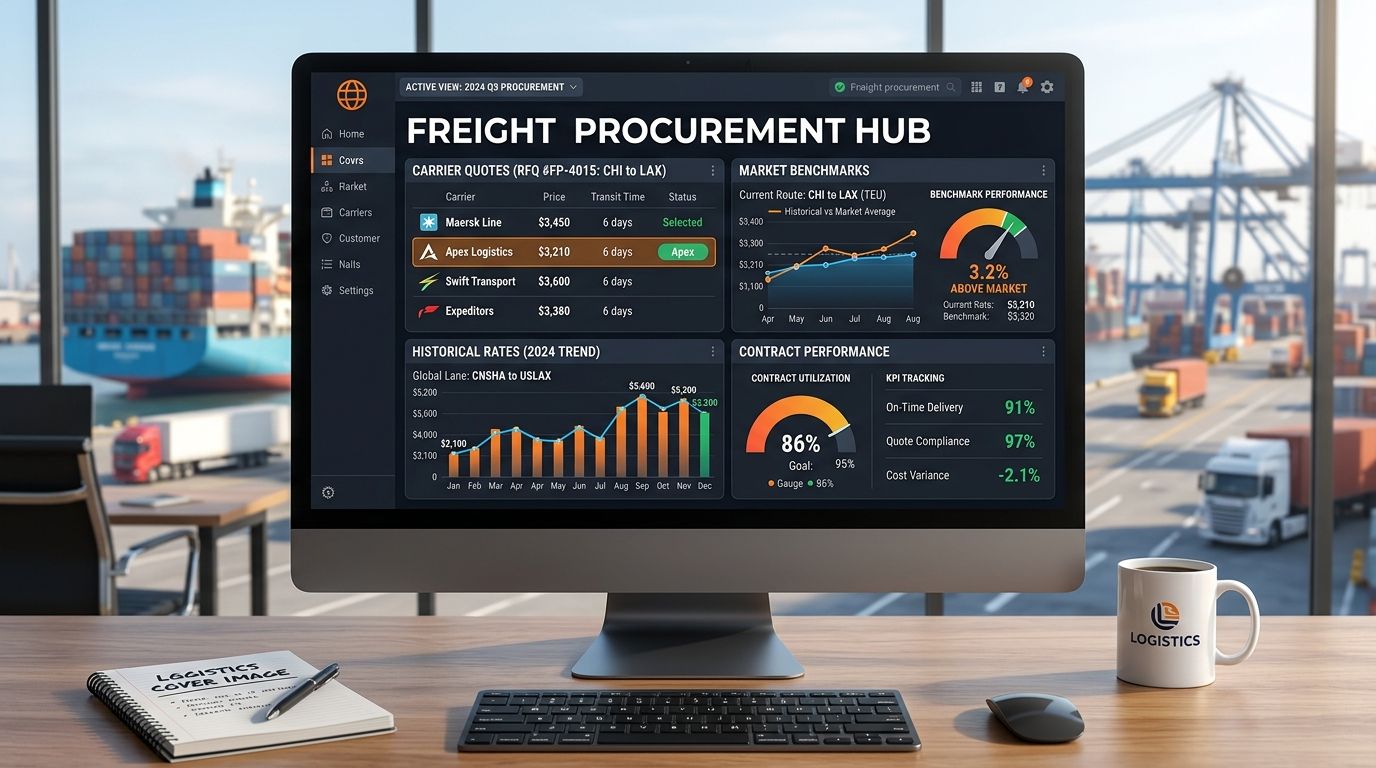
Benchmarking becomes more valuable when it is combined with accurate shipment and carrier data. Businesses should maintain visibility into:
- Carrier performance
- Shipment volume
- Lane-level spending
- Contract rates
- Spot rates
- Accessorial charges
- Historical pricing
- Actual versus quoted costs
This creates a clearer connection between procurement decisions and real transportation performance.
Conclusion
Freight rate benchmarking helps businesses move from negotiating based primarily on historical prices or carrier proposals to making decisions using broader pricing intelligence. By comparing relevant market data, historical trends, carrier quotes, and total transportation costs, procurement teams can better understand their freight spend and evaluate contract proposals. SupplySense 360 brings rate intelligence, shipment data, and market analysis together to help businesses make more informed transportation decisions.