
Parcel Shipping at Scale: Managing High-Volume Small Package Logistics
Learn how businesses can manage high-volume parcel shipping efficiently, reduce delivery costs, improve carrier performance, and gain better visibility across small package logistics


Shipping a few packages is relatively simple. Shipping thousands or even millions of small packages every month is a completely different challenge. For retailers, e-commerce businesses, manufacturers, and distributors, parcel shipping at scale requires careful coordination across carriers, fulfillment centers, transportation networks, and customers. As shipment volumes grow, even small inefficiencies can quickly become expensive.
What Is Parcel Shipping?
Parcel shipping involves transporting relatively small packages through courier, express, or parcel carrier networks. Unlike full truckload or container shipping, parcel shipments typically involve individual packages that may move through multiple sorting facilities before reaching the final customer. Common parcel shipments include:
- E-commerce orders
- Replacement parts
- Consumer products
- Documents
- Small business shipments
- Direct-to-consumer deliveries
Why High-Volume Parcel Shipping Is Challenging
Managing thousands of individual shipments creates operational complexity. Businesses need to coordinate:
- Multiple parcel carriers
- Different delivery services
- Shipping zones
- Package dimensions and weights
- Delivery commitments
- Returns
- Tracking information
At high volumes, manually monitoring every shipment is impossible. Even small increases in failed deliveries, incorrect charges, or delivery delays can significantly affect operating costs.
Key Challenges in Parcel Shipping at Scale
Rising Transportation Costs
Parcel rates can vary based on package size, weight, destination, service level, and carrier. Businesses need to continuously evaluate shipping costs to identify opportunities for savings.
Carrier Performance
Not every carrier performs equally across every route. Monitoring delivery performance helps businesses identify which providers consistently meet expectations.
Last Mile Complexity
The final stage of delivery is often the most difficult to control. Traffic, incorrect addresses, failed delivery attempts, and customer availability can all affect performance.
Returns
High-volume parcel operations also need efficient processes for managing returned products and reverse logistics.
Strategies for Managing Parcel Shipping at Scale
Use Multiple Carriers
A diversified carrier network can provide greater flexibility and reduce dependence on a single provider.
Optimize Carrier Selection
Choose carriers based on both price and historical performance.
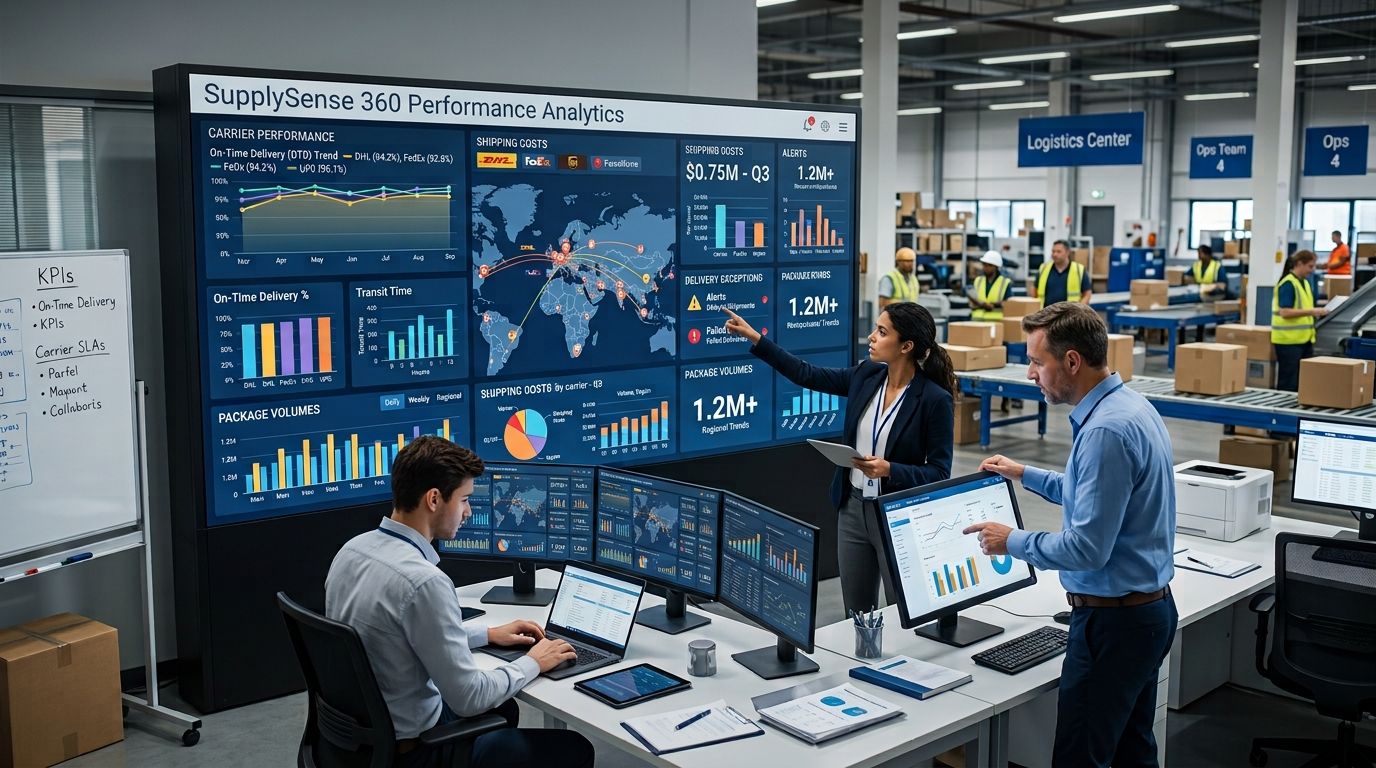
Monitor Delivery Performance
Track metrics such as on-time delivery, failed delivery attempts, transit time, and exceptions.
Automate Shipment Tracking
Automated tracking eliminates the need for teams to manually check individual carrier portals.
Analyze Shipping Data
Historical data can reveal expensive routes, unreliable carriers, and recurring delivery problems.
Why Real-Time Visibility Matters
At high shipment volumes, visibility becomes essential. Businesses need to know not just whether packages have shipped but whether they are progressing as expected. Real-time visibility can help teams identify:
- Delayed shipments
- Changing ETAs
- Delivery exceptions
- Carrier performance issues
- Potential customer-impacting delays
How SupplySense 360 Supports High-Volume Logistics
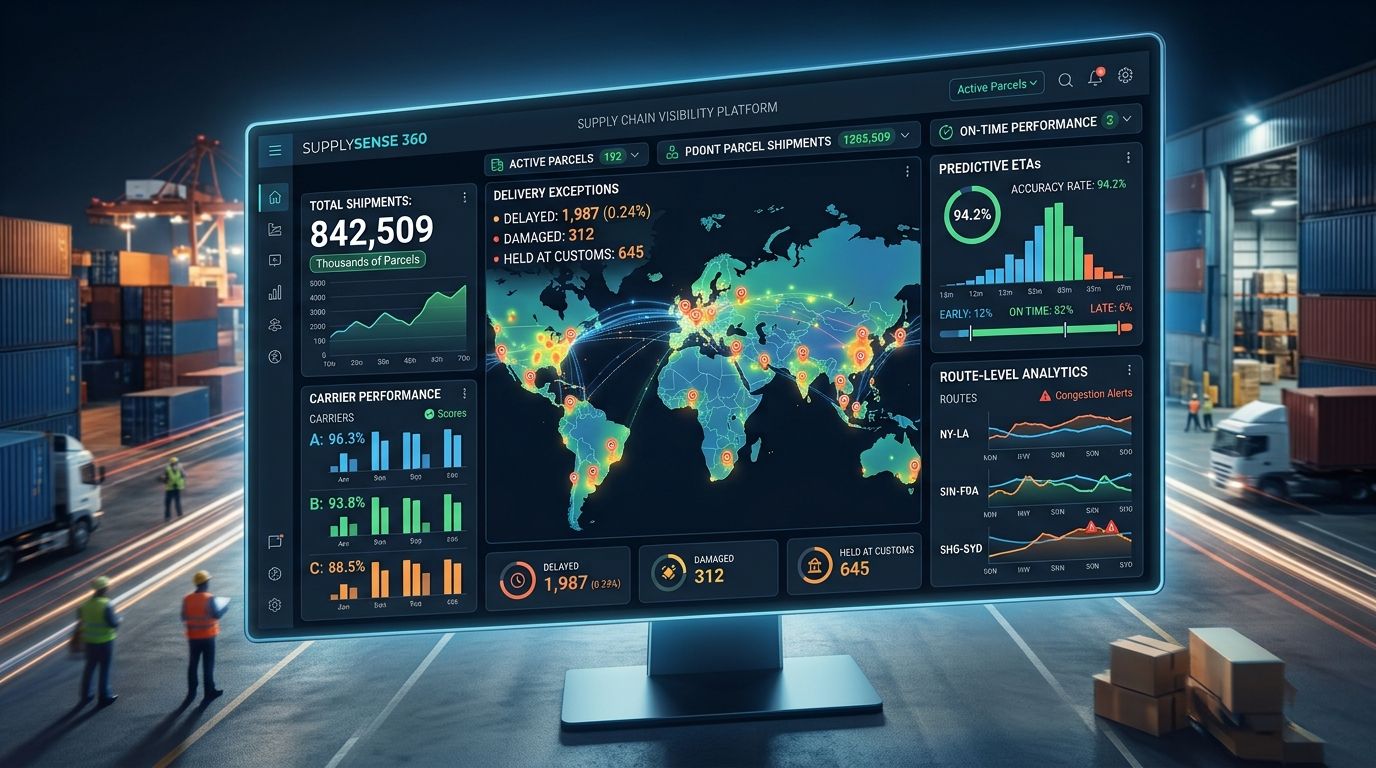 SupplySense 360 helps businesses manage complex transportation networks through:
- Real-time shipment tracking
- Predictive ETA updates
- Carrier performance analytics
- Shipment exception management
- End-to-end supply chain visibility
- Transportation intelligence
By centralizing shipment information, logistics teams can monitor high-volume operations without manually checking individual carrier systems.
Conclusion
Parcel shipping at scale requires more than simply processing more packages. It requires better data, smarter carrier management, automation, and real-time visibility. Businesses that can identify delivery risks early and understand transportation performance across their network are better positioned to control costs and deliver a stronger customer experience.