
Cold Chain Logistics: Monitoring Temperature-Sensitive Cargo
Learn how cold chain logistics helps protect temperature-sensitive cargo and how real-time monitoring improves visibility, compliance, and shipment quality


Some products cannot simply be shipped from one location to another and expected to arrive in the same condition. Pharmaceuticals, vaccines, fresh food, seafood, chemicals, and other temperature-sensitive products may require carefully controlled conditions throughout transportation. This is where cold chain logistics becomes essential. A cold chain is a temperature-controlled supply chain designed to keep sensitive products within specified conditions from origin to final destination. When temperature conditions change unexpectedly, the quality, safety, or usability of the cargo can be affected.
Why Temperature Monitoring Matters
Maintaining the correct temperature is only part of the challenge. Logistics teams also need to know whether the required conditions were maintained throughout the shipment. A shipment may pass through multiple stages, including:
- Warehouses
- Refrigerated trucks
- Ports and terminals
- Airports
- Distribution centers
- Last-mile delivery vehicles
Every transfer creates another opportunity for a temperature excursion. Without continuous visibility, teams may not discover a problem until the cargo reaches its destination.
What Is a Temperature Excursion?
A temperature excursion occurs when cargo is exposed to temperatures outside the acceptable range defined for that product. For example, a pharmaceutical shipment may require a specific temperature range throughout transportation. If the shipment remains outside that range for too long, its quality may be affected. Temperature excursions can result from:
- Refrigeration equipment failure
- Extended loading or unloading
- Power interruptions
- Delayed transportation
- Poorly prepared containers
- Unexpected route disruptions
- Incorrect storage conditions
The longer an excursion continues without detection, the harder it can be to respond effectively.
How Technology Improves Cold Chain Visibility
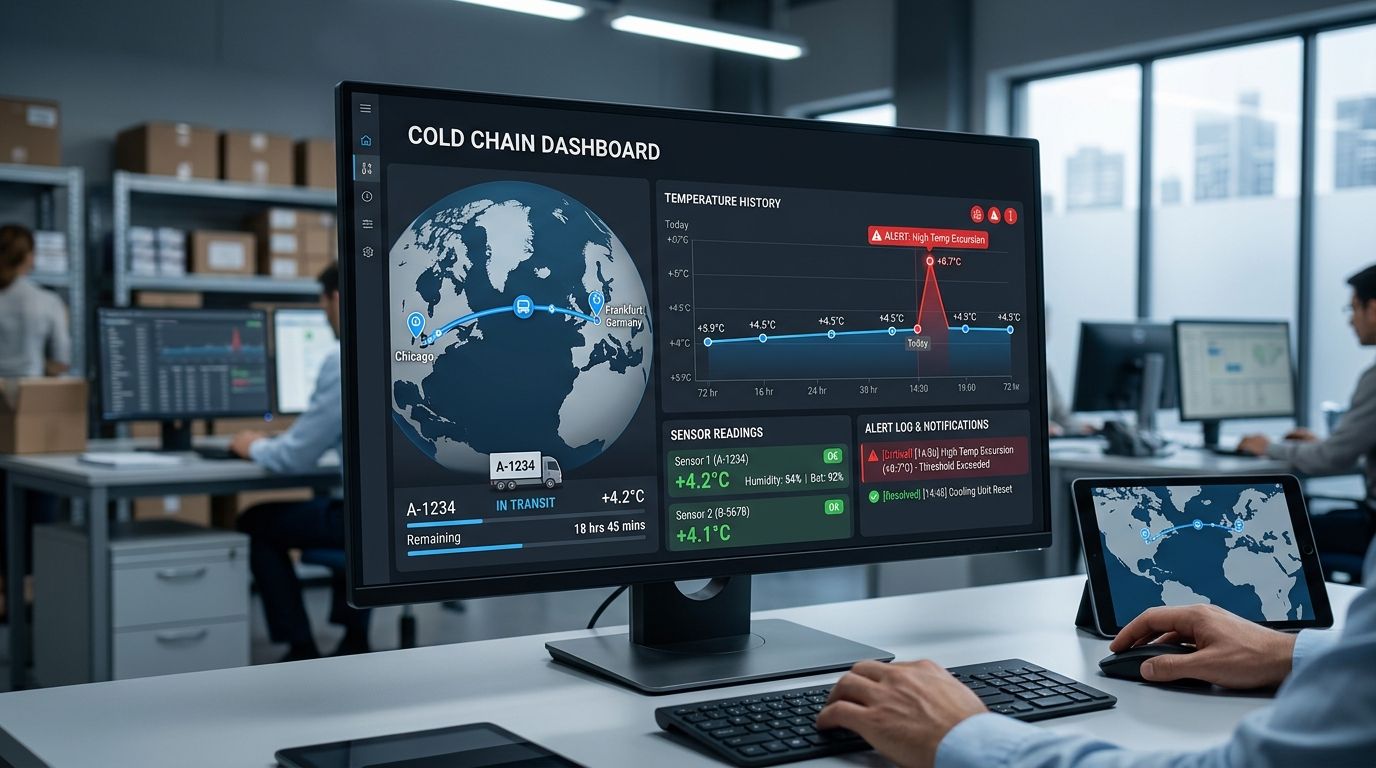
Traditional shipment tracking may tell a logistics team where a shipment is located, but location alone does not provide a complete picture. Temperature sensors and connected monitoring devices can provide additional information about the shipment's physical condition. Useful data can include:
- Current temperature
- Temperature history
- Humidity
- Location
- Door openings
- Sensor alerts
- Shipment milestones
Responding to Temperature Alerts
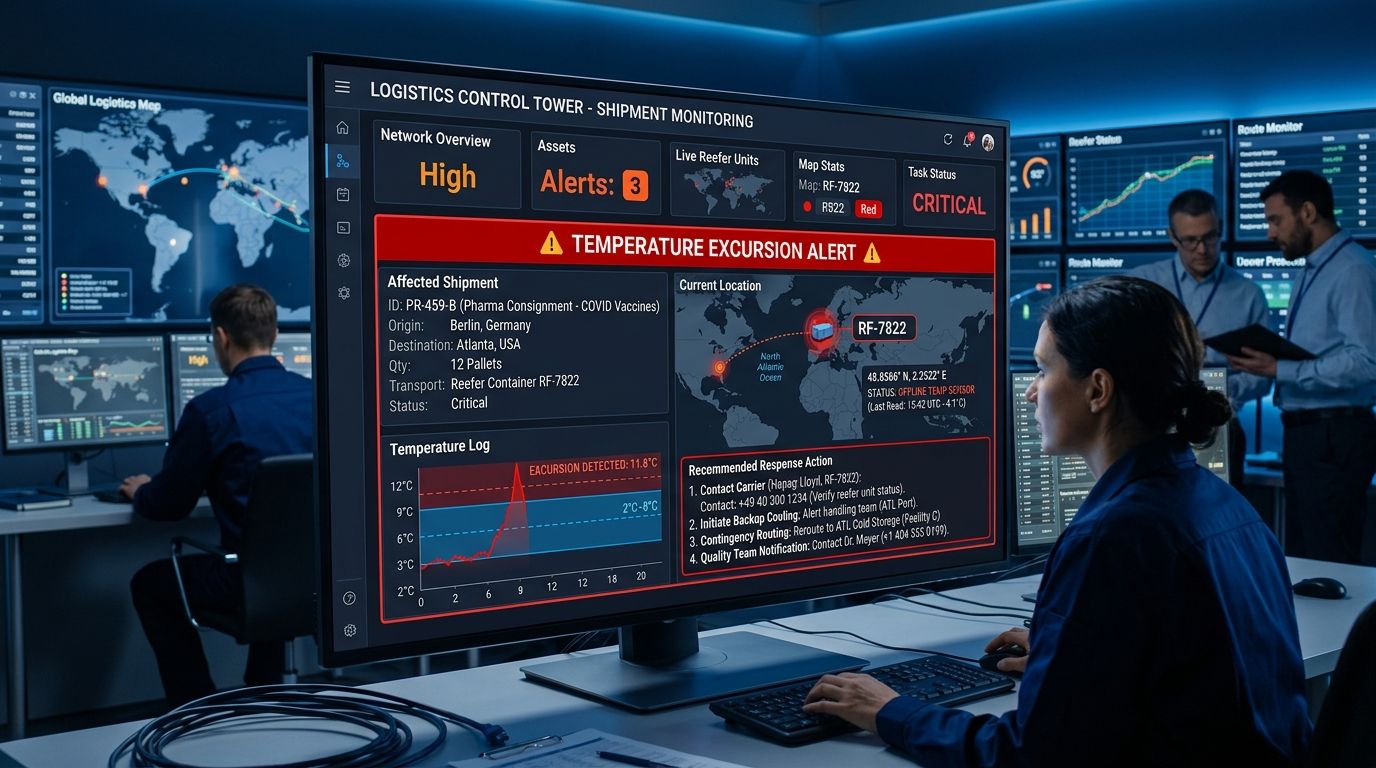
Monitoring is most valuable when teams can act on the information. If a temperature sensor identifies an abnormal reading, logistics teams can investigate the cause and determine the appropriate response. Depending on the situation, this could involve:
- Contacting the carrier
- Checking refrigeration equipment
- Reviewing the shipment's location
- Redirecting the shipment
- Alerting warehouse or quality teams
- Documenting the incident
SupplySense 360 can help bring shipment tracking, alerts, and operational data into a centralized visibility environment, giving teams greater insight into temperature-sensitive shipments and potential exceptions.
Building a More Reliable Cold Chain
Technology alone cannot eliminate every cold chain risk. Businesses should also establish clear processes around packaging, handling, transportation, storage, and emergency response. A strong cold chain strategy should include:
- Defined temperature requirements
- Reliable refrigerated equipment
- Continuous monitoring
- Clear alert thresholds
- Carrier performance monitoring
- Documented response procedures
- Regular review of temperature data
Historical data can also help businesses identify recurring problems across carriers, routes, facilities, or transportation stages.
Conclusion
Temperature-sensitive cargo requires more than basic shipment tracking. Businesses need visibility into the conditions surrounding the shipment throughout its journey. By combining temperature monitoring, real-time tracking, alerts, and proactive exception management, organizations can build a more responsive cold chain and reduce the risk of unnoticed temperature excursions. SupplySense 360 helps businesses connect shipment visibility and operational intelligence so teams can monitor critical cargo and respond to exceptions more effectively.
Learn more about SupplySense 360's real-time shipment visibility and predictive intelligence.