
Tariff Scenario Planning: How to Model Duty Changes Before They Hit Your Margins
Learn how importers can model tariff changes, estimate landed costs, assess sourcing alternatives, and protect profit margins through proactive tariff scenario planning.


A product that is profitable to import today may become significantly more expensive tomorrow. Changes in import duties, trade agreements, country-specific tariffs, and customs regulations can quickly affect the cost of bringing goods into a market. For businesses operating on tight margins, even a relatively small duty increase can influence pricing decisions, supplier relationships, and sourcing strategies. The challenge is that many importers respond to tariff changes only after they take effect. By then, purchase orders may already be committed, shipments may be in transit, and customer prices may be difficult to adjust. Tariff scenario planning offers a more proactive approach. It allows businesses to model potential duty changes, understand their financial exposure, and evaluate alternative decisions before new costs affect their margins.
What Is Tariff Scenario Planning?
Tariff scenario planning is the process of estimating how different changes in import duties and trade regulations could affect a business's costs. Rather than relying on one expected duty rate, importers create multiple scenarios to understand possible financial outcomes. For example, a business importing machinery may evaluate:
- The current applicable duty rate.
- A possible increase in the duty rate.
- A reduction resulting from a new trade agreement.
- A change in the product's tariff classification.
- A change in sourcing country that affects preferential or additional duties.
Step 1: Establish Your Current Import Cost Baseline
Before modelling potential changes, establish the current cost of importing each product. Collect the information needed to calculate landed cost, including:
- Product purchase price.
- Freight and insurance costs.
- Applicable customs value.
- Harmonized System (HS) or applicable national tariff classification.
- Country of origin.
- Import duties and other applicable taxes.
- Brokerage, port, handling, and transportation charges.
Make sure you understand the customs valuation method and the specific duty rules applicable in the destination country. Not every charge is calculated using the same valuation basis.
Step 2: Create Different Tariff Scenarios
Once the baseline is established, model alternative duty rates. Consider an illustrative product with a customs value of $100,000 and a current assumed duty rate of 5%.
| Scenario | Assumed duty rate | Import duty |
|---|---|---|
| Current situation | 5% | $5,000 |
| Scenario A | 10% | $10,000 |
| Scenario B | 15% | $15,000 |
| Scenario C | 20% | $20,000 |
The table shows the direct impact of changing the assumed duty rate, holding the customs value constant.
At a 20% duty rate, the business would pay $15,000 more in import duty than under the original 5% assumption.
These are illustrative calculations, not actual tariff rates for a particular product or country. Additional duties, exemptions, trade remedies, and other applicable charges must be evaluated separately.

Step 3: Evaluate the Impact on Landed Cost and Margins
The next step is understanding how duty changes affect the total cost of getting products to their final destination. A simplified landed-cost calculation is: Landed Cost = Product Cost + Freight + Insurance + Customs Duties + Applicable Taxes + Other Import Expenses Compare the landed cost under each tariff scenario. If the additional duty increases the total cost of a product, businesses may need to evaluate whether to:
- Adjust selling prices.
- Renegotiate supplier terms.
- Review sourcing alternatives.
- Reduce other logistics expenses.
- Accept a lower margin temporarily.
- Reconsider the commercial viability of certain products.
The important point is to understand the impact before committing to decisions that may be difficult to reverse.
Step 4: Evaluate Alternative Sourcing and Trade Options
Tariff planning should not stop at calculating additional costs. If a particular sourcing country becomes more expensive, businesses can investigate whether alternative suppliers or production locations offer a commercially viable option. However, changing the country of shipment does not automatically change the product's country of origin. Origin rules, substantial transformation requirements, applicable trade agreements, and anti-circumvention regulations must be considered. Reviewing these factors helps prevent businesses from making sourcing decisions based on incorrect assumptions about preferential duty treatment.
Step 5: Monitor Changes and Update Your Scenarios
Tariff planning should be an ongoing activity rather than a one-time exercise. Businesses should monitor official tariff schedules, customs announcements, trade agreements, and regulatory updates in their relevant markets. Useful resources include:
- World Customs Organization (WCO) for international customs standards and HS classification information.
- World Trade Organization (WTO) for trade policy information and tariff resources.
- National customs authorities for current import duties, national tariff schedules, and country-specific requirements.
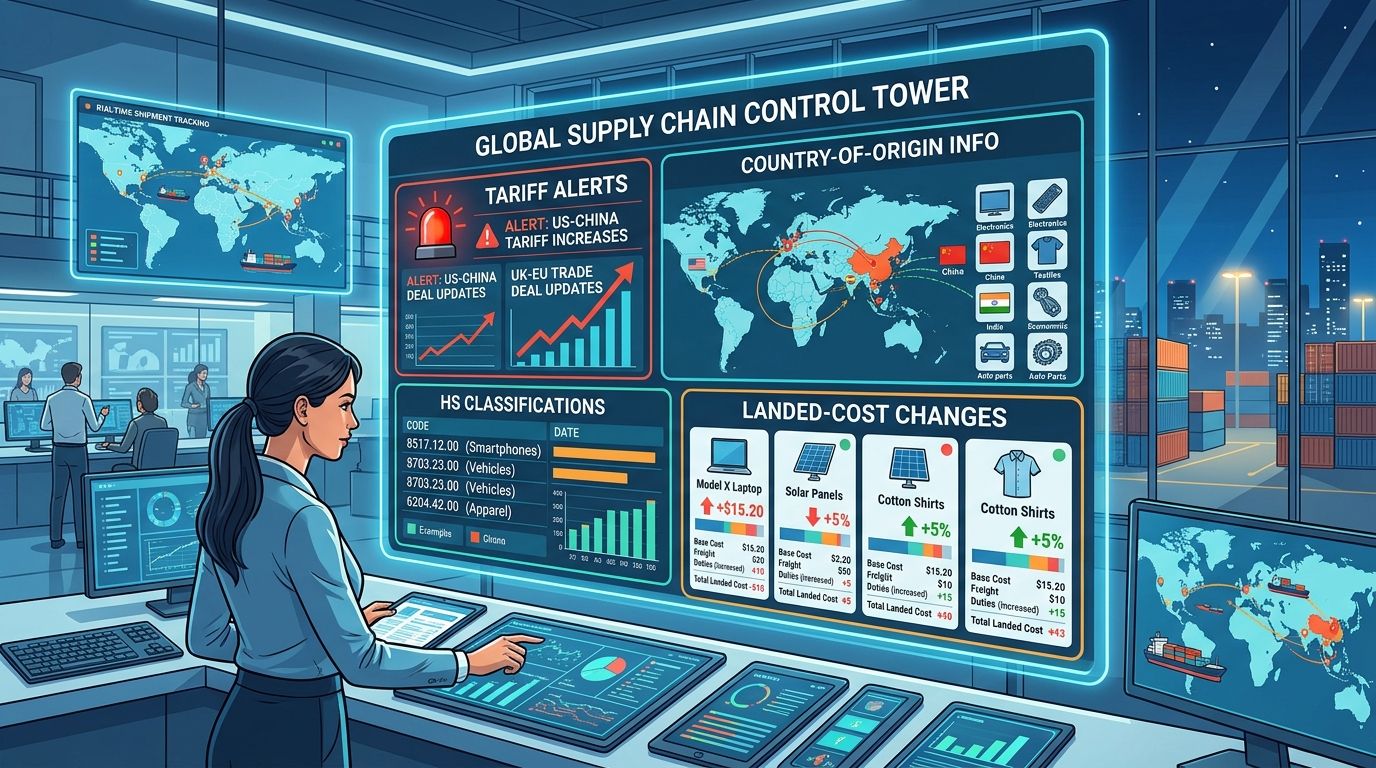 Platforms such as SupplySense 360 can support this process through tariff intelligence, HS classification tools, landed-cost calculations, and centralized supply chain information. Bringing these details together helps import teams evaluate cost exposure and make more informed decisions.
Conclusion
Tariff changes can affect more than customs expenses. They can influence product pricing, supplier selection, sourcing strategies, and overall profitability. Businesses that wait until new duties appear on their customs bills may have fewer options for protecting their margins. By establishing a cost baseline, modelling alternative duty rates, evaluating sourcing options, and monitoring regulatory changes, importers can make better-informed decisions before costs escalate.