
Air Freight vs. Ocean Freight: How to Choose Based on Cost and Speed
Compare air freight and ocean freight based on cost, speed, shipment characteristics, and business requirements to determine the right transportation option for your supply chain.


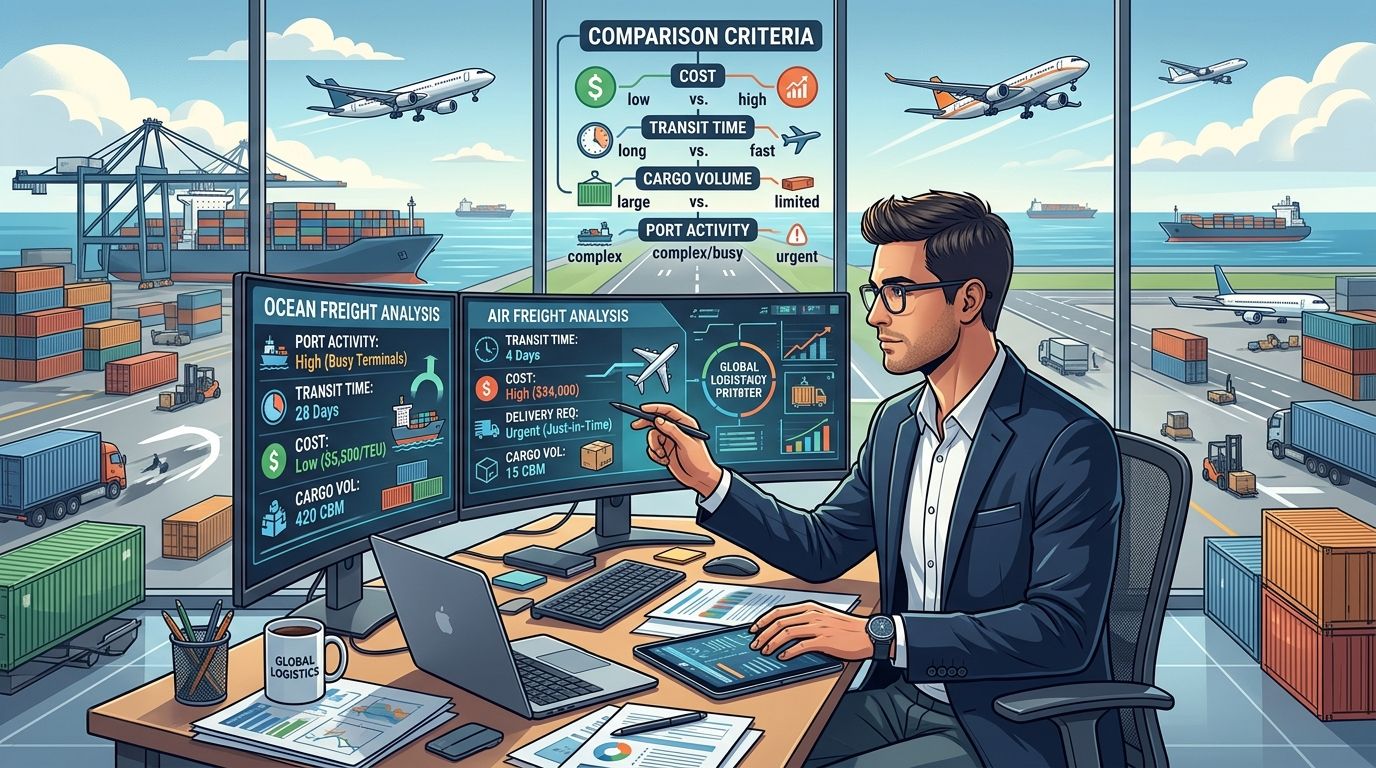
When shipping goods internationally, businesses often face an important transportation decision: Should we move this shipment by air or ocean? There isn't one answer that works for every shipment. Air freight is generally associated with faster transit, while ocean freight is commonly used for larger shipments where transportation cost is a major consideration. The right choice depends on the shipment, delivery requirements, budget, and broader supply chain strategy.
Air Freight vs. Ocean Freight at a Glance
| Factor | Air Freight | Ocean Freight |
|---|---|---|
| Speed | Generally faster | Generally slower |
| Cost | Typically higher | Typically lower per unit for large volumes |
| Shipment size | Better suited to smaller or time-sensitive cargo | Well suited to large and heavy shipments |
| Flexibility | Useful for urgent shipments | Better for planned, high-volume movements |
| Typical use | Time-sensitive or high-value goods | Bulk and large-volume international freight |
These are general characteristics. Actual cost and transit time depend on the route, carrier, cargo, service level, and current market conditions.
When Does Air Freight Make Sense?
Air freight can be valuable when speed is critical. Businesses may choose air transportation for:
- Urgent inventory replenishment
- Time-sensitive products
- High-value goods
- Perishable products
- Critical replacement parts
- Shipments with tight customer deadlines
The higher transportation cost may be justified when the financial impact of waiting for ocean transit is greater. For example, a manufacturing company facing a production stoppage because of a missing component may prioritize speed over freight savings.
When Is Ocean Freight the Better Option?
Ocean freight is often attractive for businesses moving larger quantities of goods internationally. It can make sense for:
- Large-volume shipments
- Heavy cargo
- Non-urgent inventory
- Planned replenishment
- Cost-sensitive transportation
However, businesses should account for the complete transportation journey, not just vessel transit.
Port handling, customs clearance, inland transportation, and potential delays can all affect the actual delivery timeline.
Don't Compare Cost Without Considering Time
One of the biggest mistakes businesses can make is comparing air and ocean freight purely by transportation price. A cheaper ocean shipment could become expensive if a delay causes:
- Production downtime
- Inventory shortages
- Missed customer commitments
- Expedited replacement shipments
- Additional storage or handling costs
What Factors Should You Consider?
Before choosing between air and ocean freight, evaluate:
Delivery Requirements
How quickly does the cargo actually need to arrive?
Shipment Characteristics
Consider weight, dimensions, value, and product sensitivity.
Inventory Levels
If inventory is already low, faster transportation may be worth the additional cost.
Total Landed Cost
Include freight, duties, handling, insurance, and other transportation-related costs.
Supply Chain Risk
Consider port congestion, weather, carrier disruptions, and other factors that could affect transit.
Visibility Helps You Make Better Decisions
Transportation planning doesn't end when the freight is booked.
Businesses need to monitor what happens after departure and identify changes that could affect delivery.
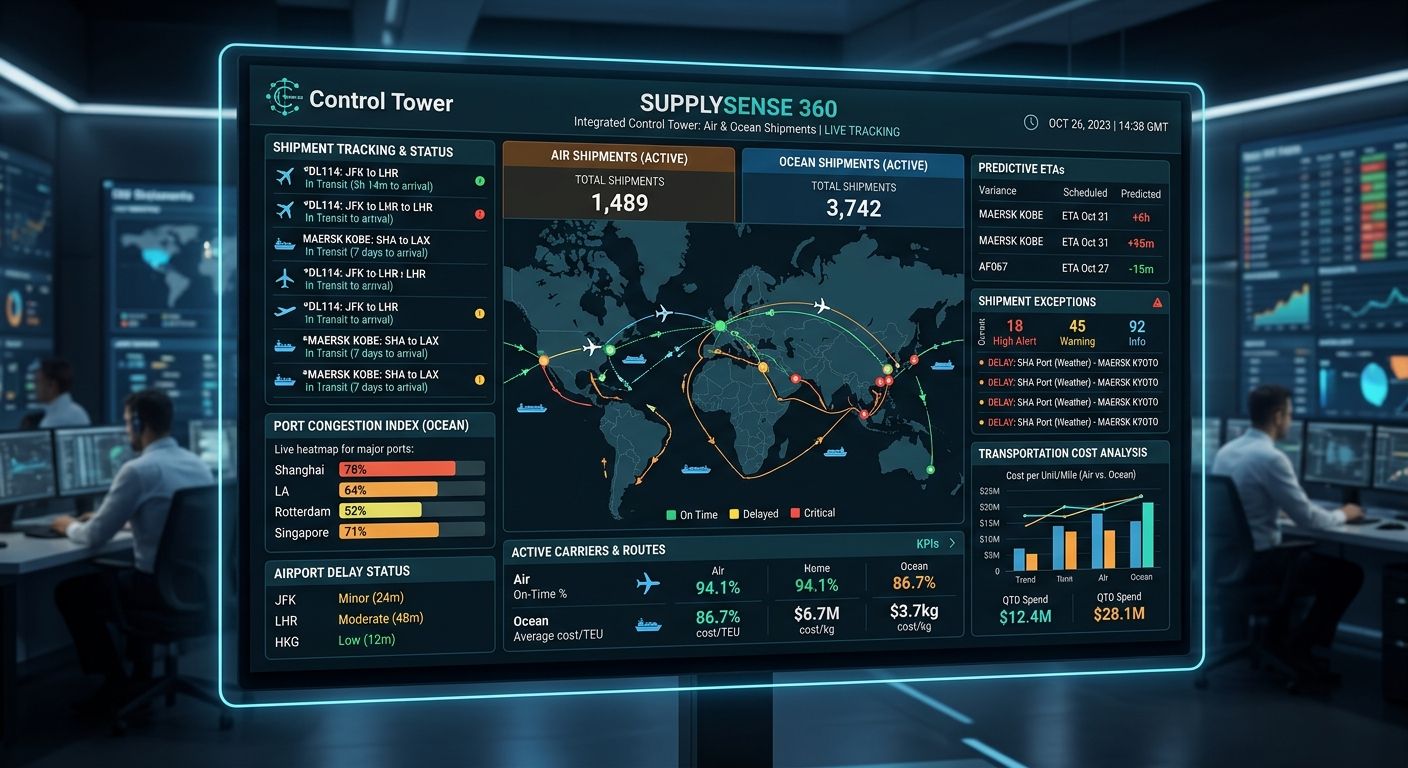 SupplySense 360 helps businesses maintain visibility across transportation modes through:
- Real-time shipment tracking
- Predictive ETA updates
- Ocean freight visibility
- Shipment milestone monitoring
- Exception management
- Transportation analytics
- End-to-end supply chain visibility
Conclusion
The choice between air freight and ocean freight isn't simply about fast versus cheap. It's about choosing the transportation option that best fits your shipment requirements, inventory position, customer commitments, and overall supply chain economics. For some shipments, paying more for speed makes sense. For others, ocean freight provides the right balance between cost and capacity. The key is having the data needed to make that decision confidently.